 listicle
Preservative-Free Meat Snacks for Travel: 5 Best Options
Table of Contents
- Why Preservative-Free Meat Snacks Matter for Travel
- Quick Comparison: Top Preservative-Free Meat Snacks
- Shaka Braai Biltong and Droewors: Traditional South African Quality
- Chomps Meat Sticks: Convenient Shelf-Stable Protein
- Mission Meats Organic Snacks: USDA Certified Clean Label
- Grass-Fed Beef Options: Nitrate-Free and Nutrient-Dense
- Is Biltong Healthy or Unhealthy? What the Nutrition Shows
- How to Store Biltong for Long Trips: Temperature and Packaging
- Frequently Asked Questions
Last Updated: October 9, 2026
Why Preservative-Free Meat Snacks Matter for Travel
On the road for hours, your snack choices matter.
Travel depletes energy fast. A quality preservative-free meat snack maintains stable blood sugar, prevents the crash from sugary options, and needs zero refrigeration, pack it once and forget it.
At Shaka Braai, we offer traditional South African biltong and droewors with fresh, locally sourced ingredients and zero artificial preservatives.
Below, we'll discuss preservative-free meat snacks for your travel style and how to store them for your entire trip.
Quick Comparison: Top Preservative-Free Meat Snacks
| Product | Format | Key Benefit | Best For |
|---|---|---|---|
| Shaka Braai Biltong & Droewors | Air-dried slices/sticks | Traditional quality, zero additives | Authentic flavor seekers, long trips |
| Chomps Meat Sticks | Shelf-stable sticks | 10g protein, 0g sugar, convenient | Quick snacking, fitness-focused |
| Mission Meats Organic | Beef & turkey options | USDA Organic certified, zero sugar | Health-conscious travelers |
| Beaver Brook Ranch | Grass-fed beef sticks | Nitrate-free, nutrient-dense | Premium quality seekers |
Shaka Braai Biltong and Droewors: Traditional South African Quality
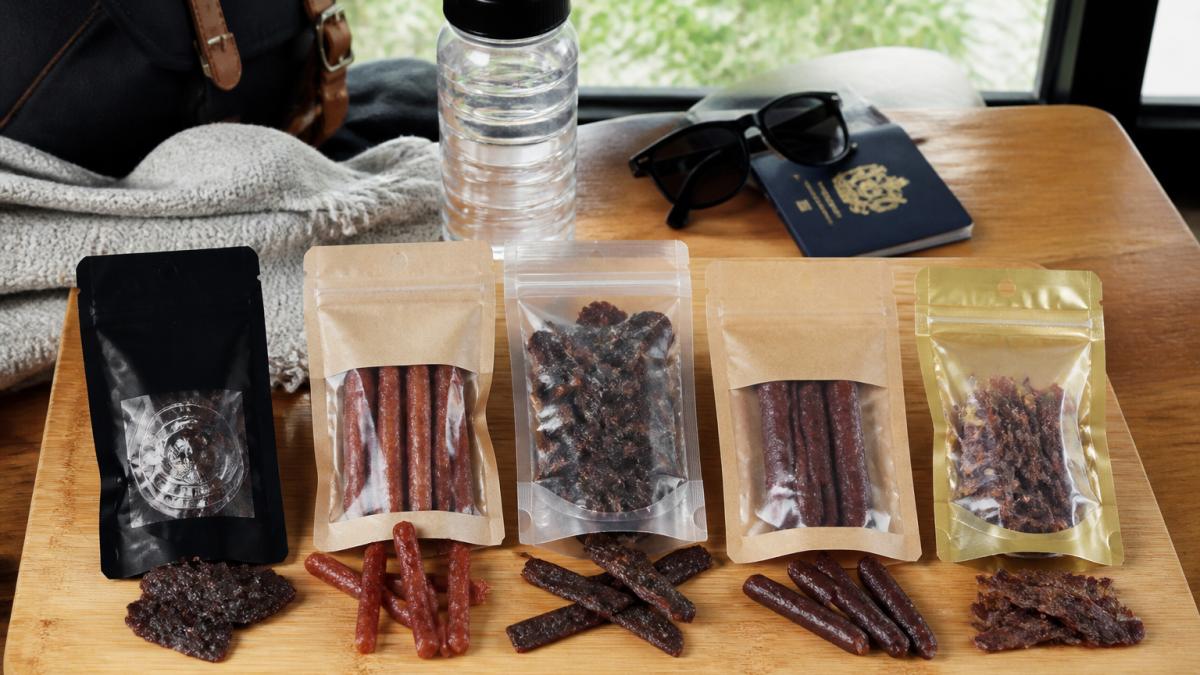
Shaka Braai's biltong and droewors use fresh, locally sourced meat with zero artificial preservatives. They offer authentic South African heritage.
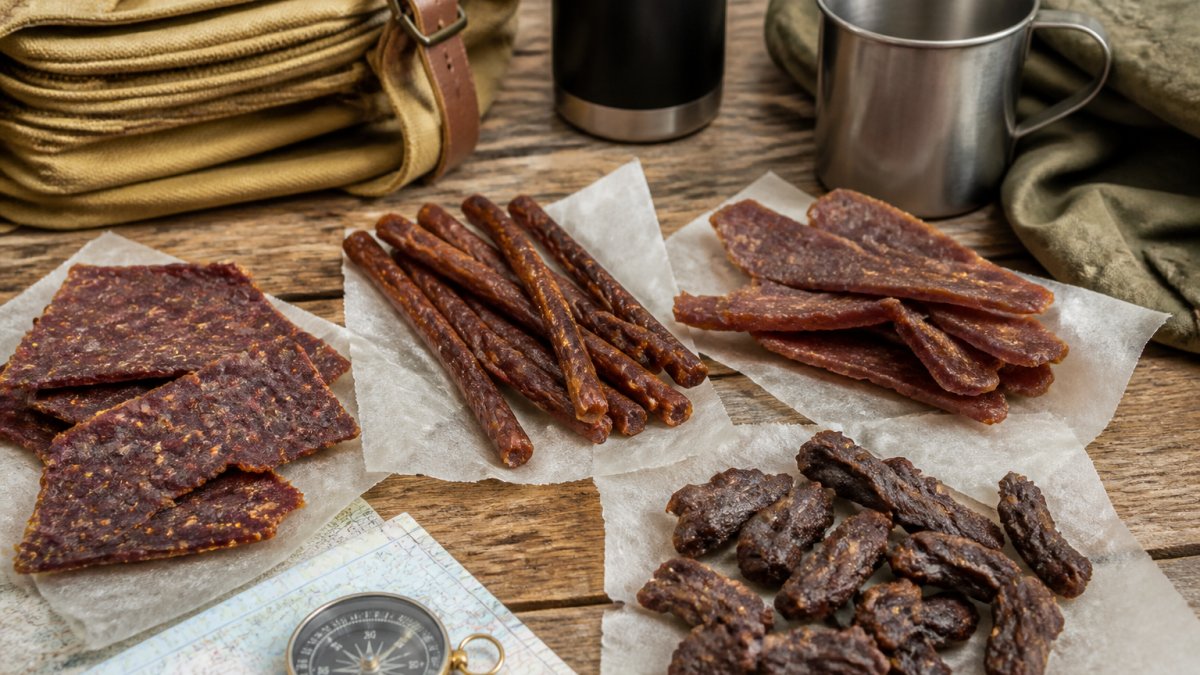
Biltong is air-dried beef cured with vinegar, spices, and salt; droewors is the same cure in sausage form.
What makes Shaka Braai different enough to order online?
For long trips, biltong's dense nutrition and shelf stability are beneficial, a small handful delivers sustained energy and is suitable for travel.
Chomps Meat Sticks: Convenient Shelf-Stable Protein
Chomps meat sticks deliver straightforward convenience: 10 grams of protein, zero grams of sugar, and a shelf-stable grab-and-go format with no preparation or mess.
The appeal is pure functionality. Research from Bulk Beef Jerky's road trip nutrition guide confirms that meat sticks are less likely than jerky to leave crumbs or debris in vehicles, making them ideal for car travel.
The tradeoff: Chomps prioritizes consistency and convenience over the depth of flavor you get from traditional curing. They're functional fuel, not a culinary experience.
Mission Meats Organic Snacks: USDA Certified Clean Label
Mission Meats positions itself on the "clean label" end of the spectrum, with USDA Organic certification and zero added sugar.
USDA Organic means the animals were raised without antibiotics, synthetic hormones, or non-organic feed, a guarantee travelers concerned about sourcing ethics can trust.
The limitation: USDA Organic doesn't automatically mean preservative-free, since many organic products still use approved preservatives.
For international travel, organic certification can provide peace of mind at borders, where some countries scrutinize meat imports more carefully.
Grass-Fed Beef Options: Nitrate-Free and Nutrient-Dense
Grass-fed beef snacks, including options from Beaver Brook Ranch, emphasize the nutritional difference between grass-fed and grain-fed beef. Grass-fed beef tends to carry higher levels of omega-3 fatty acids and conjugated linoleic acid (CLA), though the amounts in a 1-ounce snack are small. The bigger practical difference for travelers is the ingredient list, not the fatty-acid profile.
Nitrate vs. Nitrite: What the Label Actually Says
The words get used interchangeably, but they are not the same. Sodium nitrite (and its cousin sodium nitrate) are curing salts used to inhibit Clostridium botulinum and fix cured meat's pink color. Celery powder and celery juice concentrate are marketed as "natural" alternatives, but they contain naturally occurring nitrates the body converts to nitrite, so a product labeled "no added nitrates or nitrites" can still deliver nitrite if celery powder is on the ingredient list.
What this means for a traveler reading a label:
- "Nitrate-free" or "no nitrates added" is a marketing claim, not a regulated guarantee. Check the ingredient list for sodium nitrite, sodium nitrate, celery powder, or celery juice.
- "Uncured" on a USDA-inspected product means no synthetic nitrite was added, but the product may still contain celery-derived nitrite.
- Truly nitrite-free products rely on salt, acid, and drying alone for preservation. Biltong and traditional droewors fall into this category when made without curing salts.
Dietary-Specific Filtering for Travelers
If you are managing a dietary restriction, the label is your filter. Here is what to scan for on a grass-fed meat snack:
- Gluten-free: Most plain jerky and biltong are naturally gluten-free, but soy sauce and malt vinegar in marinades introduce wheat. Look for tamari or vinegar-based marinades, and look for a gluten-free certification if you are highly sensitive.
- Soy-free: Soy sauce and hydrolyzed soy protein are common in jerky marinades. Biltong traditionally uses vinegar and spices rather than soy, which makes it a strong default for soy-free travelers.
- Nightshade-free: Paprika, chili, and cayenne are nightshades and appear in many spiced meat snacks. Plain or pepper-free biltong is the safer pick if you avoid nightshades.
- Whole30 and paleo: These protocols prohibit added sugar, soy, and most preservatives. A biltong or meat stick with a short ingredient list, meat, salt, vinegar, spices, is the easiest fit.
The Trade-Off: Price and Sourcing
Grass-fed, nitrate-free snacks cost more than conventional alternatives, you're paying for sourcing, smaller batches, and a shorter ingredient list. For a month of travel snacks, that premium adds up, so compare cost per ounce: a larger bag of biltong or bulk box of meat sticks typically lands lower per ounce than single-serve sticks, at the cost of some convenience and a slightly shorter shelf life once opened.
Is Biltong Healthy or Unhealthy? What the Nutrition Shows
The question isn't binary. Biltong is nutrient-dense but high in sodium, so it belongs in a balanced diet, not as a meal replacement.
Sodium is the legitimate concern: traditional curing relies on salt, and a single ounce can contain 400-600 mg, roughly 17-26% of the daily recommended intake.
The key is context: biltong can work well as a travel snack within a broader diet of fresh vegetables, hydration, and balanced meals.
How to Store Biltong for Long Trips: Temperature and Packaging
Shelf stability is a key feature of biltong. Biltong is preserved through low moisture and acid plus salt. Air-drying reduces water activity, and the vinegar marinade and salt contribute to preservation. Removing any one of these factors, such as by trapping moisture in a sealed bag in a hot car, can shorten its shelf life.
Heat-Tolerance Guide: What Actually Happens in a Hot Car
A closed vehicle is the harshest environment your snack will face: on a 90°F day, a parked car's interior commonly reaches 130-170°F within an hour, and the glove compartment or trunk can run hotter than the cabin. Here's how to think about that:
- Under 80°F (cool hotel room, air-conditioned car, shaded backpack): Biltong stays at peak texture and flavor for 3-4 weeks sealed, longer if vacuum-sealed.
- 80-95°F (typical summer road trip cabin): Safe for days to a couple of weeks, but the fat will soften and the texture will firm up as moisture migrates. Flavor holds; mouthfeel changes.
- 95-120°F (parked car, sunny dashboard): Short-term exposure is fine for shelf-stable biltong, but repeated daily cycling accelerates rancidity in the fat. Keep it out of direct sun and rotate your supply.
- Above 120°F (trunk or glovebox on a hot day): Treat this as a stress test, not a storage plan. A single afternoon is survivable for dry biltong; a week of it is not. Move the supply into a cooler or bring it inside.
A simple field test: squeeze the bag. Condensation inside the plastic means moisture is migrating out of the meat, open it, let it breathe, and reseal once dry. It's the earliest warning sign that the aW lever is slipping.
Packaging That Protects the Cure
The real enemies are moisture and oxygen, not heat alone. Here is how to protect the supply:
- Airtight, resealable, low-headspace. A ziplock with the air pressed out works; a hard-sided container with a gasket works better for multi-week trips.
- Portion before you pack. Divide a month's supply into single-day or single-trip bags so you are not opening the main container repeatedly and re-introducing humid air.
- Add a desiccant if you are crossing climates. A food-grade silica packet in the main container absorbs the humidity swings of coastal or tropical travel.
- Keep it out of the sun. UV light accelerates fat oxidation. The glove compartment is fine; the dashboard and rear window shelf are not.
TSA and Border Reality Check
For domestic air travel, the Transportation Security Administration permits solid, packaged meat snacks in carry-on and checked bags, they're solid food, not subject to the 3-1-1 liquids rule. Powdered forms and liquid marinade or dip are different; if carrying a large quantity, expect a bag check and keep it accessible.
International travel is where rules tighten: many countries restrict or prohibit importing meat products, including cured and dried meat, to protect domestic agriculture from disease. The U.S.
Frequently Asked Questions
What makes preservative-free meat snacks better for travel than regular jerky?
Preservative-free meat snacks rely on traditional curing methods like salt, smoke, and air-drying to achieve shelf stability without chemical additives. This means fewer artificial ingredients in your carry-on, cleaner nutrition labels, and often superior taste. Products like biltong and droewors use salt curing and controlled drying to naturally extend shelf life, making them ideal for road trips and flights where you want high-protein fuel without artificial preservatives or fillers.
Is biltong healthy or unhealthy as a travel snack?
Biltong is nutrient-dense and high in protein, making it a healthy travel snack when sourced from quality producers. Biltong offers complete amino acids, iron, and B vitamins with minimal carbohydrates. The main consideration is sodium content from the curing process, check labels and pair biltong with water during travel. USDA-approved biltong from producers like Shaka Braai ensures food safety and quality standards, making it a healthy option for active travelers.
How do I know if a meat snack is truly preservative-free?
Check the ingredient list for absence of sodium nitrite, sodium nitrate, BHA, BHT, or other chemical preservatives. Clean-label meat snacks list only meat, salt, spices, and sometimes smoke, nothing else. Look for USDA Organic or USDA approval certifications, which verify production standards. Shaka Braai clearly states preservative-free claims and provides certifications. If a brand doesn't list ingredients or certifications online, contact them directly before purchasing for travel.
How long does preservative-free biltong stay fresh during travel?
Properly cured and packaged biltong remains shelf-stable for several weeks at room temperature, even without chemical preservatives. The salt curing and air-drying process removes moisture that bacteria need to grow. For long trips, store biltong in a cool, dry place, a backpack or checked luggage works fine. Vacuum-sealed packaging extends freshness further. Once opened, consume within a few days if not refrigerated. Temperature stability is key: avoid direct heat or humidity, which can cause mold. Shaka Braai's droewors and biltong are cured to be shelf-stable.
Can I bring preservative-free meat snacks through TSA security?
Yes, solid meat snacks like biltong, jerky, and meat sticks are allowed through TSA security in both carry-on and checked baggage. They're considered non-perishable solid foods and don't require refrigeration during flight. However, international travel has stricter rules, many countries prohibit meat products, even cured ones. Check the destination country's import regulations before packing. For domestic flights, you're clear to bring preservative-free meat snacks as carry-on fuel without restrictions.