 ultimate-guide
Is Preservative-Free Biltong Shelf Stable? A Complete Guide
Table of Contents
- What Makes Preservative-Free Biltong Shelf Stable
- How Long Does Biltong Last Without Preservatives
- Biltong Storage Best Practices for Maximum Freshness
- Signs of Spoiled Biltong and Food Safety
- Preservative-Free vs. Clean Label Marketing: What's the Difference
- Why Choose USDA-Approved Preservative-Free Biltong
- Frequently Asked Questions
Last Updated: October 4, 2026
What Makes Preservative-Free Biltong Shelf Stable
Preservative-free biltong shelf stable products achieve their stability through a combination of traditional preservation techniques that have been perfected over centuries. The key lies in understanding how air-drying, salt, vinegar, and water activity work together to create an environment where harmful microorganisms cannot thrive. At Shaka Braai, we've spent over 20 years perfecting our methods to deliver biltong that remains safe and delicious without relying on artificial additives.
The science behind shelf-stable preservative-free biltong is straightforward: remove moisture, control salt content, and maintain proper packaging. When you understand these principles, you'll see why traditional South African biltong can sit in your pantry for weeks without refrigeration.
The Role of Air-Drying and Dehydration
Air-drying is the foundation of biltong preservation. During the air-drying process, moisture is gradually removed from the meat, which directly reduces the water activity level. This dehydration happens naturally as the meat hangs in controlled conditions, allowing the surface to cure while the interior remains protected.
The dehydration process isn't random. Proper air-drying creates a firm exterior that resists microbial growth while maintaining the meat's nutritional integrity. When moisture content drops significantly, bacteria and fungi simply cannot multiply. This is why homemade biltong that's dried too quickly or incompletely spoils faster than commercially produced versions, the drying process must be precise.
Temperature and humidity during drying matter enormously. Commercial producers control these factors carefully, which is why USDA-approved biltong from sources like Shaka Braai maintains consistent shelf life. Home dryers often struggle with environmental variables, leading to unpredictable results.
Salt and Vinegar: Natural Preservation Methods
Salt has preserved meat for thousands of years, and for good reason. When applied properly, salt draws moisture from the meat's surface through osmosis, creating a hostile environment for pathogens. It also lowers the water activity of the meat itself, making it unsuitable for microbial growth.
Vinegar serves a dual purpose in biltong preservation. It adds flavor while creating an acidic environment that inhibits bacterial growth. The combination of salt and vinegar creates a preservation system so effective that artificial preservatives become unnecessary. Many traditional biltong recipes rely entirely on these two ingredients, plus the drying process itself.
The salt content in preservative-free biltong is carefully balanced. Too little salt fails to preserve effectively. Too much makes the product unpalatable. Commercial producers have refined this balance over decades, which is why commercially produced biltong maintains shelf stability.
Water Activity and Microbial Safety
Water activity (aw) is the measure of how much water is available for microbial growth. Most harmful bacteria require a water activity above 0.85 to survive. Quality biltong achieves a water activity well below this threshold, typically between 0.60 and 0.75, making it inhospitable to pathogens like Staphylococcus aureus and other spoilage organisms.
This is where understanding the science matters. A piece of biltong might feel dry to the touch, but what really determines safety is how much of that remaining water is actually available for microorganisms. Proper curing and drying techniques ensure that water is bound to the meat's proteins, making it biologically unavailable.
Food safety protocols in commercial production measure and verify water activity to ensure consistency. This is one reason why USDA-approved biltong provides greater confidence in shelf stability.
How Long Does Biltong Last Without Preservatives
The shelf life of preservative-free biltong depends on storage conditions, packaging quality, and whether it's homemade or commercially produced. Properly stored, commercially produced biltong can last 4-6 weeks at room temperature, while homemade versions typically last 2-4 weeks when stored correctly.
Room Temperature vs. Refrigerated Storage
Room temperature storage works well for biltong because the low moisture content and salt content inhibit spoilage at ambient conditions. The key is keeping the product in an airtight container away from direct sunlight and heat sources. Many people successfully store biltong in their pantry for weeks without any degradation in quality or safety.
Refrigeration extends shelf life significantly. Biltong stored in an airtight container in the refrigerator can last 8-12 weeks or longer. Cold temperatures slow any residual microbial activity and oxidation, preserving both safety and flavor. If you purchase biltong and don't plan to consume it within a few weeks, refrigeration is the better choice.
The difference between room temperature and refrigerated storage comes down to how slowly chemical and biological processes occur. Refrigeration essentially puts these processes in slow motion, dramatically extending the product's viable lifespan.
Homemade vs. Commercial Shelf Life
Homemade biltong typically has a shorter shelf life than commercial versions for several reasons. Home drying conditions are harder to control consistently. Temperature fluctuations, humidity variations, and inconsistent salt application all affect how long homemade biltong remains safe.
Commercial producers like Shaka Braai use standardized processes and equipment that ensure consistent results. This consistency is why our USDA-approved biltong maintains reliable shelf life across every package.
If you make biltong at home, expect it to last safely for 2-4 weeks at room temperature in ideal storage conditions. When in doubt, refrigerate.
Biltong Storage Best Practices for Maximum Freshness
Proper storage is your responsibility once biltong arrives at your door. Even the best-preserved biltong will degrade if stored incorrectly. Follow these practices to maintain quality and safety throughout the product's shelf life.
Packaging and Airtight Containers
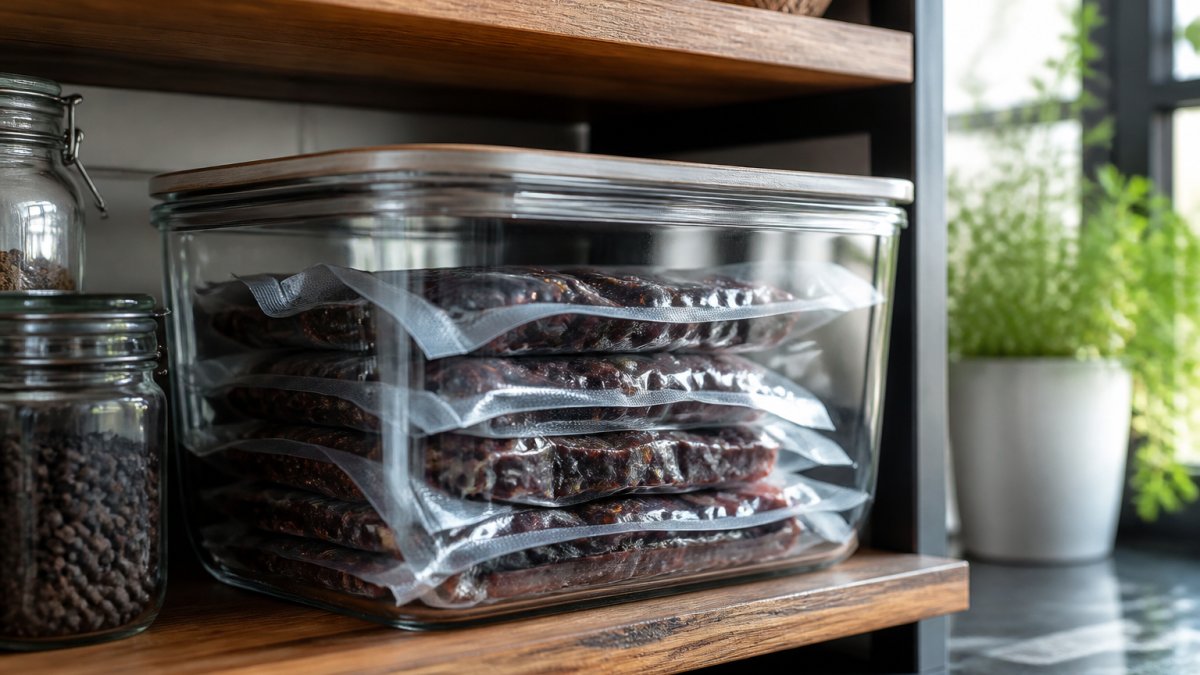
Vacuum-sealed packaging is ideal for biltong storage because it removes oxygen, which slows oxidation and prevents moisture reabsorption. When you open vacuum-sealed biltong, transfer any unused portions to an airtight container immediately.
Oxygen exposure causes biltong to oxidize, which degrades flavor and can lead to rancidity over time. Airtight containers protect against this process. Avoid storing biltong in paper bags or loosely covered dishes, as these allow air circulation that accelerates degradation.
The container itself matters. Avoid containers that have absorbed odors from previous foods, as biltong readily absorbs surrounding smells.
Climate and Environmental Factors
Temperature stability is crucial. Biltong stored in a cool, dark pantry lasts longer than biltong stored near a stove or in direct sunlight. Heat accelerates oxidation and any residual microbial activity. Humidity also matters, a dry environment is preferable to a humid one, as moisture can rehydrate the product's surface.
If you live in a humid climate, refrigeration becomes even more important. Moisture in the air can gradually rehydrate biltong's exterior, potentially creating conditions where surface mold could develop. This is especially true in coastal areas or during summer months.
Avoid storing biltong in the freezer unless you plan to keep it for several months. Freezing changes the meat's texture and can affect flavor when thawed. Room temperature or refrigerated storage is preferable for normal consumption timelines.
Signs of Spoiled Biltong and Food Safety
Even with proper storage, you should know how to identify biltong that has spoiled. Recognizing these signs protects you from foodborne illness.
Visual and Sensory Indicators
Mold growth is the most obvious sign of spoilage. Any visible mold, white, green, or black, means the biltong should be discarded immediately. Surface discoloration beyond the normal deep red or brown color can indicate microbial growth or oxidation that has progressed too far.
Smell is a reliable indicator. Fresh biltong has a pleasant, slightly spicy aroma. If it smells sour, rotten, or off in any way, don't eat it. Your nose is detecting volatile compounds produced by spoilage organisms or oxidation.
Texture changes also signal problems. If biltong becomes slimy, sticky, or develops an unusual softness, discard it. These changes indicate moisture reabsorption or microbial activity.
Pathogen Risks and Safe Handling
The primary pathogens of concern in improperly stored biltong are Staphylococcus aureus and fungal species. If you notice any signs of spoilage, the safest approach is to throw the product away.
According to FDA food safety guidelines, when in doubt, throw it out. Trust your senses, they're designed to detect spoilage.
Proper handling also matters. Don't leave biltong at room temperature for extended periods. If you're taking it on a trip or to an event, keep it in an insulated container. Minimizing time at warm temperatures reduces the risk of any remaining microorganisms multiplying.
Preservative-Free vs. Clean Label Marketing: What's the Difference
The terms "preservative-free" and "clean label" are often used interchangeably, but they mean different things. Understanding the distinction helps you make informed choices about what you're buying.
Preservative-free means the product contains no added chemical preservatives like sodium nitrite, sodium benzoate, or similar compounds. Clean label is a broader marketing term that suggests the product contains only recognizable, natural ingredients with minimal processing.
A product can be preservative-free but still use other processing methods to achieve shelf stability. It can also be clean label while containing small amounts of preservatives that occur naturally. Biltong that relies on salt, vinegar, and proper drying achieves both preservative-free and clean label status simultaneously.
The marketing distinction matters because clean label has become a consumer preference signal. When consumer food trends research shows that shoppers actively seek products with fewer additives, producers respond by emphasizing clean label credentials. Preservative-free biltong naturally aligns with this preference because the preservation method is traditional, not chemical.
Why Choose USDA-Approved Preservative-Free Biltong
USDA approval means the product has been produced under strict food safety standards and inspected for compliance. This certification provides assurance that the biltong meets pathogen reduction requirements and was handled safely throughout production and packaging.
When you purchase USDA-approved preservative-free biltong from Shaka Braai, you're getting a product that has been verified to meet safety standards without relying on artificial preservatives. Our 20 years of experience in traditional meat curing, combined with modern food safety protocols, ensures that every package delivers authenticity and reliability.
The difference between USDA-approved and non-certified biltong often comes down to traceability and accountability. This transparency is what allows consumers to trust the shelf stability claims.
Choosing preservative-free biltong doesn't mean sacrificing safety. It means choosing a product where the preservation method is transparent, the ingredients are recognizable, and the safety standards are verified by a government agency.
Understanding whether preservative-free biltong is truly shelf stable comes down to recognizing how proper drying, salt, vinegar, and controlled water activity work together. The challenge for most consumers is finding biltong produced with these methods verified through USDA approval. At Shaka Braai, we've built our reputation on delivering authentic, traditionally-cured biltong and droewors that prove you don't need artificial preservatives to achieve reliable shelf stability. Our USDA-approved products use fresh, locally sourced ingredients and time-tested curing methods that have worked for generations. Contact Shaka Braai to request a call back and discover the difference that 20 years of expertise makes in every package.
Frequently Asked Questions
How long can preservative-free biltong last at room temperature?
Properly made preservative-free biltong can last 2-4 weeks at room temperature when stored in airtight containers away from moisture and direct sunlight. The exact shelf life depends on the moisture content, salt concentration, and packaging integrity. USDA-approved biltong like ours undergoes rigorous food safety testing to ensure stability without artificial preservatives. For extended storage beyond 4 weeks, refrigeration is recommended to maintain optimal quality and safety.
What are the signs of spoiled biltong?
Spoiled biltong typically shows visible mold (especially white or green spots), off odors, slime on the surface, or an unusual sour smell beyond the normal vinegar tang. If biltong becomes brittle and crumbly in unexpected ways, or develops an ammonia-like scent, it has likely spoiled. Trust your senses: if it looks, smells, or feels wrong, discard it. Proper storage in airtight containers and cool, dry conditions prevents most spoilage issues.
Does preservative-free biltong need to be refrigerated?
Preservative-free biltong does not require refrigeration if stored correctly in airtight containers at room temperature, thanks to the air-drying process that reduces water activity to levels that inhibit microbial growth. However, refrigeration extends shelf life significantly and is ideal for long-term storage beyond 4 weeks. Climate matters: in hot, humid environments, refrigeration is strongly recommended to prevent moisture absorption and maintain food safety.
What makes USDA-approved biltong safer than homemade versions?
USDA-approved commercial biltong undergoes strict food safety inspections and verification that water activity levels meet safety standards. Commercial producers use controlled environments, precise salt and vinegar ratios, and validated dry-curing processes that homemade versions may not replicate consistently. This ensures pathogen reduction and shelf stability without artificial preservatives, giving you confidence in both safety and shelf life.