 ultimate-guide
How to Host a Whole Hog Roast: Complete Guide
Table of Contents
- Plan Your Whole Hog Roast: Sizing and Guest Count
- Whole Hog Roast Equipment Rental and Setup Options
- Fuel Selection: Charcoal vs. Hardwood for Fire Management
- Preparation and Seasoning: Brining, Rubs, and Basting
- Pig Roast Cooking Time Per Pound and Temperature Control
- Food Safety for Whole Hog Roasts and Handling
- How to Carve a Whole Roasted Pig and Serve Your Guests
- Waste Management, Cleanup, and Event Planning Logistics
- Frequently Asked Questions
Last Updated: October 2, 2026
Plan Your Whole Hog Roast: Sizing and Guest Count
Hosting a whole hog roast starts with one critical decision: how large should your pig be? The size determines everything else, cooking time, equipment needs, fuel consumption, and whether you'll have leftovers or hungry guests.
Plan for one pound of live pig weight per person, accounting for bone weight and fat rendering. A 100-pound pig feeds roughly 50-75 people depending on sides and appetites. Err slightly larger rather than smaller.
A 100-pound live pig yields approximately 60-70 pounds of actual meat after processing, an important distinction when ordering from your butcher.
A 40-50 pound pig serves 20-30 people; a 120-150 pound pig serves 60-100 guests comfortably.
Write down your guest count, add 10-15% for unexpected arrivals, then use this to determine pig size and equipment needs.
Whole Hog Roast Equipment Rental and Setup Options
You have two primary equipment paths: a commercial rotisserie or a cinderblock pit. Each has distinct advantages, and your choice shapes the entire event experience.
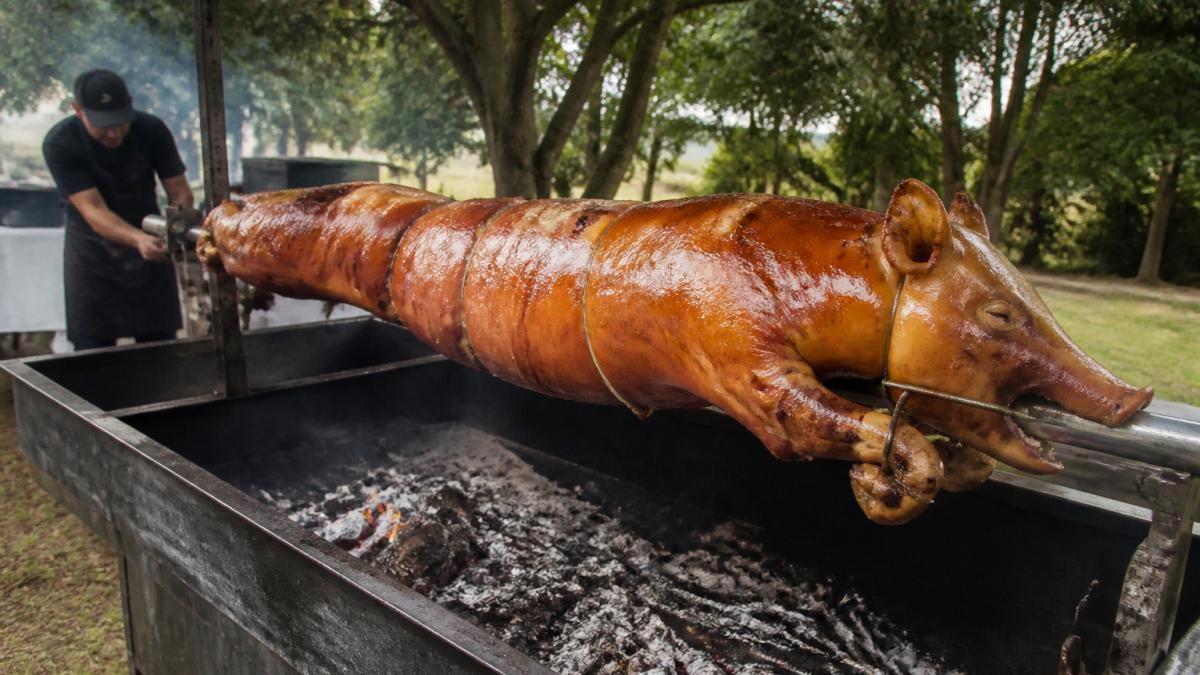
A rotisserie is the easier path for first-time hosts. The pig rotates slowly over direct heat, self-basting as fat renders. Rotisseries handle pigs up to 150 pounds with consistent results and require less active monitoring than a pit.
A cinderblock pit is the traditional South African approach. You build or rent a pit from stacked cinderblocks, place a grate over coals, and cook skin-side down initially, then flip ribs-side up.
For your first whole hog roast, a rental rotisserie removes variables. For authentic results, learn the cinderblock method or hire professionals.
You'll also need heavy-duty tongs (24+ inches), heat-resistant gloves, a reliable meat thermometer, sharp carving knives, and serving platters.
Fuel Selection: Charcoal vs. Hardwood for Fire Management
Your fuel choice affects flavor, heat consistency, and cooking duration for your whole hog roast.
Charcoal burns hot and clean with consistent heat, ideal for rotisseries. You'll need 40-60 pounds for a 4-6 hour cook, depending on temperature and wind.
Hardwood delivers superior flavor and is traditional for pit cooking. Oak, hickory, and fruitwoods create smoke that penetrates the meat and develops an authentic smoke ring.
A hybrid approach works well: start with charcoal for consistent base heat, then add hardwood chunks toward the end for flavor.
Cold weather and wind require more fuel and careful positioning. In windy conditions, charcoal's predictability becomes especially valuable.
Never use treated wood, painted wood, or softwoods like pine. These release chemicals and bitter flavors into your whole hog roast.
Preparation and Seasoning: Brining, Rubs, and Basting
The meat quality matters, but preparation determines flavor. Start 12-24 hours before cooking with a brine.
Dissolve 1 cup salt and 1 cup sugar per 5 gallons of water, add aromatics like bay leaves, garlic, and peppercorns. Submerge the whole hog roast for 12-18 hours.
Pat the pig completely dry after brining, moisture prevents skin crisping. Air-dry for at least 2 hours or refrigerate uncovered overnight.
Apply your rub generously inside and out. A classic rub combines paprika, garlic powder, onion powder, black pepper, and salt. Work it into every crevice and under the skin.
Basting maintains moisture and builds flavor. Prepare a basting liquid of melted butter mixed with apple cider vinegar, hot sauce, or preferred seasonings.
Don't oversalt the brine if you're also applying a heavily salted rub. Taste as you go.
Pig Roast Cooking Time Per Pound and Temperature Control
This is where precision matters. Undercooked pork is unsafe. Overcooked pork is dry.
For a rotisserie over charcoal, plan 12-15 minutes per pound (a 100-pound pig takes roughly 20-25 hours at 250-275°F). For a cinderblock pit, expect 15-20 minutes per pound (25-33 hours for 100 pounds).
Internal temperature is your real guide. The thickest part of the shoulder should reach 160°F for food safety.
Indirect heat is essential to prevent burning. Arrange coals to create a hot zone and cooler zone. Rotate the pig between zones or position it in the cooler zone with a drip pan beneath.
In the final hour, once internal temperature reaches 150°F, adjust heat to crisp the skin without darkening it too fast. Move to the cooler zone and cover loosely with foil if needed.
Food Safety for Whole Hog Roasts and Handling
Whole hog roasts involve raw meat, heat, and long cooking times, all conditions where food safety matters intensely.
Start with a healthy animal from a reputable source. Work with a licensed processor who handles the initial butchering and cleaning.
Keep the pig refrigerated until cooking begins. Don't leave it sitting at room temperature for hours before the cook.
Cleanliness during cooking matters. Use clean utensils, tongs, and platters. If you're handling the raw pig during setup, wash your hands thoroughly before touching anything else.
Maintain consistent cooking temperature. Pork must reach 160°F throughout to be safe. This applies to the thickest parts of the shoulders and hindquarters, not just the loin.
Keep cooked meat warm (above 140°F) until serving, or cool it quickly and refrigerate. Don't let cooked meat sit at room temperature for more than 2 hours (the CDC). In hot weather, that window shrinks to 1 hour.
After the event, refrigerate leftovers within 2 hours. Whole hog roast meat keeps 3-4 days refrigerated. Freeze it for longer storage.
How to Carve a Whole Roasted Pig and Serve Your Guests
Carving a whole hog roast is part spectacle, part skill.
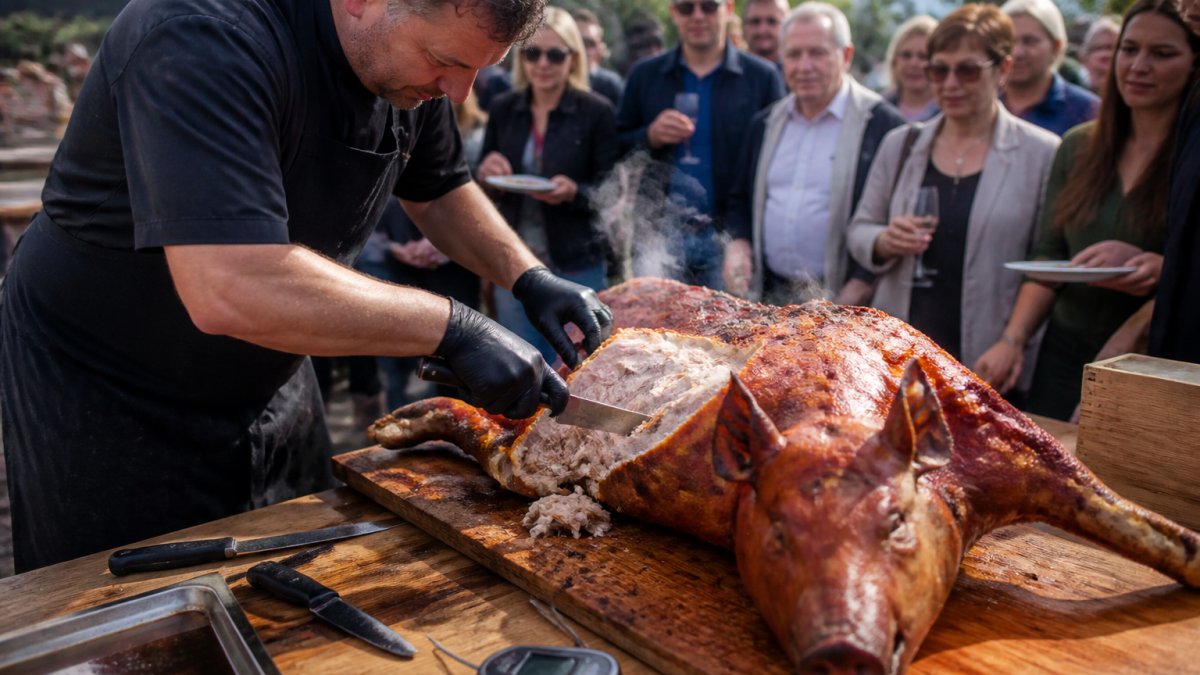
Start by removing the hindquarters. Cut through the skin and meat where the hind leg meets the body.
Next, remove the front shoulders the same way, cut around the shoulder joint and separate cleanly.
The loin runs along the spine. Cut along both sides of the spine, then slice the loin into portions.
The belly (pork belly) is underneath. Slice it into strips or chunks. This is often the fattiest, most flavorful part.
Don't discard the head and jowls. These are delicacies in traditional braai culture. The jowl meat is rich and flavorful.
Work methodically. A whole hog roast is large, and carving takes 15-20 minutes if you're organized.
Serve with bread, sauce, and sides. The meat speaks for itself, but good accompaniments complete the experience.
Waste Management, Cleanup, and Event Planning Logistics
A whole hog roast generates significant waste. Plan for it.
Bones, skin scraps, and trimmings accumulate during carving. Arrange for a large waste bin beforehand.
Grease and fat drippings require careful handling. If you're using a cinderblock pit, place a drip pan beneath the grate.
Equipment cleanup happens after guests leave. A rotisserie needs thorough washing, grease hardens quickly. Cinderblock pits should be cleared of ash and debris.
For the overall event, whole hog roast logistics demand planning. Coordinate timing with your guest arrival.
Arrange adequate seating and serving areas. A whole hog roast is a gathering event, not a rushed meal.
Weather contingencies matter. Have a tent ready for unexpected rain. Wind can disrupt fire management, so know your setup's exposure and plan accordingly.
For significant events, weddings, corporate functions, consider hiring professionals.
Hosting a whole hog roast is ambitious, but the reward, a memorable gathering centered on exceptional food, justifies the effort. Whether you tackle it yourself or partner with experienced professionals, the key is preparation and attention to detail. At Shaka Braai, we've perfected this process for weddings, corporate events, and backyard celebrations. Request a call back to discuss how we can make your next whole hog roast unforgettable, or reach out with questions about planning your event.
| Planning Element | Key Decision | Impact |
|---|---|---|
| Pig size | 1 lb per person | Determines cook time and guest satisfaction |
| Equipment | Rotisserie vs. pit | Affects ease, flavor, and monitoring demands |
| Fuel type | Charcoal vs. hardwood | Influences heat consistency and flavor profile |
| Cooking duration | 12-20 min per lb | Requires precise temperature monitoring |
| Carving prep | Sharp tools and clean station | Affects presentation and food safety |
| Waste plan | Bins, drip pans, compost | Prevents cleanup disasters and environmental issues |
Frequently Asked Questions
How many people will a whole hog roast feed?
A 100-pound hog typically feeds 50-75 people, depending on appetite and side dishes. The general rule is 1.5 to 2 pounds of whole hog per person. A 150-pound pig serves 75-100 guests comfortably. Account for bone weight and fat rendering when calculating meat yield, expect about 60-65% of the live weight as usable meat. For events with lighter appetites or multiple protein options, you can stretch the servings further.
How long does it take to cook a whole hog roast?
Cooking time depends on hog weight and temperature. A general rule is 4-5 hours for a 100-pound pig at 250°F indirect heat, or roughly 25-30 minutes per pound. Larger hogs (150+ pounds) may take 6-8 hours. Use a meat thermometer to confirm doneness, the internal temperature should reach 190°F at the thickest part of the thigh. Start early in the morning for an evening meal, and always allow 30-45 minutes resting time before carving.
What are the most common mistakes when cooking a whole hog?
Common errors include inconsistent temperature control, which results in undercooked or burnt meat; failing to baste regularly, which dries out the skin; placing the pig skin-side up too early, which prevents proper rendering; and not using a meat thermometer, leading to guesswork. Many hosts also underestimate cleanup time and waste management. Overloading the fire with fuel at once causes flare-ups; instead, manage heat gradually. Finally, rushing the resting period, let the hog rest at least 30 minutes after cooking for juicier, easier carving.
What equipment is essential for a DIY whole hog roast?
Essential equipment includes a rotisserie or cinderblock pit, a meat thermometer, long-handled tongs and gloves, a sharp carving knife and cutting board, basting brush, and a fire management tool like a shovel. You'll need a large cooler for storing the raw hog, tables for carving and serving, and proper ventilation to manage smoke. Many hosts rent professional rotisserie equipment rather than building a pit. A weather canopy is highly recommended for sun and rain protection, and have fire extinguishers on hand for safety.