 Ultimate guide
Why Is Biltong So Expensive? A Cost Breakdown
Table of Contents
- Why Biltong Costs More Than You'd Expect
- The Hidden Cost: Meat Weight Loss During Drying
- Quality Cuts and Beef Ingredient Costs
- Biltong vs Beef Jerky: Why the Price Difference Matters
- How to Choose Quality Biltong and Assess Real Value
- Is Making Your Own Biltong Cheaper?
- Understanding Biltong Price Per Pound and Fair Pricing
- The Preservation and Food Safety Premium
- Frequently Asked Questions
Last Updated: October 17, 2026
Why Biltong Costs More Than You'd Expect
Why is biltong so expensive? It's a combination of premium ingredients, labor-intensive preparation, and the physics of meat preservation. At Shaka Braai, we've spent over 20 years producing traditional biltong, and every dollar of the final price reflects real costs most snack foods never encounter.
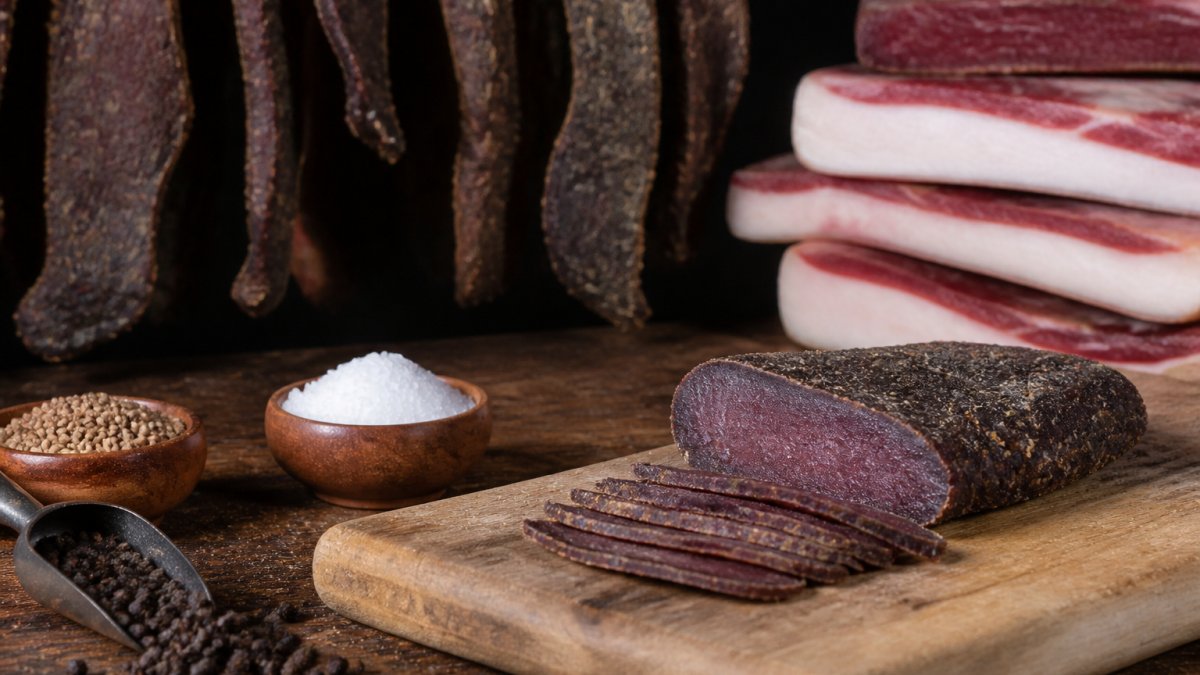
Unlike mass-produced beef jerky, which uses heat and machinery to accelerate drying, authentic biltong relies on slow air-drying over days or weeks. That demands climate control, ventilation, consistent monitoring, and space, all of which add up quickly, on top of premium meat and expensive spices.
Understanding why biltong costs what it does helps you assess value. Cheap biltong may cut corners on meat quality or rush drying; paying more for quality buys safety, flavor, and a product that lasts.
The Hidden Cost: Meat Weight Loss During Drying
Here's the part that surprises most people: raw meat loses significant weight during the air-drying process. A kilogram of raw beef doesn't become a kilogram of finished biltong, it becomes roughly 400 to 500 grams, depending on the cut and drying conditions.
Beef is roughly 60-70% water when raw, and that moisture evaporates as it dries. Removing moisture is the mechanism that preserves biltong: it prevents bacterial growth and extends shelf life.
For pricing, this means producing one kilogram of finished biltong requires roughly 2-2.5 kilograms of raw meat. That raw meat cost is built into every package you buy, the drying yield is one of the biggest hidden costs in biltong production.
This yield loss is unavoidable in authentic air-dried biltong, it's the process, not waste, and it's why biltong always costs more per finished kilogram than raw beef.
Quality Cuts and Beef Ingredient Costs
Biltong producers don't use every cut of beef. The best biltong comes from lean, whole-muscle cuts: top round, eye of round, sirloin tip (knuckle), and silverside (bottom round).
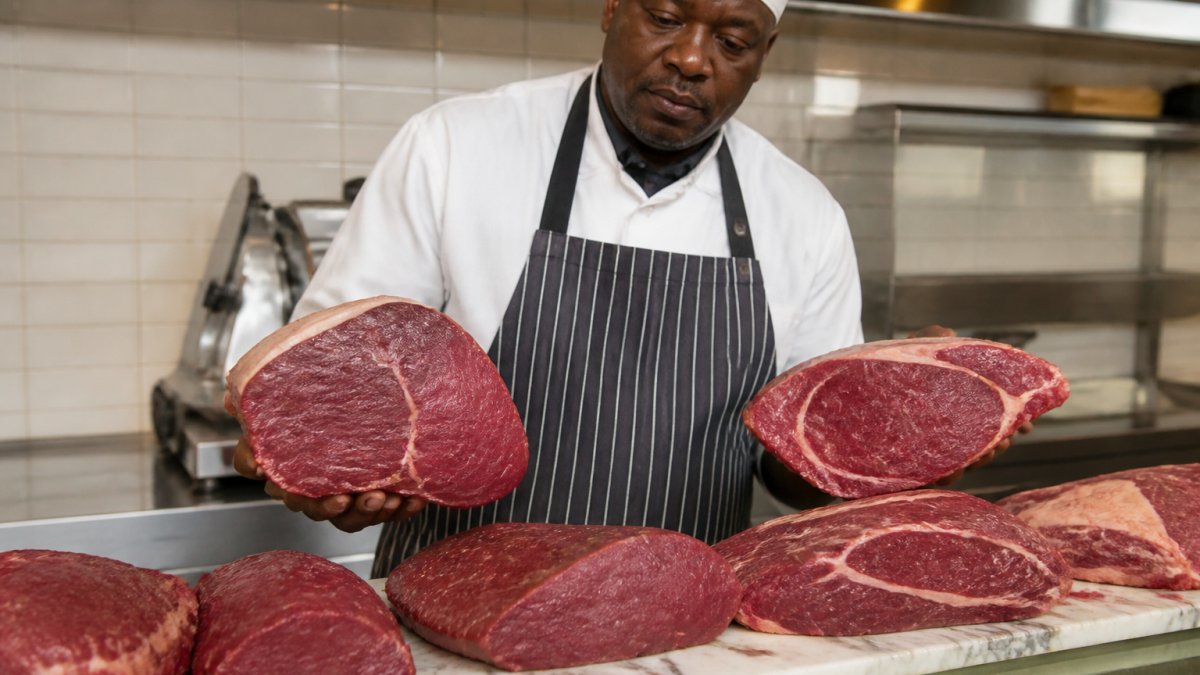
Why lean cuts cost more per usable pound. Biltong requires muscle with very little intramuscular fat. Fat oxidizes during long air-drying and turns rancid, which is why traditional recipes specify lean cuts and why producers trim aggressively.
What the U.S. beef market does to that cost. The spread between commodity ground beef and whole-muscle rounds is persistent. When fed-cattle prices rise, from drought, feed costs, or herd contraction, the cuts biltong producers rely on rise with them.
Cut selection is also a quality decision. Top round and silverside dry evenly and develop the dense, savory chew that defines good biltong. Fattier cuts turn rancid during a 5-7 day dry, and tougher cuts become leathery.
The per-finished-pound math. Lean whole-muscle cuts cost more per raw pound and lose 10-20% to trim before drying.
At Shaka Braai, we source fresh beef that meets our lean-cut specification and reject cuts that would compromise the dry. That commitment means we pay for whole-muscle rounds even when commodity beef prices spike, and it's a direct reason our per-pound price sits where it does.
Biltong vs Beef Jerky: Why the Price Difference Matters
Biltong and beef jerky are both dried meat snacks, but their methods, and cost structures, diverge in ways a side-by-side price tag doesn't reveal.
Heat vs air: the process gap. Beef jerky is typically made in a dehydrator or oven at roughly 160-180°F for 4-8 hours. The heat drives moisture out quickly, so a batch can be finished in a single shift.
Drying yield. Jerky and biltong land in a similar raw-to-finished range, roughly 2 to 2.5 pounds of raw meat per finished pound, but biltong producers target a drier, denser product, pushing yield toward the higher end.
Facility time is a real cost. A jerky dehydrator turns over its capacity every few hours. A biltong drying room turns over every 5-7 days. That means a biltong producer needs roughly 15-30 times the drying capacity per pound of weekly output compared with a jerky operation, more square footage, more climate control, more monitoring labor.
Ingredient cost per pound. Traditional biltong uses meat, salt, cracked pepper, coriander, and vinegar, no sugar, soy sauce, binders, or added water. Jerky recipes commonly include sugar, soy sauce, Worcestershire, and sometimes nitrites, which add weight at low cost.
Labor and skill. Jerky production is largely hands-off once loaded. Biltong requires skilled assessment: judging moisture by feel and weight, monitoring humidity, and pulling pieces at the right point to avoid case-hardening (a dry exterior sealing moisture inside). That judgment is labor, and it doesn't scale linearly.
The bottom line. Biltong costs more than jerky because it uses pricier lean cuts, holds them in climate-controlled drying space for a week instead of hours, and adds no cheap fillers. The price difference is a process difference, and it shows in texture, ingredient list, and shelf stability.
How to Choose Quality Biltong and Assess Real Value
Price per pound alone doesn't tell you whether biltong is a good value. Cheap biltong may be overpriced if rushed through drying or made with lower-quality meat; pricier biltong can be a bargain if made with premium cuts and proper technique.
Here's how to assess quality:
Appearance and texture. Good biltong has a deep, even burgundy color without pale spots. The surface should feel dry but not brittle, and a piece should bend slightly before snapping, not crumble like jerky.
Ingredient list. Look for short ingredient lists: beef, salt, spices, vinegar. Avoid products with sugar, soy sauce, or preservatives like sodium nitrite. Preservative-free biltong requires better production practices and proper food safety handling, which costs more but delivers a cleaner product.
Origin and production method. Traditional air-drying costs more than heat acceleration or hybrid methods. Whether a product was air-dried for a full week or speed-dried in 24 hours affects both flavor and price.
Packaging and storage. Quality biltong is often vacuum-sealed to prevent moisture loss and oxidation, and USDA-approved packaging ensures food safety compliance, details that add cost but protect the product.
When comparing biltong products, calculate cost per finished kilogram, not just per pound. A $40-per-pound product is roughly $88 per kilogram; $50 per pound is $110 per kilogram, a gap that compounds across a year of consumption.
Is Making Your Own Biltong Cheaper?
Is making biltong at home cheaper than buying it? It depends on your setup and how much you value your time.
Home biltong making requires:
- Quality raw beef (same cost as commercial producers face)
- Spices and vinegar
- A dedicated drying space with airflow control
- Time to monitor the drying process
- Equipment (hooks, racks, or a dedicated drying box)
If you already have a suitable space, a garage, basement, or outdoor area with good airflow, your main costs are beef and spices. A kilogram of quality raw beef costs roughly $12-18; after drying to 400-500 grams, your cost per finished kilogram is $24-36 in raw materials alone.
That's cheaper than many commercial products, which often retail for $40-60 per kilogram. But this doesn't account for:
- Time sourcing beef, preparing it, and monitoring drying
- Equipment (drying racks, thermometer, humidity monitor)
- Space costs
- Risk of spoilage if the environment isn't controlled
- Inconsistency, first batches may not match commercial quality
For casual makers, the time investment often exceeds the money saved; for serious enthusiasts making large batches, home production can be cost-effective. The real advantage isn't always price, it's control over ingredients and the satisfaction of making it yourself.
Understanding Biltong Price Per Pound and Fair Pricing
Biltong pricing varies widely by quality, production method, and retailer. Understanding what drives these prices helps you spot fair pricing versus overpricing.
Here's what affects the price:
Production scale. Large commercial producers spread facility and labor costs across thousands of kilograms, lowering per-unit cost. Small-batch producers pay more per unit. Shaka Braai's family-owned approach prioritizes quality over volume, so our costs are higher than mass producers', and our product reflects that investment.
Meat sourcing. Premium cuts cost more than commodity beef. Local, grass-fed, or heritage breed beef costs more than factory-farmed alternatives. Consistent sourcing from quality suppliers adds cost but ensures consistency.
Drying time and method. Longer air-drying produces deeper flavor and better preservation but requires more facility time and labor. Faster methods reduce cost but compromise quality.
Packaging and shipping. Vacuum-sealed packaging and insulated shipping for direct-to-consumer orders add cost. Retail products sold locally might have lower packaging costs.
Food safety compliance. USDA-approved production requires proper facilities, testing, and documentation. Producers who skip these steps can sell cheaper, but they're also selling a riskier product.
Fair pricing should reflect these factors. Biltong that is suspiciously inexpensive may indicate lower meat quality, rushed drying, added preservatives, or food safety shortcuts. If it's significantly pricier than other options without a clear quality difference, you may be paying for branding rather than substance.
The Preservation and Food Safety Premium
One cost that's often invisible to consumers is food safety compliance. Commercial biltong producers must meet USDA standards for meat processing, which includes:
- Proper facility design and sanitation
- Regular testing for pathogens
- Traceability systems to track ingredients and products
- Documentation and record-keeping
- Proper packaging and labeling
These requirements prevent foodborne illness, and they add cost. A home maker can skip them; a commercial producer cannot.
According to USDA guidance on meat processing and food safety, facilities must implement Hazard Analysis and Critical Control Points (HACCP) protocols. This means identifying where contamination could occur, monitoring those points, and maintaining records. It's rigorous, and it costs money.
The air-drying method itself is a food safety feature: removing moisture makes biltong inhospitable to most bacteria, which is why properly made biltong can be shelf-stable for months without refrigeration, a quality cheaper, faster-dried products may not achieve.
When you buy USDA-approved biltong from a producer like Shaka Braai, you're paying for that assurance: the product has been tested, the facility inspected, and there's accountability if something goes wrong. That's the difference between a snack you can confidently eat and a product with unknown risks.
The price of quality biltong reflects the true cost of producing a safe, flavorful, traditional snack. Account for meat quality, drying yield, labor, facility costs, and food safety compliance, and it's accurately priced, not overpriced. Understanding these factors helps you choose products that offer real value.
Frequently Asked Questions
How much raw beef does it take to make a pound of biltong?
Raw beef loses approximately 50-60% of its weight during the air-drying process. This means you need roughly 2-2.5 pounds of raw meat to produce 1 pound of finished biltong. The exact yield depends on the meat cut, moisture content, and drying conditions. This significant weight loss is a major factor in biltong's higher per-pound cost compared to fresh beef.
Does higher-priced biltong mean better quality?
Price often reflects quality, but not always in a straightforward way. Premium biltong typically uses better meat cuts (topside, steak), traditional air-drying methods, and minimal preservatives. However, some of the cost goes toward small-batch production, USDA compliance, and shipping. When choosing quality biltong, look for dense texture, rich color, and transparent ingredient lists rather than price alone.
Is making your own biltong cheaper than buying it?
Home biltong making can reduce costs if you buy meat in bulk from a reliable supplier, but it requires significant time, proper equipment, and knowledge of food safety. You'll save on labor and packaging, but factor in drying time (1-3 weeks), potential spoilage risk, and the cost of quality seasonings and vinegar. For most people, the convenience and safety assurance of commercially produced biltong justifies the premium price.
What's the cheapest way to buy biltong without sacrificing quality?
Buy in bulk from reputable producers who offer volume discounts, and look for USDA-approved options that provide transparent ingredient lists and certifications. Buying directly from established producers eliminates middleman markups. Seasonal promotions or loyalty programs can also reduce costs. Avoid suspiciously cheap biltong, as it often indicates lower meat quality, excess fillers, or preservation shortcuts that compromise safety and taste.
If you're looking for authentic, USDA-approved biltong made with fresh, locally sourced ingredients and no preservatives, Shaka Braai brings over 20 years of family-owned expertise to every batch. Our traditional air-drying method and commitment to quality cuts ensure you're getting genuine biltong, not a shortcut version. Request a call back to learn more about our premium biltong and droewors, and discover why quality craftsmanship commands fair pricing.