 How-to
How to Slice Biltong for the Best Texture at Home
Last Updated: November 4, 2026
Quick Summary
To slice biltong for the best texture, cut across the muscle fibers rather than along them, using a long, sharp knife drawn in one smooth stroke. Slicing against the grain shortens the fibers so each bite feels tender instead of stringy.
- Cut across the fibers at a right angle, never along them.
- Use a long knife, ideally 8 to 12 inches, and draw it in one stroke.
- Avoid serrated knives because they tear fibers and dry the cut face faster.
- Chill the biltong for 20 to 30 minutes before slicing for firmer, cleaner slices.
- Hone the blade before each session and sharpen only when honing stops restoring the edge.
Table of Contents
- Why Slicing Technique Changes Biltong Texture
- Choosing the Right Knife or Biltong Slicer
- Preparing a Stable Cutting Surface and Trimming Fat
- How to Cut Biltong Against the Grain
- Getting Consistent Slice Thickness
- Troubleshooting Texture Problems and Blade Care
- Serving Biltong Slices at the Right Temperature
- Order Shaka Braai Biltong for Your Next Slicing Session
- Frequently Asked Questions
Biltong is one of the best-loved cured snacks in the American kitchen, but a lot of people still wonder why their slices turn out tough, stringy, or uneven. The answer is almost always in the cut. This guide walks you through how to slice biltong for the best texture at home, from choosing a knife to troubleshooting problems.
Why Slicing Technique Changes Biltong Texture
Slicing biltong against the muscle fibers makes each bite tender. Cutting along the grain leaves long, chewy strands that feel tough no matter how well the meat was cured.
Many home cooks find that the same piece of biltong can taste completely different depending on how it is cut. Thin slices break apart easily and melt on the tongue. Thick slices hold more chew and deliver a meatier bite.
Two things drive the change:
- Grain direction: Cutting across the fibers shortens them, so each bite feels softer.
- Slice thickness: Thinner pieces dry out less and show more of the cured flavor.
Choosing the Right Knife or Biltong Slicer
A sharp, long blade does most of the work. A short or dull knife crushes the meat instead of slicing it cleanly, which pulls fibers loose and leaves a ragged edge that feels chewy no matter how carefully you cut.
The tool matters because biltong is a low-moisture, fibrous meat.
Common options and what each is actually good for:
- Long slicing knife (8-12 inch blade): The best all-around choice for slabs. A blade longer than the slab lets you draw through the whole piece in one motion, so you are not sawing back and forth and roughening the cut face. Look for a full-tang blade with a slight flex, a stiff, thick spine tends to wedge on dense, dry biltong.
- Chef's knife (6-8 inch): Fine for sticks and smaller pieces, and the most controllable option if you are slicing by hand on a board. The curved belly lets you rock through a piece, but rocking is exactly what you want to avoid on biltong, use the flat forward section of the edge and push straight down and forward.
- Dedicated biltong slicer (guillotine style): A spring-loaded or fixed-blade guillotine with an adjustable thickness guide. This is a consistent option for slicing because the guide sets thickness mechanically and the blade travels on a fixed path.
- Serrated knife: Generally a poor choice for biltong. The teeth tear fibers rather than sever them, and the torn surface dries out faster and feels fuzzy on the tongue. Reserve a serrated blade for crusty bread, not cured meat.
When you choose, weigh three things:
- Blade length versus piece size. The blade should be at least as long as the widest part of the slab. If it is shorter, you will saw, and sawing is what produces stringy edges.
- Edge geometry. A thin edge (often called a fine or acute bevel) slices cured meat cleanly but dulls faster against a board. A thicker edge lasts longer but wedges and crushes. For biltong, most practitioners favor a thin edge and accept more frequent honing.
- Handle and control. A handle that fills your palm reduces the grip force needed, which matters when you are slicing a whole batch. Slippery handles on a slick board are a real safety issue, not just a comfort one.
Watch out: A knife that is sharp but too short for the slab will force a sawing motion, and no amount of sharpening fixes that, the cut face will still look torn and feel rough.
The right tool makes a visible difference, so here is how the common options compare.
| Option | Best for | Key difference |
|---|---|---|
| Long slicing knife (8-12 inch) | Slabs | Blade long enough to draw through in one stroke |
| Chef's knife (6-8 inch) | Sticks and smaller pieces | Controllable on a board; avoid rocking |
| Dedicated biltong slicer | Consistent thickness | Guide sets thickness mechanically |
| Serrated knife | Not recommended | Tears fibers and dries the cut face faster |
Preparing a Stable Cutting Surface and Trimming Fat
Set your board on a flat, stable surface before you start. A board that slides makes it harder to keep slices even and raises the risk of a cut.
A few simple steps help:
- Place a damp cloth or non-slip mat under the board.
- Use a wooden or plastic board that is heavy enough to stay put.
- Keep your fingers curled and away from the blade path.
Trim any hard fat and dry edges before slicing. Fat can be tough to chew and may not slice cleanly. Remove thin silver skin too, since it can make a slice feel chewy.
How to Cut Biltong Against the Grain
Start by finding the grain. Look for the long lines of muscle fiber running through the piece. These lines show you which direction the meat runs.
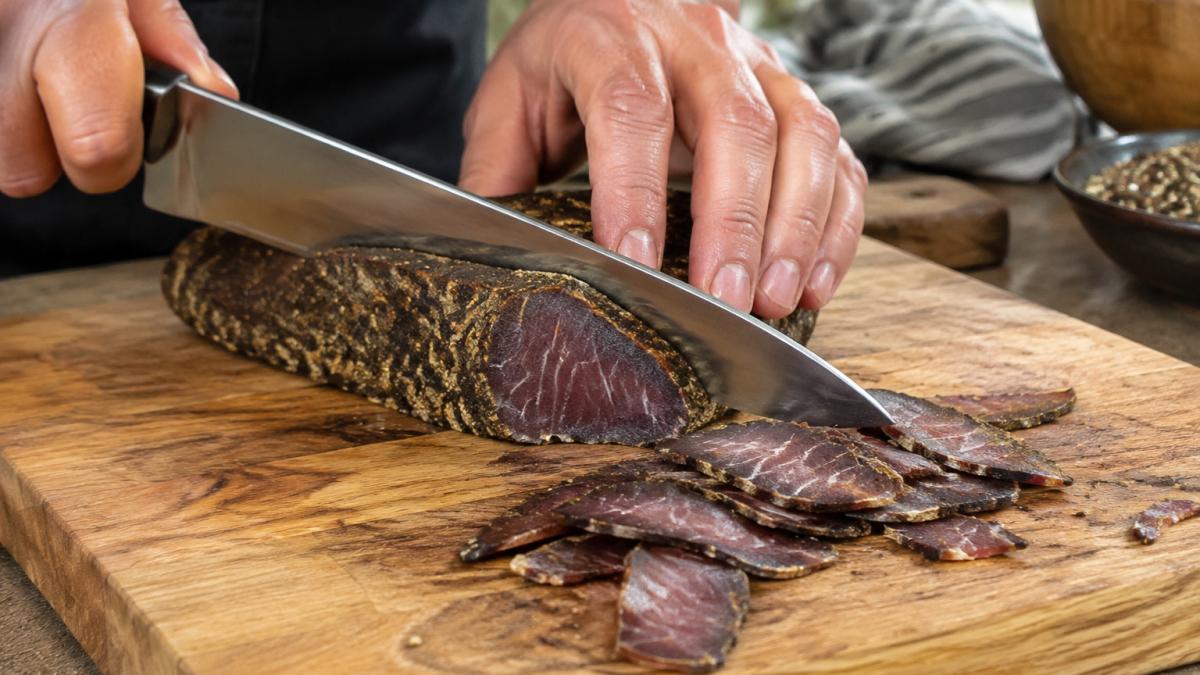
Then follow these steps:
- Lay the biltong flat on your board.
- Find the direction of the fibers.
- Angle your knife so it crosses the fibers at a right angle.
- Draw the blade in one long, smooth stroke rather than sawing.
- Repeat until the whole piece is sliced.
If you cut with the grain, you will get long, stringy strands. Cutting across the grain gives short, tender pieces that are much easier to enjoy.
Getting Consistent Slice Thickness
Even slices cook and taste the same. Uneven slices mean some pieces are too dry while others are still soft.
To keep thickness steady:
- Mark your target thickness on a piece of tape on the blade or board.
- Cut slightly thicker than you want, since biltong can compress a little.
- Use a biltong slicer if you cut often, because the guide keeps every slice the same.
Many home cooks find that the first few slices are the hardest to get right. After that, a steady rhythm makes the rest easier.
Troubleshooting Texture Problems and Blade Care
Most slicing problems trace back to one of three variables: grain direction, blade condition, or the moisture level of the biltong itself. The first two are covered above. The third is the one most guides skip, and it is often the real reason a slice shatters or tears.
Diagnose by how the meat fails, not by how it looks.
- Shattering or crumbling at the cut line (too dry): The biltong has lost so much moisture that the fibers are brittle. A sharp blade still cuts it, but the surface fractures and you get ragged, dusty edges. Fixes: slice slightly thicker than you want, use a longer draw with light pressure rather than pressing down, and let the piece sit in a sealed container for 20-30 minutes before slicing so it picks up a little moisture from the interior. If a whole batch is brittle, a brief rest in a closed bag with a slice of apple or a damp paper towel (not touching the meat) will soften the surface without making it wet.
- Tearing or stretching instead of cutting (too wet): The interior is still soft and the blade drags rather than severs. This is common with thick slabs that were dried unevenly. Fixes: chill the piece for 20-30 minutes before slicing, slightly chilled biltong is firmer and slices thinner and cleaner than room-temperature meat, and reduce downward pressure so the edge does the work. If the piece is genuinely under-dried, slice it and finish the slices in a dehydrator or oven on its lowest setting with the door cracked, checking every 15 minutes.
- Tough slices that are not stringy: Usually grain direction, but check thickness too. A slice over about 1/8 inch on a dense piece will feel chewy even when cut correctly across the grain.
- Uneven pieces: Slow down and use a thickness guide. Freehand slicing drifts most in the last third of a slab, when the piece gets thin and hard to hold.
Honing versus sharpening for cured-meat blades. These are different jobs and most home cooks conflate them.
- Honing realigns a rolled edge. It does not remove metal and does not restore a dull edge. Use a honing steel or a fine ceramic rod with light, consistent strokes at the blade's existing angle, a few passes per side, before each slicing session. On a thin-edged slicing knife, honing every session is normal and extends the time between sharpenings.
- Sharpening removes metal to create a new edge. Do this when honing no longer restores performance, typically when the knife starts tearing rather than slicing even after honing. A whetstone in the 1000- to 3000-grit range is enough for kitchen slicing knives; a finer finish is not necessary for cured meat and can make the edge too fragile for board contact.
- Board contact is the main wear source. A thin edge dulls fastest against hard surfaces. Use a wooden or plastic board, not glass or stone, and avoid scraping the edge across the board after each cut.
Watch out: Honing a knife at the wrong angle rounds the edge instead of realigning it, and a rounded edge crushes biltong rather than slicing it, if honing seems to make the knife worse, stop and sharpen instead of honing harder.
Keep the blade clean and dry after each session.
Serving Biltong Slices at the Right Temperature
Biltong is usually served at room temperature. Cold slices from the fridge feel firmer and hide some of the flavor, so take them out a little before serving.
Once sliced, store leftover pieces in an airtight container in a cool, dry place. Keep them away from heat and direct sun so they keep their texture.
For a simple serving plan:
- Slice just before the guests arrive for the freshest texture.
- Arrange slices on a board with a small bowl for any dry fat trimmings.
- Offer a variety of thicknesses so guests can pick their favorite bite.
Order Shaka Braai Biltong for Your Next Slicing Session
Practice makes slicing easier, and good meat makes the practice worth it. If you want premium biltong to work on, you can shop Shaka's premium biltong and cured meats online, with shipping available across the USA.
Once you have your slices ready, you will taste the difference that clean, even cuts make. Start with a thin slice and work your way up to find the texture you love most.
Frequently Asked Questions
How do you cut biltong, with or against the grain?
Cut biltong against the grain, meaning across the muscle fibers rather than along them. Slicing across the fibers shortens them, so each bite breaks down easily and feels tender. Cutting with the grain leaves long fibers intact, which makes the piece chewier and more likely to tear in strips. Locate the direction of the fibers by looking at the lines running through the meat before you start, and keep your cuts perpendicular to them for the most consistent texture.
How thick should you slice biltong?
Most people slice biltong between about 3 and 6 millimeters thick, which is roughly an eighth of an inch to a quarter inch. Thinner slices feel more tender and melt more easily, while thicker slices give a firmer, meatier bite. Pick a thickness you like and keep it even across the whole slab so every piece chews at the same rate. Slightly thicker cuts hold together better if your biltong is on the softer side.
What is the best knife for slicing biltong?
A long, sharp, non-serrated slicing knife works best, such as a 9- to 12-inch carving or slicing knife. The length lets you make one smooth pass across the slab, which avoids crumbling. A dedicated manual biltong slicer is another option if you slice often and want uniform thickness. Serrated blades tend to tear the meat, so they are generally a poor choice for this task.
Why does biltong crumble when I slice it?
Crumbling usually comes from a dull blade, a sawing motion, or slicing with the grain. Use a sharp knife and draw it in one long, steady stroke rather than pressing down and back. Make sure the biltong is cold or fully dried, since very soft pieces break apart more easily. Keeping your cutting surface stable, for example with a non-slip liner under the board, also helps you apply even pressure.