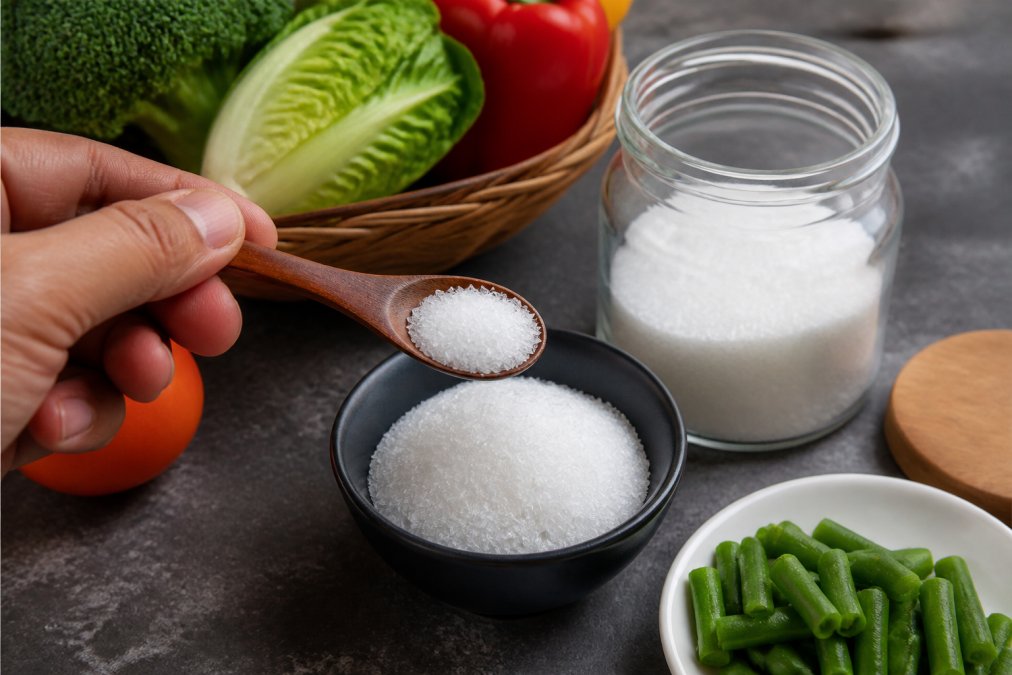
 ultimate-guide
Is MSG Bad for You? Explained (2026 Review)
Table of Contents
- What MSG Is and Why It Got a Bad Reputation
- What the FDA Stance on MSG Safety Actually Says in 2026
- MSG Sensitivity Symptoms: What the Evidence Shows
- Natural vs Synthetic Glutamate: Is There a Real Difference?
- MSG vs Table Salt: Which Has More Sodium?
- MSG in Processed Foods vs Whole Foods
- Culinary Uses: Why Chefs Reach for MSG
- Conclusion: Is MSG Bad for You in 2026?
- Frequently Asked Questions
Last Updated: September 25, 2026
What MSG Is and Why It Got a Bad Reputation
Monosodium glutamate is the sodium salt of glutamic acid, an amino acid found naturally in tomatoes, parmesan, and mushrooms. MSG bad for you fears trace back to a 1968 letter, not to clinical evidence. This guide from Shaka Braai breaks down what the FDA actually says, what trials show, and where the real sodium story sits.
The history of the MSG controversy
The panic started with a single letter to the New England Journal of Medicine in 1968, describing numbness and palpitations after Chinese meals. The author speculated about MSG, cooking wine, and sodium. Only the MSG hypothesis stuck in public memory. Within a decade, the phrase "Chinese restaurant syndrome" had entered common usage, and a food additive became a cultural scapegoat.
The 'Chinese Restaurant Syndrome' myth
The term itself is now widely regarded as misleading and carries a racial undertone that researchers have flagged. A 2018 analysis in the Journal of the American Academy of Nutrition and Dietetics argued the label should be retired. The symptoms it described were never tied to MSG in controlled conditions.
What the FDA Stance on MSG Safety Actually Says in 2026
The FDA classifies MSG as generally recognized as safe (GRAS) under the Federal Food, Drug, and Cosmetic Act, a status it has held since 1958 and has reaffirmed repeatedly. That classification has not changed heading into 2026, and no rulemaking is pending that would alter it. The agency requires "monosodium glutamate" to appear on ingredient labels when it is added, and it notes that a small number of people may report short-term reactions after eating large amounts.
The number most guides skip: the Acceptable Daily Intake
The Joint FAO/WHO Expert Committee on Food Additives set an Acceptable Daily Intake (ADI) for MSG of not specified, meaning the committee found no need to set a numeric ceiling based on available toxicological data. In practice, researchers and dietitians often reference a working benchmark of roughly 30 mg per kilogram of body weight per day drawn from older controlled feeding studies.
How to spot MSG on a label, including the aliases
Federal labeling rules require added MSG to be declared by its full name, but glutamate also arrives in processed foods through ingredients that contain it naturally or as a byproduct of processing. These are not hidden MSG in a regulatory sense, they are simply glutamate-bearing ingredients, but they are what most label-reading guides fail to explain. Common ones include:
- Hydrolyzed vegetable protein (soy, corn, or wheat based)
- Autolyzed yeast extract and yeast extract
- Soy protein isolate and soy sauce
- Worcestershire sauce and many bouillon or stock bases
- Maltodextrin in some savory snack seasonings
What has actually changed by 2026
The short answer is: not much on the regulatory side, and that stability is itself the story. The FDA's GRAS listing has survived every review cycle since the 1990s, and the agency's public position has not shifted. What has changed is the surrounding context, more states and retailers have pushed sodium-reduction labeling, and food manufacturers have leaned harder into umami-based reformulation as a way to cut salt without losing flavor.
MSG Sensitivity Symptoms: What the Evidence Shows
Reported MSG sensitivity symptoms cluster into a recognizable pattern: headache, flushing, tingling or burning around the face and neck, chest tightness, and occasional hives or swelling. Less commonly reported are nausea, sweating, and palpitations. These reactions are typically temporary and resolve on their own within an hour or two, without treatment.
The dose and timing detail most guides leave out
When symptoms have been observed in controlled settings, they tend to follow a specific profile. Reactions are most often reported after consuming a large amount in a short window, commonly cited as 3 grams or more, taken without food. Symptoms typically begin within 15 to 30 minutes and fade within a couple of hours. Eating MSG alongside a meal, or in the small quantities used in normal cooking (often under a gram per dish), does not reliably reproduce them.
Why clinical trials point to the placebo effect
Double-blind studies, where neither participant nor researcher knows which sample contains MSG, consistently show that people who believe they are sensitive react to placebos at similar rates. When subjects are told they received MSG, symptoms spike. When they are not told, the gap closes.
Who is more likely to report sensitivity
A common pattern in the literature is that people who already expect MSG to cause problems, because of family history, prior experience, or cultural messaging, report symptoms at higher rates than people who do not. Asthma and chronic urticaria have been studied as possible risk factors, but controlled trials have not confirmed a consistent link. If you have a diagnosed condition and notice a pattern, that is worth discussing with a clinician rather than self-diagnosing from a symptom list.
What to do if you think you react
Track the dose, the timing, and whether the food was eaten on an empty stomach. Those three variables explain more reported reactions than the ingredient itself. If symptoms are consistent, reproducible, and tied to a specific dose, that is a clinical conversation. If they only appear when you know MSG is present, that is a nocebo pattern, and it is still worth understanding, because it changes what you avoid and why.
Natural vs Synthetic Glutamate: Is There a Real Difference?
No. The glutamate molecule in a tomato and the glutamate in a shaker of MSG are chemically identical. Your digestive system cannot distinguish them. The difference is the delivery: whole foods bring glutamate alongside fiber, water, and other nutrients, while the additive arrives as a concentrated crystalline powder.
| Source | Glutamate Form | Sodium Load | Typical Use |
|---|---|---|---|
| Tomatoes, mushrooms, parmesan | Naturally occurring | Varies by food | Whole-food cooking |
| Soy sauce, fish sauce | Fermentation-derived | High | Marinades, finishing |
| Crystalline MSG | Added, isolated | About one-third of table salt | Flavor enhancer |
| Table salt | Sodium chloride | Highest per gram | General seasoning |
MSG vs Table Salt: Which Has More Sodium?
MSG contains roughly one-third the sodium of table salt by weight. That single fact reframes the entire debate. If your concern is dietary sodium, MSG is the lighter option, gram for gram. Using a small amount of MSG alongside reduced salt can lower total sodium while keeping food palatable, a technique food scientists call sodium reduction through umami.
MSG in Processed Foods vs Whole Foods
Processed foods are where MSG intake adds up, not because the additive is dangerous but because it rides along with high-sodium, high-calorie products. Snack chips, instant noodles, and frozen entrees often combine added MSG with salt, preservatives, and refined oils. The health concern sits with the whole package, not the flavor enhancer alone.
Culinary Uses: Why Chefs Reach for MSG
Chefs use MSG because it delivers umami, the savory fifth taste, faster and more cheaply than any whole ingredient. A quarter-teaspoon in a braise rounds out flavor the way a long simmer would. It sharpens roasted vegetables, deepens broths, and makes low-sodium dishes taste complete.

Conclusion: Is MSG Bad for You in 2026?
The evidence says no for the general population. The FDA maintains its GRAS status, blinded trials keep pointing to the placebo effect, and the sodium math favors MSG over table salt. The real question is not whether MSG is bad for you, but whether the foods carrying it are worth eating.
Frequently Asked Questions
Is it scientifically proven that MSG is bad for you?
No. Decades of peer-reviewed research and clinical trials have not found consistent evidence that MSG is harmful for the general population. The FDA lists it as generally recognized as safe (GRAS). Some people report temporary reactions like headaches after eating large amounts, but controlled studies often show these symptoms also occur with placebos, suggesting sensitivity may not be caused by MSG itself.
What does the FDA say about the safety of MSG?
The FDA classifies MSG as generally recognized as safe (GRAS), the same category as table salt and vinegar. The agency requires food manufacturers to list MSG on ingredient labels when it is added. The FDA has reviewed numerous scientific studies and found no evidence that MSG causes serious health hazards for most people. The FDA stance on MSG safety has remained consistent for decades.
How does MSG differ from naturally occurring glutamates?
Chemically, the glutamate in MSG is identical to the glutamate found naturally in tomatoes, parmesan cheese, mushrooms, and seaweed. Your body metabolizes both the same way. The difference is the source: natural glutamate comes bound in whole foods, while MSG is a purified food additive. Some people prefer whole-food sources for other nutritional reasons, but the glutamate molecule itself is the same.
Are there specific groups of people who should avoid MSG?
Most people can consume MSG without issue. If you notice recurring symptoms after eating foods high in MSG, try tracking your dietary intake and discussing it with a healthcare provider. People managing high blood pressure should watch total sodium, since MSG contains about one-third the sodium of table salt. Anyone with concerns about adverse reactions should seek personalized medical advice rather than avoiding MSG based on anecdotal claims.
Is MSG considered a 'clean label' ingredient in 2026?
It depends on who you ask. Regulatory agencies like the FDA consider MSG safe, but some consumers associate it with processed foods and avoid it for that reason. Brands focused on clean-label products often skip added MSG and rely on naturally occurring glutamate from ingredients like tomatoes or aged cheese. If clean label matters to you, check ingredient lists and look for products that source flavor from whole foods.