 How-to
How Much Food Do You Need for a Large Event?
Last Updated: October 30, 2026
Quick Summary
To estimate food quantities for a large event, start with your guest count plus a 5 to 10 percent buffer, then allow about 6 to 8 ounces of cooked protein and 4 to 6 ounces of starch per adult. Buffet-style service needs an extra 10 to 15 percent. Separate appetizers, desserts and beverages into their own counts.
- Start with your guest count and add a 5 to 10 percent buffer for unexpected guests.
- Plan about 6 to 8 ounces of cooked main protein per adult guest.
- Allow 4 to 6 ounces of starch or grain side per adult guest.
- Plan 6 to 10 small appetizer bites per guest for a cocktail hour.
- Add 10 to 15 percent extra food when service is buffet or self-serve.
Table of Contents
Getting food quantities right takes some math, but the math is simple once you know the rules. This guide walks you through a practical planning method, with worked examples you can copy. Food planning is a guessing game for most hosts, and that is where budgets and guest satisfaction both go wrong.
Most event hosts fail for one of two reasons. They either plan for the wrong number of people, or they treat every guest the same. A toddler does not eat like a linebacker, and a three-hour cocktail reception needs far less than a four-course dinner.
- Too little food leaves guests hungry and reflects poorly on the host
- Too much food drives up costs and creates waste
- A clear method removes most of the guesswork
Keep in mind that food quantities are only one part of the plan. Service style, timing, and dietary needs all shift the numbers, and we cover each of those below.
Start With Your Guest Count and Attendance Buffer
Your guest count is the foundation of every calculation that follows. Start with the number of invitations you send, then adjust for how many people you realistically expect to attend. RSVPs are useful, but plan for a buffer of roughly 5 to 10 percent for walk-ins and plus-ones who were not on the list.
Here is a simple worksheet to get started:
- Write down the total number of invitations sent
- Multiply by your expected response rate (often 70 to 85 percent for weddings, higher for corporate events with mandatory attendance)
- Add a 5 to 10 percent buffer for unexpected guests
- Split the final number into adults and children
For very large events, attendance uncertainty becomes a bigger problem. If you are working with a caterer or vendor, confirm their minimum order and how they handle last-minute headcount changes. Many vendors ask for a final count a few days before the event, and that deadline matters.
Calculating Catering Portions Per Person
Once you have a headcount, convert it into food. Planning guidelines commonly used in the industry suggest a range of total food per adult guest for a full meal, adjusted by menu and event. Treat any figure as a rule of thumb, not a fixed standard, and confirm quantities with your caterer. Liquid refreshments require similar foresight, as calculating the appropriate volume of bulk event beverages ensures that your hydration strategy remains as consistent as your solid food service.
Break the total into courses so you can see where the food actually goes:
- Main protein: about 6 to 8 ounces of cooked meat per adult
- Starch or grain side: about 4 to 6 ounces per adult
- Vegetables or salads: about 3 to 4 ounces per adult
- Bread or rolls: one or two per adult
- Dessert: a small portion, often counted separately from the main meal
Appetizers need their own count. A typical cocktail hour uses 6 to 10 small bites per guest, and the number goes up when there is no dinner served afterward. You can see the actual food menu options to match portions to what is served. Entrée portions and appetizers should never be treated as one calculation, because a guest who fills up on snacks will eat less of the main course.
A common mistake is forgetting that dessert and beverages are separate lines in your budget. To estimate the per-head cost for each line, see the guide on calculating catering cost per head. Dessert is usually a small add-on, while beverages depend heavily on how many guests drink and how long the event runs.
Adjusting Quantities for Event Type, Duration, and Service Style
The same guest count can call for very different food totals. A buffet-style event lets guests take more than they would from a plated meal, so plan a little extra. Compare the trade-offs in full-service vs drop-off catering to see which style fits your event. A seated, plated dinner gives you tighter control, because every portion is measured before it reaches the table.
Duration matters too. Here is how the numbers shift:
- Short events (under two hours): lean toward appetizers and light fare
- Standard events (two to four hours): plan a full meal with sides
- Long events (four hours or more): plan for two service points or extra snacks
Service style changes the picture as well. Self-service stations encourage second helpings, while staffed carving or plated service keeps portions consistent. Beverage service and self-service behavior also affect how fast food disappears.
Watch out: Buffets and self-service lines are the most common place to run short, because guests often go back for seconds. Add a buffer of 10 to 15 percent to the total when service is self-serve.
How Much Food for 50 Guests: A Worked Example
Let's run the full calculation for a 50-guest event. Assume 45 adults and 5 children, a 3-hour buffet-style dinner, and a 10 percent attendance buffer.
Step 1: Adjust the headcount. 50 guests plus a 10 percent buffer gives about 55 guests, which we round to 55 for planning.
Step 2: Split the adults and children. Using the same numbers, that is roughly 50 adults and 5 children after the buffer.
Step 3: Calculate total food. For 50 adults at one pound each, you need 50 pounds of food. For 5 children at half a pound each, you need 2.5 pounds. Total: about 52.5 pounds.
Step 4: Break it down by course. Split the 52.5 pounds across protein, starches, vegetables, and bread using the ratios from earlier. Then add appetizers if they are served.
Step 5: Add a service buffer. Because this is buffet-style, add 10 to 15 percent. That brings the final target to roughly 58 to 60 pounds of food.
Use this as a template. Change the numbers for your own guest count and service style, and the same steps will give you a reliable estimate.
Food Quantities for a Braai: Meat, Sides, and Appetizers
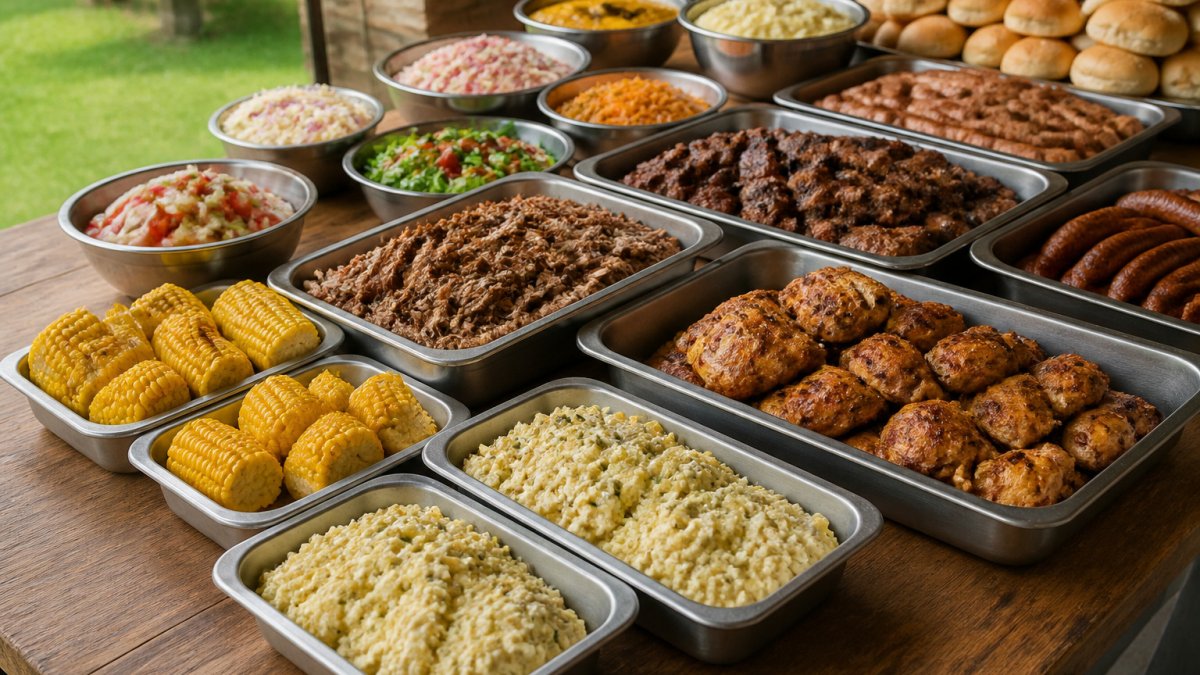
A braai, the South African word for an outdoor barbecue, is built around meat and fire, so the planning is a bit different. Meat is the main draw, and guests expect it to be plentiful. Plan for roughly 8 to 10 ounces of cooked meat per adult when meat is the main course, and add sides to fill out the table.
For a braai, plan these categories:
- Meat: 8 to 10 ounces cooked per adult, more if it is the only main
- Sides: salads, pap or potatoes, and vegetables at about 6 to 8 ounces per adult
- Appetizers: 6 to 10 small bites per guest before the main meal
- Bread and condiments: one or two per adult, plus sauces
Large cuts like whole hog or whole lamb change the math. For a complete walkthrough, read planning your whole hog roast catering event. A whole-animal roast yields a predictable amount of cooked meat, so ask your caterer for the expected yield per animal before you lock in a size. Shaka Braai offers whole hog and whole lamb roasts for weddings, corporate events, and backyard gatherings.
Using a Food Quantity Calculator for a Party, and Planning Your Next Step
Online food quantity calculators can speed up the work. Enter your guest count, event length, and service style, and most tools return a rough total for each food category. Treat the result as a starting point and check it against the worksheet above, because calculators often miss dietary needs and menu mix.
Before you finalize, review these points:
- Confirm the headcount with your caterer or vendor
- Check dietary restrictions and allergies, and plan one or two alternatives
- Plan leftovers and food safety, following your local food safety guidance for holding temperatures
- Decide how you will measure results after the event, so you can adjust next time
We recommend calling for a quote early, especially for large events. Request a call back from the team to talk through quantities for your guest count and service style.
Frequently Asked Questions
How much food do you need for 50 guests?
A common starting point is about one pound of total food per adult and half a pound per child, which puts a 50-guest event at roughly 50 pounds of food if most guests are adults. Adjust that figure for meal format: a buffet with several sides usually needs more total weight than a plated dinner, while a long event with heavy appetizers may need less protein per person. Always add a buffer of about 10 percent for unexpected attendance, and track what is left over after the event to refine your numbers for next time.
How many appetizers should you plan per guest?
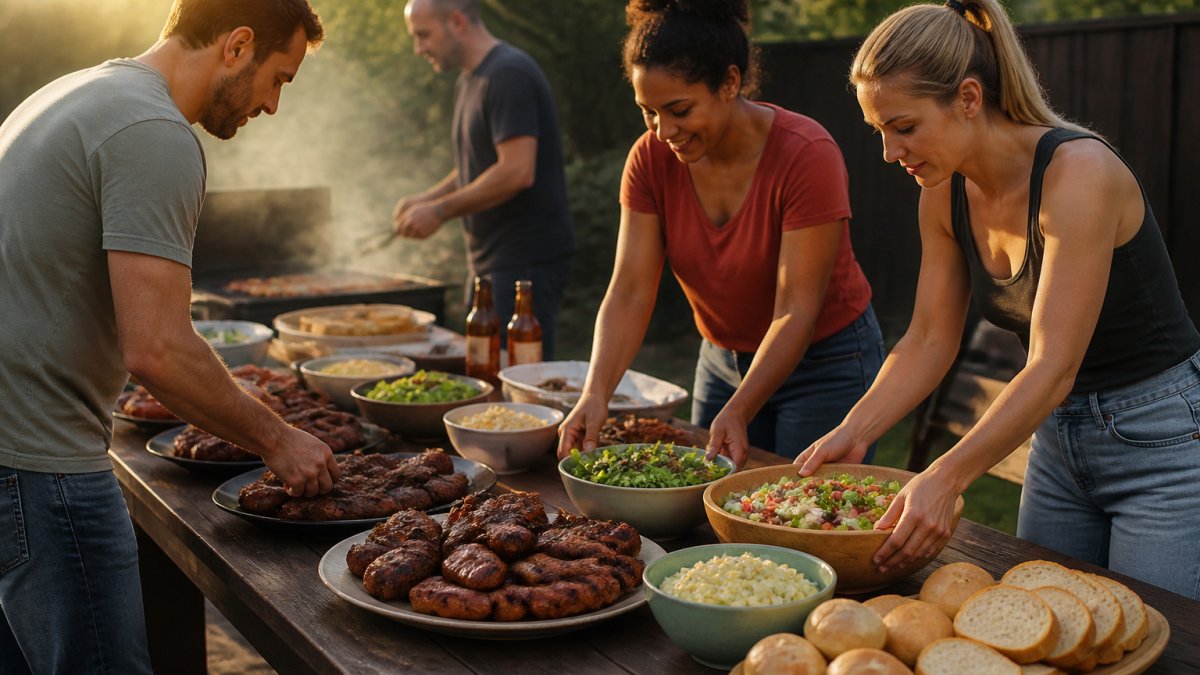
For a cocktail-style reception before a meal, plan roughly 6 to 8 small bites per guest for the first hour and about 3 to 4 per guest for each additional hour. If appetizers are the main meal, plan 12 to 15 pieces per guest. Mix in a few heavier items so guests are not filling up on light bites alone. Adjust downward for events where a full dinner follows shortly after.
How does event length affect food quantities?
Longer events need more food because guests graze over time and expect service to continue. For events over three hours, plan an additional appetizer round or a second light course, and keep the meal portions consistent with your guest count. Shorter events, such as a 90-minute lunch, can rely on a single main course with fewer side dishes. Always confirm the schedule with your caterer or venue before finalizing quantities.
Should I plan extra food for a large party?
Yes, but plan the buffer deliberately rather than doubling everything. Adding 10 percent to your total covers most attendance surprises at private events. Plan containers and cold storage so surplus food can be handled safely.