 How-to
Choosing Meat Cuts for Spit Roasting: A Practical Guide
Quick Summary
The best cuts for spit roasting are roughly cylindrical, tied tightly roasts with even thickness, such as rib roast, prime rib, or ribeye roast, because their fat self-bastes during the long slow turn. Leaner options like topside and silverside also work well when basted or marinated, while chuck is a poor fit for spit roasting.
- Pick a roast that is roughly cylindrical and tied tightly, so it turns without wobbling.
- Buy a roast heavier than needed, since trimming and shrinkage reduce the weight you serve.
- Rib roast, prime rib, and ribeye roast are the most popular and excellent choices for a rotating spit.
- Lean topside and silverside are affordable but need basting or a marinade to stay juicy.
- Pull a roast 5 to 10 degrees below target and rest it 15 to 30 minutes before carving.
Table of Contents
- Why the Cut Matters More on a Spit Than on a Grill
- Comparing Rib Roast, Prime Rib, and Ribeye Roast
- Leaner Options: Sirloin, Topside, and Silverside
- Cut-by-Cut Comparison Table and Pros and Cons for Spit Roasting
- Size, Shape, and Balance: Choosing a Roast That Turns Evenly
- How to Cook a Roast Beef on a Spit, Including Cooking Time per Kg
- Preparing Your Roast: Marinade Options and Trimming
- Booking Your Spit Roast Event With Shaka Braai
- Frequently Asked Questions
Choosing the right cut matters far more on a spit than on a grill. A roast turns slowly for hours, so its shape, fat, and size decide whether it cooks evenly and stays juicy. Whole hog and whole lamb roasts are built for events, and the same principles apply to beef. Here is how to pick a cut that works.
Ask a butcher for a cut that is roughly cylindrical and tied tightly. A loose, flat piece will wobble, cook unevenly, and may slip off the forks. Plan on a roast that is heavier than you need for the meal, since trimming and shrinkage will reduce the weight you serve.
Why the Cut Matters More on a Spit Than on a Grill
On a grill, you can flip a steak and watch the sear. On a spit, the meat rotates slowly in indirect heat for hours, so you cannot fix a bad choice halfway through. The cut you pick sets the cooking time, the texture, and how much fat bastes the meat as it turns.
Comparing Rib Roast, Prime Rib, and Ribeye Roast
These three cuts are close relatives, and they are the most popular choice for a rotating spit. Rib roast and prime rib usually come from the same primal section, and the names often overlap at the butcher counter. Ribeye roast is the boneless version of the same cut and tends to be more uniform in shape.
Rib roast keeps its bones, which help the roast hold its form and add flavor as it cooks. Ribeye roast is easier to tie and balance, but it can cost more per kilogram. Ask your butcher which cut they are selling, because the labels are not always consistent from one store to another.
Leaner Options: Sirloin, Topside, and Silverside
Leaner roasts are a good fit when you want a lower cost per serving. Sirloin roast brings a firm texture and beefy taste, but it has less marbling, so it can dry out if you cook it past medium. Topside and silverside are affordable and hold their shape well on the spit. They are less juicy than rib cuts, so a marinade or a baste helps.
The trade-off is simple. Lean cuts cost less and slice cleanly, but they reward careful timing. Rib cuts forgive a few extra minutes and stay tender.
Cut-by-Cut Comparison Table and Pros and Cons for Spit Roasting
Use this table to compare the main options at a glance. Cost tiers are relative, not quoted prices, because butcher pricing varies by location and season.
| Cut | Tenderness | Fat and Marbling | Shape on the Spit | Cost Tier | Ideal Doneness | Spit Suitability |
|---|---|---|---|---|---|---|
| Rib roast (bone-in) | Tender | High | Good; bones add stability | Higher | Medium-rare to medium | Excellent |
| Prime rib | Tender | High | Good; similar to rib roast | Higher | Medium-rare | Excellent |
| Ribeye roast (boneless) | Tender | High, even | Very good; uniform and easy to balance | Higher | Medium-rare | Excellent |
| Sirloin roast | Moderately tender | Moderate | Fair; needs careful tying | Mid-range | Medium-rare | Good with care |
| Topside | Firmer | Low | Very good; compact | Lower | Medium-rare | Good with basting |
| Silverside | Firmer | Low | Very good; compact | Lower | Medium-rare | Good with basting |
| Chuck | Tough unless slow-cooked | High connective tissue | Variable | Lower | Well done and shredded | Poor on a spit |
Pros and cons for spit roasting:
- Rib roast: Pro: bones add flavor and stability, and the fat cap self-bastes. Con: heavier, pricier, and slower per pound because of the bone.
- Ribeye roast: Pro: balances evenly and carves into uniform slices. Con: costs more per pound and has less bone structure to anchor the forks.
- Sirloin: Pro: firm, beefy taste and clean slices. Con: dries out past medium, so it rewards a thermometer.
- Topside and silverside: Pro: affordable, compact, and slice neatly for a crowd. Con: low fat means they need basting or a marinade and careful timing.
- Chuck: Pro: cheap and flavorful when braised. Con: tough and stringy on a spit unless cooked very slowly and shredded, so it is a poor fit for carving.
Regional cut-name equivalents. Butchers do not use one universal naming system, so the same cut can carry different labels. In the United States, what is often sold as a rib roast or standing rib roast may appear elsewhere as prime rib, and a boneless ribeye roast is the same muscle without the bone. Topside is the American round; silverside corresponds to the outside round or eye of round area depending on the butcher. Sirloin roast in the U.S. usually means the sirloin primal, while in other regions the term can point to a different section of the loin. When you order, describe the muscle and the shape you want rather than relying on the name alone: ask for a tied, roughly cylindrical roast of a stated weight, and confirm whether it is bone-in or boneless.
Watch out: a cut with uneven thickness or loose ends can rotate off-balance and burn on one side, so tie it tightly and check the balance before the fire is lit.
Size, Shape, and Balance: Choosing a Roast That Turns Evenly
A roast needs to sit centered on the spit and rotate without wobble. Look for a shape close to a cylinder, roughly the same thickness from end to end. Avoid pieces with a thin tail that will overcook while the thick middle stays underdone.
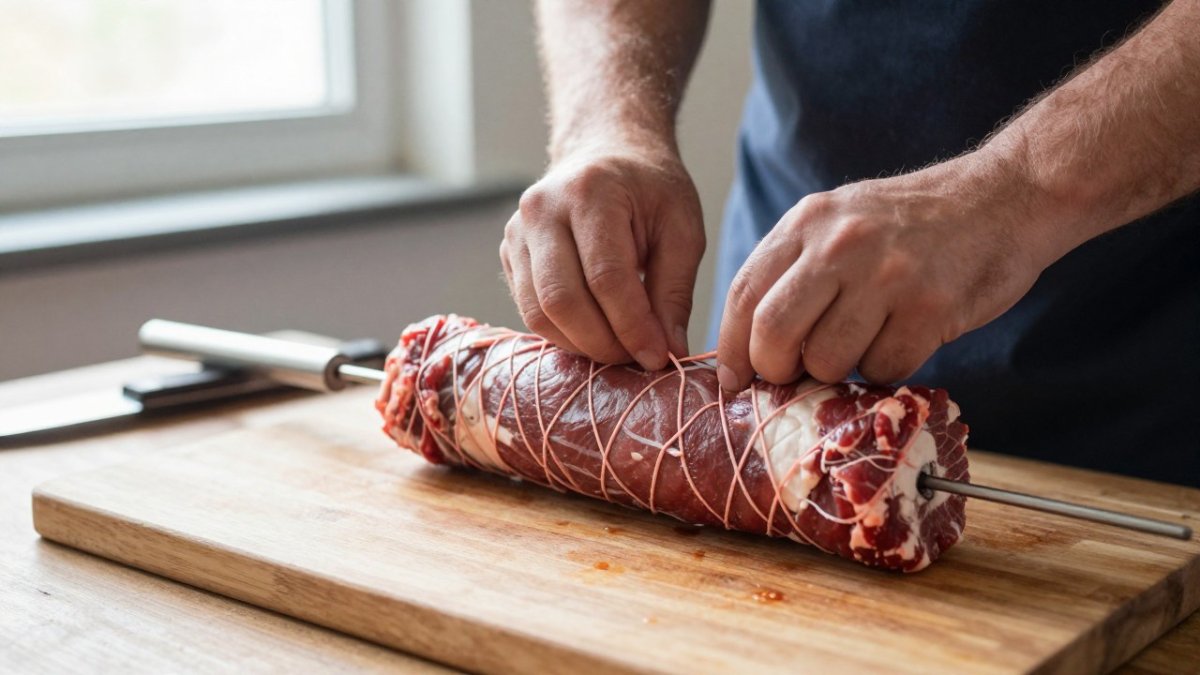
Tie the roast with butcher's twine at regular intervals. Check the balance by resting the spit on two supports before you start the fire. If one end dips, adjust the tying or the position of the forks. For larger events, two smaller roasts often cook more evenly than one very large piece.
How to Cook a Roast Beef on a Spit, Including Cooking Time per Kg
Time is a planning tool, not a doneness test. A rotating roast cooks from the outside in, and the same weight can finish early or late depending on coal bed, wind, lid position, and the cut's fat cover. Use time to know when to start checking, then trust a thermometer. For a deeper walkthrough of hosting a whole-animal roast, see our complete guide to hosting a whole hog roast.
As a rough planning guide for a tied boneless roast on a steady medium spit fire, allow about 20 to 25 minutes per pound for medium-rare, and 25 to 30 minutes per pound for medium. A 10-pound ribeye roast therefore lands in roughly 3.5 to 4 hours for medium-rare, while a lean 6-pound topside may take 2 to 2.5 hours.
Target internal temperatures, pulled from the spit just before the finish line and rested:
- Rare: 120 to 125 degrees Fahrenheit
- Medium-rare: 130 to 135 degrees Fahrenheit
- Medium: 140 to 145 degrees Fahrenheit
- Medium-well: 150 to 155 degrees Fahrenheit
Carryover matters. A large roast will rise another 5 to 10 degrees Fahrenheit while it rests, so pull it 5 to 10 degrees below your target and tent it loosely with foil for 15 to 30 minutes before carving. Resting lets juices redistribute; carving immediately sends them onto the cutting board.
Thermometer placement is where most spit cooks go wrong. Insert the probe into the thickest part of the roast, away from bone, fat cap, and the spit rod itself. On a rotating spit, run the probe cable clear of the turning path and check the reading at the same spot each time. If your thermometer has a leave-in probe, confirm it is rated for the radiant heat near the fire.
Heat management is a separate skill from cut selection. Build a bed of coals split to either side of the drip zone rather than directly under the meat, so fat drips into a drip pan instead of igniting.
Watch out: flare-ups from dripping fat are the fastest way to ruin a spit roast, so keep the coal bed offset, use a drip pan, and keep a spray bottle of water nearby for small flare-ups rather than dousing the fire.
Rotate at a slow, even speed so the surface bastes itself in its own fat. If one side is browning faster, the roast is off-balance or the fire is uneven; fix the balance or the coal distribution rather than speeding up the spit.
Preparing Your Roast: Marinade Options and Trimming
Trim excess hard fat but leave a thin layer, since it bastes the meat as it turns. Pat the roast dry before seasoning so the surface browns rather than steams.
For lean cuts, a marinade adds moisture. Simple options include olive oil with garlic, rosemary, and black pepper, or a mix of vinegar, mustard, and brown sugar. Marinate overnight in the refrigerator. Keep sugary marinades away from the final hour of cooking, since they can scorch.
Booking Your Spit Roast Event With Shaka Braai
If you would rather not manage a spit yourself, Shaka Braai handles whole hog and whole lamb roasts for weddings, corporate functions, and backyard parties, with professional staff to serve your guests. Our family-owned business has more than 20 years of experience. If you are weighing your options, compare full-service and drop-off catering to see which fits your event before booking. For a full look at what we offer, see our Full Catering Menu. To ask about dates and a quote, call Shaka's BBQ for a free estimate. You can also learn more about Shaka's BBQ events before you decide. Pricing depends on quantity, dates, and delivery, so contact us for current figures.
Frequently Asked Questions
What is the best cut of beef to spit roast?
Rib roast and ribeye roast are the most reliable choices for spit roasting because they have even marbling, a compact cylindrical shape, and enough fat to stay juicy over a long, slow cook. Sirloin is a leaner option that works well if you prefer less fat, but it needs careful timing to avoid drying out. Topside and silverside are affordable and hold their shape well, though they are less tender and benefit from a marinade. Avoid chuck, which is full of connective tissue that stays tough unless braised slowly. Choose based on your budget, the number of guests, and how much fat you want in the finished roast.
What meat can you spit roast?
Beef roasts, whole lamb, pork shoulder, pork leg, and whole hog are all common choices for spit roasting in the United States. Beef rib and sirloin roasts are popular for smaller gatherings, while whole lamb and whole hog suit larger events. Chicken and turkey are also spit roasted, but they cook faster and need different timing. Whichever meat you choose, the key is a cut that is compact, reasonably uniform in shape, and balanced on the spit so it rotates evenly over the heat source.
How long does a rotisserie beef roast take to cook?
Cooking time depends on the weight of the roast, the heat of your rotisserie, and how far the meat sits from the heat source. As a general guide, plan roughly 20 to 30 minutes per pound at a steady medium heat, but always check with a meat thermometer. Pull a medium-rare roast at 130 to 135 degrees Fahrenheit internal temperature and rest it for 15 minutes before carving. Because every spit and grill behaves differently, treat any time estimate as a starting point rather than a guarantee.
Should you tie a roast before spit roasting?
Yes, tying a roast with butcher's twine is recommended before spit roasting. Tying helps the roast keep a uniform cylindrical shape so it turns evenly on the spit and cooks at the same rate on all sides. It also keeps loose pieces of meat from falling off during rotation. Tie at regular intervals along the length of the roast, snug enough to hold its form but not so tight that it constricts as the meat expands during cooking.