 How-to
How to Keep Whole Hog Meat Moist While Roasting
Last Updated: November 7, 2026
Quick Summary
To keep whole hog meat moist, brine or inject the thickest cuts with a salt solution, then cook low and slow at a steady 225°F to 275°F. Place shoulders and hams where heat is gentlest, and pull the loin early at 145°F so the whole hog stays juicy.
- Keep the pit steady, ideally near 250°F, rather than running hot.
- Probe shoulders and hams to 195°F to 205°F for tender, juicy meat.
- Pull the loin at 145°F and rest it covered while the shoulders finish.
- Inject the thickest shoulder and ham cuts slowly in several spots.
- Dry the skin well and finish at 350°F to 400°F for the last 20 to 30 minutes.
Table of Contents
- Why Whole Hog Meat Dries Out and Where Moisture Is Lost
- Preparing the Hog: Cleaning, Scalding and Removing Surface Moisture
- Pig Brine Recipe and Injection Ratios That Lock in Juice
- How to Season a Whole Pig for Roasting Without Drying the Surface
- Setting Up a Pit or Cooker and Choosing Heat Placement
- How Long to Slow Cook a Whole Pig and Managing Cooking Temperature
- Troubleshooting Dry Meat by Cut and Holding Your Hog Safely
- Booking Shaka Braai for Your Next Whole Hog Roast
- Frequently Asked Questions
Why Whole Hog Meat Dries Out and Where Moisture Is Lost
Whole hog roasting is one of the most rewarding cooking projects you can take on, but it is also one of the easiest to ruin. A pig is a large animal, and its meat varies a lot from one cut to the next. The shoulders and hams hold a lot of fat and connective tissue, while the loin and ribs are leaner and dry out faster. A common problem with whole hog roasts is that the outside looks perfect while the inside turns dry and stringy.
Moisture escapes in three main ways. First, heat drives water out of the surface. Second, long cooks render fat and tighten muscle fibers. Third, meat that rests poorly or sits too long on a hot cooker keeps losing juice after it leaves the heat. Knowing where the moisture goes makes it much easier to stop it.
- Surface evaporation: dry skin and exposed meat lose water fast in hot air.
- Muscle tightening: proteins squeeze out liquid when they get too hot, too quickly.
- Carryover cooking: meat keeps cooking after you pull it, which pushes out more juice.
Preparing the Hog: Cleaning, Scalding and Removing Surface Moisture
Good results start before the fire is lit. Clean the hog well, rinse out the cavity, and pat every part dry with paper towels. Wet skin steams instead of crisping, and extra surface water slows browning and can lead to uneven cooking.
Scalding helps loosen the hair and skin so the finished skin can crisp. Many cooks also remove excess fat from the cavity and around the neck, since this fat can flare up and burn. Keep the hog cold until you are ready to cook, and make sure your prep surfaces and hands are clean to protect food safety.
A quick checklist before cooking:
- Rinse the cavity and pat dry with paper towels
- Trim loose fat that could flare up
- Score the skin lightly so seasoning can reach the meat
- Keep the hog chilled until the cooker is hot
Pig Brine Recipe and Injection Ratios That Lock in Juice
A pig brine is one common way to help keep whole hog meat moist. Salt helps muscle proteins hold onto water, so the meat can stay juicier even after long cooking. Chill the brine completely before it goes near raw meat.
For injection, use a lighter mix so the liquid spreads evenly. Many cooks inject a lighter salt solution into the thickest parts of the shoulders and hams. Inject slowly in several spots rather than all at once, so the liquid does not pool and leak out.
Always keep brine and injected meat refrigerated and follow standard food-safety guidance from the USDA's Food Safety and Inspection Service at fsis.usda.gov.
How to Season a Whole Pig for Roasting Without Drying the Surface
Seasoning should add flavor without pulling moisture out of the skin. Rub the outside with a mix of salt, black pepper, garlic powder and a little brown sugar, but keep the rub on the lighter side. Heavy sugar can scorch over long cooks and dark crusts can turn bitter.
Apply the rub after the brine has rested, and leave the hog uncovered in the fridge for a few hours so the surface firms up. Then season again lightly just before cooking. Working in layers gives you a flavorful surface without drying out the meat underneath.
Setting Up a Pit or Cooker and Choosing Heat Placement
Heat placement matters as much as seasoning. Put the thickest cuts, the shoulders and hams, closest to the heat source's gentler side, because they need more time to become tender. The loin and ribs are leaner and should sit farther from direct heat so they do not overcook.
Keep the cooker steady rather than hot. For the full event logistics beyond the cooking setup, see our complete guide to hosting a whole hog roast. Use a consistent bed of coals, add fuel in small amounts, and avoid large temperature swings. Wind, weather and cooker type all change the picture, so expect to make adjustments. Cold, windy days pull more heat away, and thin-walled cookers run hotter on the side nearest the fire.
The article's guidance on where each cut should sit relative to the heat can be summarised like this:
| Cut | Heat placement | Reason |
|---|---|---|
| Shoulders and hams | Gentler side of heat | Thickest cuts need more time to become tender |
| Loin and ribs | Farther from direct heat | Leaner, so they overcook easily |
How Long to Slow Cook a Whole Pig and Managing Cooking Temperature
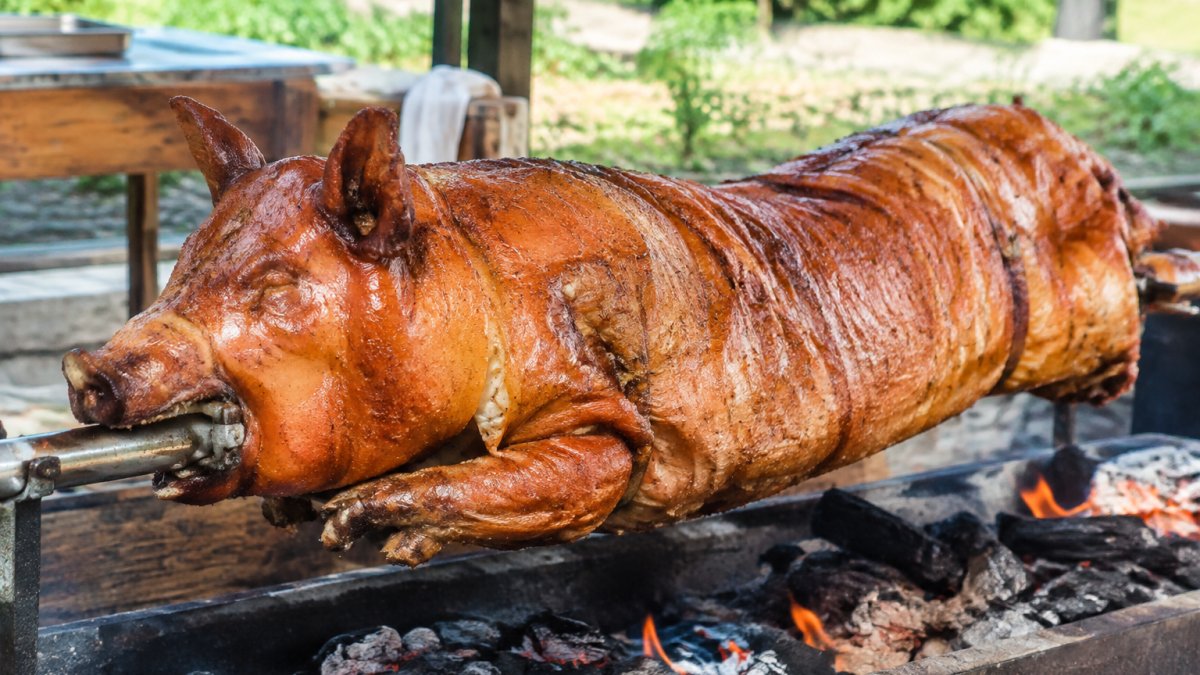
Low and slow is the core rule for keeping whole hog meat moist, but "low and slow" only works when you can measure it. The goal is a steady pit temperature in the 225°F to 275°F range for most of the cook, with the thickest cuts, shoulders and hams, positioned where the heat is gentlest and most consistent.
Plan cooking time by weight, then verify with a thermometer. Wind, ambient temperature, cooker insulation, and how often the lid comes off all change how long the cook takes, so build in extra time and hold the finished hog warm rather than rushing the cook.
Thermometer placement matters as much as the reading. Use a leave-in probe in the thickest part of a shoulder and another in a ham, inserted so the tip sits in the center of the muscle and not against bone or in a fat pocket, bone conducts heat and will read high, and fat reads low. Check the loin separately with an instant-read thermometer, because it will finish long before the shoulders.
Doneness targets by cut:
- Shoulders and hams: 195°F to 205°F for pulled, sliceable-tender meat; connective tissue breaks down in this range and the meat stays juicy.
- Loin: 145°F, then rest; carryover will push it a few degrees higher. Pull it early and hold it covered.
- Ribs and belly: 190°F to 200°F if you want them tender, or pull earlier for a firmer bite.
- Skin: crisp at 350°F to 400°F for the final 20 to 30 minutes, or finish it separately over direct heat.
Watch out: pulling the hog when the shoulders read 165°F to 175°F is the single most common cause of tough, dry whole hog, the meat is safe at that point but the collagen has not yet converted, so it will slice dry and stringy.
Keep the cooker temperature steady rather than chasing big swings. Add fuel in small amounts, pre-light charcoal in a chimney, and use a water pan or a heat diffuser between the fire and the meat to soften radiant heat. On cold, windy days, expect to burn more fuel and to rotate the hog more often; on a thin-walled offset smoker, the firebox side can run 50°F hotter than the stack side, so turn the hog every few hours.
Pork Cut Doneness Targets in Degrees Fahrenheit
Troubleshooting Dry Meat by Cut and Holding Your Hog Safely
Dry meat on a whole hog often traces back to a few common causes: the cut was cooked past its target, the heat was too high or too direct, the meat was not rested, or it sat on the cooker after it was done.
Loin and tenderloin. These are the leanest cuts and the first to dry out. If the loin is chalky, it was overcooked, pull it at 145°F and rest it covered while the shoulders finish.
Shoulders. Dry, stringy shoulder usually means it was pulled too early, before the connective tissue broke down, or the pit ran too hot and the outside dried before the center rendered. The fix is more time at 225°F to 250°F, not more heat.
Hams. Hams dry out when they are cooked to slicing temperature but held on the heat too long, or when the injection did not reach the center.
Ribs and belly. These dry out fast because they are thin. If the ribs are dry, they were likely exposed to direct heat or cooked past 200°F. Wrap them in foil with a splash of liquid for the last hour, or move them to a cooler zone.
Skin. Soft, rubbery skin means the surface was wet or the pit ran too cool; chewy skin means it was cooked at low heat the whole time.
Holding the hog safely is the other half of moisture management. Cooked pork should be held at 140°F or above if it will sit before serving; a 140°F holding cabinet or a cooler with heated bricks works, and a probe thermometer in the thickest cut confirms it.
Watch out: wrapping a hot hog tightly in foil and leaving it in a cooler for hours will keep it warm, but it also traps steam and turns crisp skin soggy, vent the foil or leave a corner open if skin matters to you.
Booking Shaka Braai for Your Next Whole Hog Roast
Managing moisture, heat and timing for a whole hog takes practice, experience and a lot of hours by the fire. If you would rather let a team handle it, Shaka Braai, a family-owned business with over 20 years of experience, specializes in whole hog and whole lamb roasts for weddings, corporate events and backyard gatherings. Our professional staff handles the cooking and serving so you can focus on your guests.
Pricing depends on guest count, event date and delivery details, so the best next step is to see our full catering menu and then contact Shaka's BBQ for a free estimate. You can also read our whole hog roast catering planning guide to see what goes into a successful event. For background on the health and handling side of cured meats, read our guide to whether biltong is healthy. Once you are ready, request a call back and we will talk through your event.
Frequently Asked Questions
How to keep roast pork from drying out?
Keep the heat low and steady, usually between 225 and 275 degrees Fahrenheit, and avoid opening the cooker more than needed. Brining or injecting the meat before cooking adds moisture that helps it stay juicy. Track the internal temperature of the shoulders and hams with a probe thermometer, and pull the meat once the thickest parts reach a safe temperature. Letting the hog rest and then holding it wrapped in towels in a cooler keeps the juices in the meat rather than on the cutting board.
Should you brine a whole hog before roasting?
Brining is one of the most effective ways to keep a whole hog moist, especially in the lean loin and ribs that dry out first. A basic pig brine recipe uses salt, sugar and aromatics dissolved in water, and the hog needs enough time to absorb it, often overnight in a food-safe container kept refrigerated. Injection works faster for thick cuts like the shoulders and hams. Always keep the brine cold and follow a tested ratio so the meat is seasoned evenly without becoming overly salty.
How long should a whole hog rest after roasting?
A whole hog should rest for at least 30 to 60 minutes after it comes off the heat, and larger hogs can rest longer while staying wrapped in towels or insulated blankets. Resting lets the juices redistribute through the muscle so they do not run out when you carve. If the hog will be held for service, keep it above 140 degrees Fahrenheit or refrigerate it promptly within food-safety limits, and never leave cooked meat at room temperature for more than two hours.
How do you know when a whole hog is safely cooked?
The USDA recommends cooking fresh pork to an internal temperature of 145 degrees Fahrenheit, measured with a food thermometer in the thickest part of the meat away from bone. For a whole hog, check the shoulders, hams and loin in several places because thickness varies widely. Juicy, pull-apart texture in the shoulders is common at higher temperatures, but the minimum safe temperature is the key check before serving.