 How-to
Is Biltong Legal in the US? A Complete Guide
Table of Contents
- Is Biltong Legal to Eat and Buy in the United States?
- Bringing Biltong Into the US: What You Need to Know
- CBP Food Declaration Rules at the Border
- Why Beef and Cured Meat Imports Are Restricted
- Where to Buy Biltong in the US Legally
- Biltong vs. Beef Jerky: Key Differences
- What Happens if Biltong Is Seized at Customs
- Frequently Asked Questions
Last Updated: October 14, 2026
Is Biltong Legal to Eat and Buy in the United States?
Is biltong legal in the US? Yes, biltong is legal to eat and buy in the United States. You can purchase USDA-approved biltong from domestic producers and specialty food retailers without legal issues.
At Shaka Braai, we've spent over 20 years navigating these distinctions. The short answer is straightforward; the longer answer depends on what "legal" means in context.
To answer the question, is biltong legal in the US?, domestically produced biltong that meets USDA standards is legal to buy, sell, and eat.
The question gets more complex when importing biltong or bringing it back from a trip, where federal regulations change the rules significantly.
Bringing Biltong Into the US: What You Need to Know
Bringing biltong across the border is where most travelers run into trouble. The rules are strict, enforcement is real, and, critically, admissibility is not determined by whether the product is biltong. It is determined by the animal species the meat came from, the country or region of origin, and that region's current animal-disease status.
The Framework: Species + Origin + Disease Status
USDA Animal and Plant Health Inspection Service (APHIS) rules govern meat entering the country, applied by a CBP officer at the port of entry. Three variables drive the outcome:
- Species. Beef, pork, poultry, game (venison, kudu, springbok, ostrich), and others fall under different rules. Poultry or ruminants from a region with an active disease outbreak face tighter restrictions than the same product from a clean-status species and region.
- Origin. The country, and sometimes the region, where the animal was raised and the product processed matters. Biltong from a region recognized as free of a relevant disease is treated differently from one where that disease is present.
- Current disease status. APHIS maintains country and regional disease-status lists that change over time. A region eligible two years ago may not be today, which is why dated blog posts and traveler anecdotes are unreliable, the answer depends on the status the day you cross.
There is no single yes-or-no answer for 'can I bring biltong in?' Check current APHIS and CBP guidance for your product's specific species and origin before you travel.
Personal Import Rules for Travelers
For personal use, the practical path is narrower than many travelers assume. A few general patterns hold:
- Commercially produced, shelf-stable, sealed product from an eligible origin is most likely to be admitted if declared and inspected. 'Commercially produced' means a licensed facility, sealed retail packaging, and a label identifying the product, species, and country of origin.
- Homemade, unpackaged, or repackaged biltong is generally not admissible. Inspectors cannot verify the species, source animal's health status, or preparation conditions, so it is typically refused and destroyed.
- Drying or curing does not, by itself, make meat admissible. This is the most common misconception. Biltong is air-dried and salt-cured, but that does not exempt it from species- and origin-based rules; a dried product from an ineligible origin is still ineligible.
- Species matters beyond beef. Biltong is made from beef, game, poultry, pork, and other species. Do not assume beef rules apply identically to game or poultry, each species has its own disease-risk profile and admissibility conditions.
A Practical Traveler Checklist
Before you pack biltong for a trip into the country, work through these steps:
- Identify the species. Read the label or ask the producer, 'meat' is not enough.
- Identify the origin. Country, and region if the producer can tell you.
- Check current eligibility. Look up APHIS and CBP guidance for that species and origin close to your travel date, since status can change.
- Confirm the packaging. Sealed, original retail packaging with a legible label showing product name, species, ingredients, and country of origin.
- Declare it on your customs form. Biltong is both a food and an agricultural product.
- Present it for inspection. Keep it accessible, carry-on is easier than checked baggage, and follow the officer's instructions.
- Accept the outcome. If the officer rules it inadmissible, it will be seized and destroyed, an administrative action, not criminal, provided you declared it honestly.
Check current APHIS animal product import guidance for your species and origin Review CBP's traveler guidance on declaring food and agricultural products
Commercial Import Restrictions
Commercial import is far more demanding than a personal supply. An importer generally needs:
- A foreign facility meeting USDA Food Safety and Inspection Service (FSIS) equivalence requirements for the species and product
- An import permit or eligibility determination from APHIS for the species and origin
- Official inspection certificates from the country of origin
- FDA food-safety, labeling, and facility-registration compliance
- Documentation tracing the product from source animal to shipment
Most commercially imported biltong comes from facilities that already cleared these hurdles. The paperwork and costs are significant, which is why many domestic producers make USDA-inspected biltong locally instead.
CBP Food Declaration Rules at the Border
Understanding what to declare prevents problems. U.S. Customs and Border Protection doesn't want to catch you breaking rules, they want you to declare what you're bringing so they can assess it.
At a port of entry, you fill out a customs declaration form asking about food and agricultural items. Biltong falls into both categories, a food product made from an agricultural commodity (beef).
Be honest on your declaration, lying on a customs form carries consequences beyond losing your biltong, including fines or other penalties.
If you declare biltong, a CBP officer examines the packaging, label, and condition.
The inspection takes a few minutes. You won't face trouble if you're honest and the product meets standards.
Why Beef and Cured Meat Imports Are Restricted
Restrictions on importing beef and cured meat exist for one reason: animal disease prevention.
Foot-and-mouth disease, bovine spongiform encephalopathy (mad cow disease), and other animal diseases can devastate herds.
Many countries have different disease statuses, and some regions carry livestock diseases that don't exist here. Importing meat from those regions risks introducing them.
This is why the rules are strict. It's not about the safety of eating the biltong itself. It's about protecting American livestock from foreign diseases.
Customs agents take the risk seriously, confiscating meat products regularly, even from travelers who don't understand the rules. The agency would rather destroy a traveler's biltong than risk an outbreak.
Where to Buy Biltong in the US Legally
The easiest way to enjoy biltong legally is to buy it domestically. Several options exist for finding quality biltong without crossing any borders.
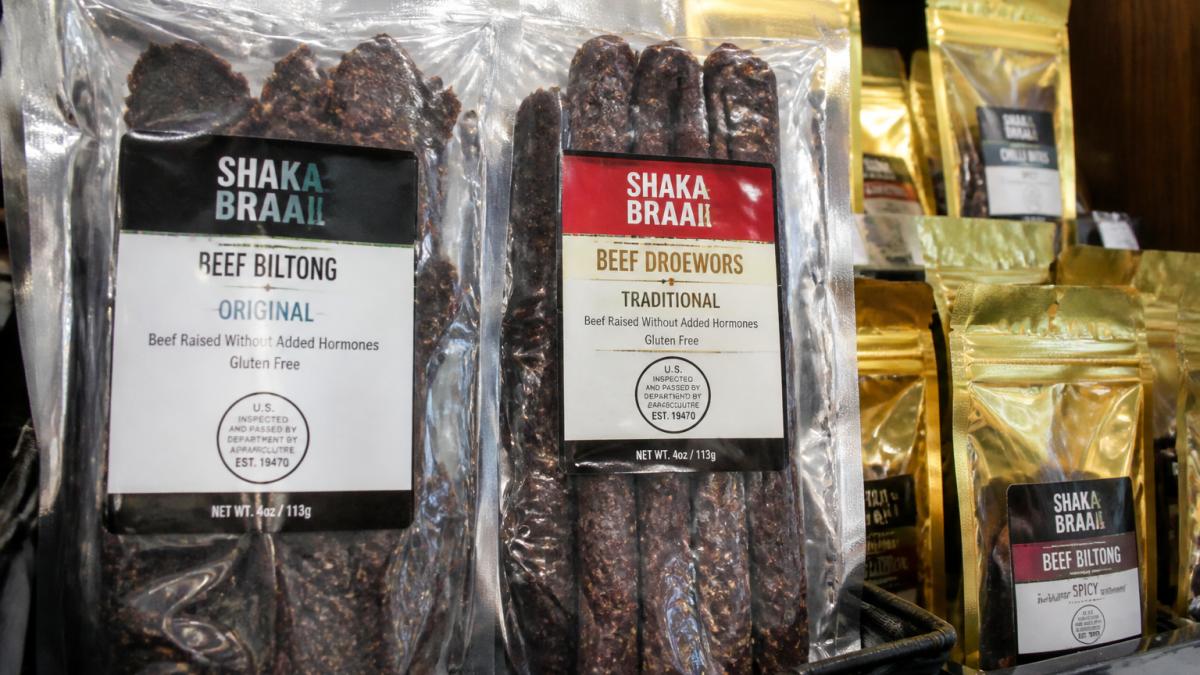
Specialty food shops in areas with South African communities often stock biltong, major cities with large expatriate populations have multiple options, and online retailers ship nationwide.
Shaka Braai offers USDA-approved biltong and droewors that meet all domestic food safety standards. Our products are made with fresh, locally sourced ingredients and no preservatives.
Other retailers and online shops also offer compliant biltong.
Domestic biltong often costs more than imported alternatives, but you're paying for guaranteed legality and food safety, and supporting local producers who follow the regulations.
Biltong vs. Beef Jerky: Key Differences
The difference between biltong and beef jerky helps explain why import rules matter. They're similar products with important distinctions.
Beef jerky is dried beef, seasoned and smoked or heat-dried.
Biltong is cured beef dried with air and salt.
That difference matters for imports. Beef jerky, heated during processing, raises fewer food safety concerns; biltong, air-dried without heat, carries more perceived risk to regulators.
Both are shelf-stable and safe when made properly, but customs treats them differently: beef jerky from most countries passes more easily than biltong because heat processing adds a safety margin.
This is why some travelers find it easier to bring back beef jerky than biltong. The regulatory risk is lower.
What Happens if Biltong Is Seized at Customs
Seizure is the outcome travelers fear most and misunderstand most. The consequences depend almost entirely on whether you declared the biltong.
Declared but Not Admissible
If you declare your biltong and the officer rules it inadmissible, the item is seized and destroyed. This is an administrative action, not criminal: you will not be charged, and ordinarily not fined. The officer is applying APHIS and CBP rules to your item, the refusal is about the product, not you.
The biltong is destroyed, not resold, donated, or returned, eliminating any animal-disease risk it might have carried.
Undeclared and Discovered
If you don't declare the biltong and it's found, during baggage screening, secondary inspection, or a canine sweep, the situation changes. Failing to declare agricultural products violates federal law, and CBP can assess civil penalties depending on whether the failure looks like a mistake or deliberate concealment. Serious cases can bring criminal penalties.
The practical difference is stark: a declared, refused item costs you the biltong; an undeclared, discovered item can cost the biltong plus a monetary penalty and affect your trusted-traveler status in programs like Global Entry.
What the Officer Is Actually Checking
When an officer examines declared biltong, the questions are concrete:
- What species is the meat?
- Where was the animal raised and the product processed?
- Is that origin currently eligible for that species?
- Is the packaging sealed, original, and labeled?
- Is there any sign of spoilage, contamination, or tampering?
If the answers line up with current eligibility, the item is typically admitted; if any answer is missing or the origin is ineligible, it is refused. The officer is not judging whether biltong is 'safe to eat', the test is whether it meets species- and origin-based admissibility rules.
Why the Rules Are Enforced This Way
The restrictions keep foreign animal diseases out of U.S. livestock. Foot-and-mouth disease, African swine fever, and others can devastate herds and cost the agriculture industry billions. They generally don't harm humans who eat the meat, which is why the rules feel counterintuitive to a traveler holding a sealed, shelf-stable snack, the risk being managed is to animals, not you.
That is also why drying and curing create no exemption: a dried product can still carry disease risk if it came from an animal in a region where that disease is present.
If You Are a Frequent Traveler
The reliable strategy is buying biltong produced domestically under USDA inspection. Domestic product has already cleared U.S. food-safety and inspection requirements, so there is no border question. To bring back a specific product from abroad, use the checklist above to reduce the chance of a refused item.
Frequently Asked Questions
Can you bring biltong into the US from South Africa?
Personal travelers cannot bring biltong purchased abroad into the US, even in carry-on or checked luggage. The USDA prohibits all beef and cured meat products from most countries, including South Africa, due to animal disease risks. Commercial imports also face strict restrictions. If you attempt to bring it through customs, the product will be confiscated. The safest option is to purchase USDA-approved biltong produced domestically or by authorized importers.
Is biltong legal to buy in the United States?
Yes, biltong is legal to buy in the US when it's produced domestically or imported by authorized commercial operations that meet USDA food safety standards. Look for products with clear USDA approval labeling, country of origin statements, and packaging that indicates compliance with US food safety regulations. Specialty food shops, online retailers, and South African delis often carry legal, inspected biltong. Always verify the product meets USDA standards before purchasing.
What is the difference between biltong and beef jerky?
Biltong and beef jerky are both dried cured meats, but they differ in preparation and flavor. Biltong uses vinegar and spice curing, then air-dries slowly, resulting in a tender, moist texture with bold spice flavors. Beef jerky is typically marinated, then heat-dried, creating a chewier texture and often a sweeter taste. Biltong's traditional South African recipe and curing method give it a distinctive character that sets it apart from American-style beef jerky.
What should I declare at customs if I have meat products?
You must declare all meat and animal products at customs, even if you believe they're allowed. CBP officers will examine and test your declaration. Undeclared meat products carry penalties including fines and confiscation. Be honest about the product type, country of origin, and whether it's packaged or homemade. Officers assess risk based on animal disease prevalence in the source country. Declaring gives you the best chance of avoiding penalties, though most beef products will still be seized.