 Comparison
Natural Alternatives to Sodium Nitrite in Meat
Table of Contents
- Why Sodium Nitrite Is Used in Cured Meat
- Nitrate vs. Nitrite in Meat: Understanding the Difference
- Plant-Based Curing: Celery Powder in Cured Meat
- Starter Cultures and Fermentation in Natural Curing
- Curing Meat Without Nitrites: Is It Truly Possible?
- How to Cure Meat Safely: Key Considerations
- Natural Alternatives to Sodium Nitrite: A Practical Comparison
- Health Concerns and What the Evidence Shows
- Frequently Asked Questions
Last Updated: October 10, 2026
Why Sodium Nitrite Is Used in Cured Meat
Sodium nitrite has been the standard curing agent in processed meats for over a century. It serves multiple critical functions that go beyond just adding flavor. When you cure meat with sodium nitrite, you're addressing genuine food safety challenges that have shaped how we preserve and process protein.
The primary reason sodium nitrite exists in cured meat is pathogen control. It inhibits the growth of Clostridium botulinum, the bacterium responsible for botulism, a potentially fatal foodborne illness. Nitrite also prevents spoilage organisms from multiplying, which extends shelf life and maintains product safety during storage and transport. Beyond safety, sodium nitrite fixes the pink-red color that consumers expect in cured products like bacon, ham, and salami. Without it, these products would turn an unappetizing gray-brown.
We understand why conventional curing methods rely on sodium nitrite, it's proven, effective, and well-understood across the food industry. However, consumer demand for cleaner labels and fewer synthetic additives has driven serious exploration into natural alternatives to sodium nitrite in meat. The challenge isn't replacing the ingredient; it's replacing all three functions simultaneously: safety, color, and flavor.
Nitrate vs. Nitrite in Meat: Understanding the Difference
Sodium nitrate and sodium nitrite are chemically distinct compounds that play different roles in meat curing, though they're often confused because one converts into the other.
Sodium nitrate is a slower-acting curing agent used primarily in long-cured products like dry-aged salami and aged charcuterie. It requires time and bacterial action to convert into nitrite, making it unsuitable for products that need quick preservation. Sodium nitrite, by contrast, works immediately.
The critical conversion happens through bacterial action and natural processes. Certain microorganisms reduce nitrate into nitrite through enzymatic activity. This is why starter cultures, beneficial bacteria added during fermentation, are central to natural curing methods. When you use celery powder or other plant-derived nitrate sources, you're relying on this microbial conversion to generate the nitrite you need for safety and color development.
Understanding this distinction matters when evaluating natural alternatives to sodium nitrite in meat. A product labeled "no added nitrite" might still contain nitrate that becomes nitrite during processing. A truly "nitrite-free" product avoids both compounds entirely, which creates entirely different food safety requirements.
Plant-Based Curing: Celery Powder in Cured Meat
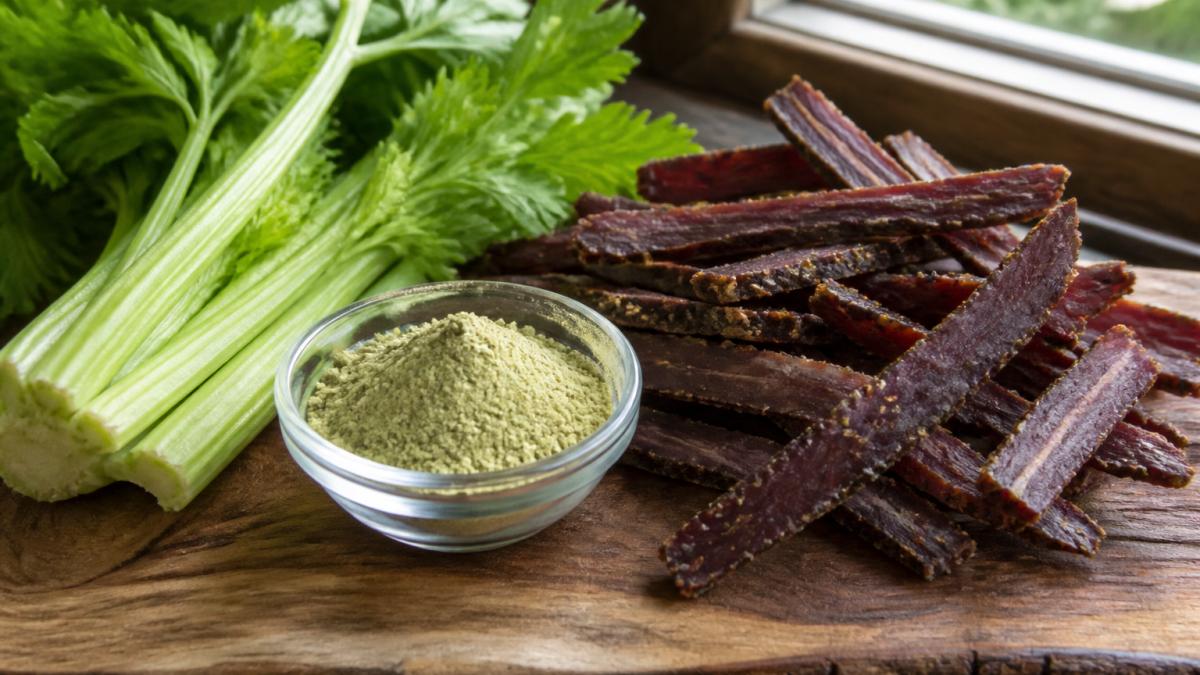
Celery powder has emerged as the most widely adopted plant-derived nitrate source in commercial meat curing. It's simply dehydrated, ground celery, a whole food ingredient that contains naturally occurring nitrates. When used with the right fermentation conditions, celery powder can deliver the same functional benefits as synthetic sodium nitrite.
How Celery Powder Works as a Nitrate Source
Celery powder works through a biological process, not chemistry. The nitrates present in celery are inert until bacterial fermentation converts them into active nitrite. This conversion requires specific conditions: the right starter culture, proper temperature, and adequate time for fermentation to occur.
The nitrate concentration in celery powder varies depending on the celery variety and growing conditions, but a typical application uses celery powder combined with a starter culture containing nitrate-reducing bacteria like Lactobacillus or Pediococcus species. These bacteria metabolize the nitrate and produce nitrite as a byproduct. The process is slower than adding synthetic sodium nitrite directly, which is why celery powder works better in fermented products or aged applications than in fresh sausages requiring immediate color development.
Food safety depends on achieving sufficient nitrite levels during the curing window. Processors using celery powder must validate that their specific formulation, starter culture, and processing conditions produce adequate nitrite concentration to control pathogens. This is where many small producers and home curers encounter practical challenges, the conversion isn't guaranteed without proper technique.
Celery Juice and Powdered Celery Juice
Celery juice concentrate and powdered celery juice are commercial preparations that standardize the nitrate content more reliably than whole celery powder. These products are used extensively in commercial meat production, particularly in products marketed as "uncured" or "naturally cured."
The advantage of these preparations is consistency. Manufacturers can specify nitrate concentration, which allows more predictable fermentation outcomes. Powdered celery juice is easier to incorporate into dry sausage formulations than liquid celery juice, which requires adjusting moisture content in the recipe.
However, these products still require starter cultures and fermentation time to convert nitrate into functional nitrite. They're not a direct drop-in replacement for sodium nitrite in fresh applications. The marketing term "naturally cured" often obscures this reality, the end product still contains nitrite; it simply originated from a plant source rather than synthetic synthesis.
Starter Cultures and Fermentation in Natural Curing
Starter cultures are the biological engine that makes plant-based curing work. These are carefully selected strains of lactic acid bacteria that ferment meat while simultaneously reducing nitrate to nitrite. Without the right starter culture, celery powder is just an inert ingredient.
The most common starter cultures in natural curing contain Lactobacillus plantarum, Lactobacillus sakei, or Pediococcus pentosus. These bacteria lower pH through lactic acid production, which creates an acidic environment that inhibits pathogens while the nitrite formation provides additional safety. The fermentation process also develops the characteristic tangy flavor of traditional cured meats.
Temperature and duration are critical. Fermentation at 68-72°F over 24-48 hours allows sufficient bacterial activity for nitrite formation in fresh sausages. Dry-aged products require weeks or months, during which the bacterial action continues gradually. This is fundamentally different from the immediate action of synthetic sodium nitrite, which means product development timelines shift significantly when moving to natural alternatives.
Curing Meat Without Nitrites: Is It Truly Possible?
This question sits at the heart of the natural curing debate. The answer is technically yes, but with substantial caveats.
You can produce shelf-stable cured meat without any form of nitrite, synthetic or plant-derived, by using alternative preservation methods: high salt content, low pH through fermentation or acid addition, reduced water activity through drying, or combinations of these approaches. Traditional cultures have done this for centuries. Heavily salted dried meat, fermented sausages with very low pH, or completely desiccated products can achieve safety without nitrite.
The trade-off is dramatic. Products cured without nitrite lack the pink color, distinctive cured flavor, and the specific safety margin that nitrite provides against botulism. They also require stricter processing controls and shorter shelf life in many cases.
The marketing distinction matters here. "No added nitrite" products often contain plant-derived nitrite formed during fermentation, they're not actually nitrite-free. "Nitrite-free" products that claim safety typically rely on high salt, low pH, or refrigeration requirements that aren't always clearly communicated to consumers.
How to Cure Meat Safely: Key Considerations
Safety in natural curing depends on controlling multiple variables simultaneously. This is where home curers and small producers often struggle, because the margin for error is narrower than with synthetic sodium nitrite.
Pathogen Control and Food Safety Standards
The primary safety concern in curing is Clostridium botulinum, which produces a deadly toxin in anaerobic (oxygen-free) environments like vacuum-sealed or canned products. Nitrite at sufficient concentration, typically 100-150 parts per million in the finished product, provides a reliable barrier against this pathogen.
When using natural alternatives to sodium nitrite in meat, you must validate that your specific method achieves adequate nitrite concentration. This requires either laboratory testing or adherence to established formulations and processes that have been validated. The USDA and FDA provide guidance on safe curing practices, but these guidelines traditionally focus on sodium nitrite because it's the established standard.
For commercial producers, this means working with food scientists and conducting challenge studies to prove that your natural curing method controls pathogens as effectively as conventional methods. For home curers, it means following tested recipes precisely and understanding the limitations of your approach.
Labeling and Consumer Expectations
The regulatory landscape around curing labels is complex. Products labeled "uncured" or "naturally cured" must still meet food safety standards, but the labeling doesn't always clearly communicate whether nitrite is present (from plant sources) or absent.
The USDA allows "no added nitrite" or "uncured" labels on products that contain plant-derived nitrite, as long as sodium nitrite wasn't directly added. This technically accurate but potentially misleading labeling has created consumer confusion. Someone buying "uncured bacon" might believe they're avoiding nitrite entirely, when the product actually contains nitrite derived from celery powder.
Clear labeling should specify whether the product contains nitrite from any source, what the safety validation involved, and any storage or handling requirements. At Shaka Braai, we're transparent about our USDA-approved curing methods for our biltong and droewors.
Natural Alternatives to Sodium Nitrite: A Practical Comparison
| Alternative | Nitrate Source | Conversion Method | Best For | Key Limitation |
|---|---|---|---|---|
| Celery powder | Plant-derived | Starter culture fermentation | Aged sausages, fermented products | Slow conversion, requires fermentation time |
| Celery juice concentrate | Plant-derived | Starter culture fermentation | Commercial production, standardized formulations | Liquid handling, moisture adjustment needed |
| Swiss chard powder | Plant-derived | Starter culture fermentation | Specialty cured meats | Limited commercial availability |
| High salt + fermentation | Salt-based preservation | Bacterial fermentation | Dry-aged products, traditional charcuterie | No cured color, requires extended aging |
| Vinegar/acid curing | Acid-based preservation | pH reduction | Fresh products, short shelf life | Requires refrigeration, limited stability |
Each alternative involves trade-offs in processing time, product characteristics, safety validation, and consumer acceptance. Celery-based methods dominate commercial natural curing because they most closely replicate the functional benefits of synthetic sodium nitrite while using recognizable plant ingredients.
Health Concerns and What the Evidence Shows
Consumer concern about sodium nitrite centers on potential links to cancer and other health conditions. The scientific evidence is complex and often misrepresented in marketing claims.
Nitrite itself isn't inherently carcinogenic. The concern arises when nitrite reacts with amino acids in meat at high temperatures, potentially forming nitrosamines, which have shown carcinogenic potential in animal studies.
Plant-derived nitrite creates the same theoretical risk as synthetic sodium nitrite because the chemical compound is identical. Switching from synthetic to celery-derived nitrite doesn't eliminate this concern; it simply changes the source of the compound.
Natural alternatives to sodium nitrite in meat don't represent a health breakthrough, they're primarily a response to consumer preference for recognizable ingredients and cleaner labels. The safety profile and potential health considerations remain similar because the active compound, nitrite, is the same regardless of origin.
Choosing how to cure meat involves weighing safety, flavor, shelf life, and ingredient preferences. Whether you're sourcing cured meats for your family or exploring options for events, understanding what's actually in your food matters. At Shaka Braai, our USDA-approved biltong and droewors are crafted using traditional methods with fresh, locally sourced ingredients and no unnecessary preservatives.
Frequently Asked Questions
What natural alternatives to sodium nitrite are used in cured meat?
The most common natural alternatives include celery powder, celery juice, and powdered celery juice, which contain naturally occurring nitrates. These are often combined with starter cultures containing nitrate-reducing bacteria that convert nitrates to nitrites during fermentation. Swiss chard powder and other vegetable-derived nitrate sources are also used. Each method produces different curing results and requires careful formulation to ensure food safety and proper color and flavor development.
Can celery powder replace sodium nitrite in meat?
Celery powder can serve as a nitrate source in natural curing, but it functions differently than sodium nitrite. Celery powder requires a starter culture with nitrate-reducing bacteria to convert its natural nitrates into nitrites during fermentation. This process takes longer than direct sodium nitrite addition and produces variable results depending on processing conditions, temperature, and bacterial activity. The final nitrite concentration may differ from synthetic curing, affecting both safety margins and flavor development.
Can you cure meat safely without nitrites?
Truly nitrite-free curing is extremely challenging because nitrites serve critical food safety functions, particularly in preventing Clostridium botulinum growth in anaerobic environments. Most 'nitrite-free' commercial products actually use natural nitrate sources that convert to nitrites during processing. Complete avoidance of nitrite formation requires alternative preservation methods like high salt concentration, refrigeration, or vacuum sealing with reduced shelf life. Any nitrite-free approach must be validated for pathogen control before use.
What is the difference between naturally occurring nitrites and added sodium nitrite?
Added sodium nitrite is a synthetic preservative added directly to meat in controlled amounts. Naturally occurring nitrites form when nitrates (from vegetables like celery) are converted by bacteria during fermentation or curing. While the chemical compound is identical, the regulatory labeling differs: products using natural sources may claim 'no added nitrites,' though nitrites still form. The conversion process with natural sources is less predictable, potentially resulting in variable final nitrite levels and different flavor profiles compared to direct sodium nitrite addition.