 comparison
Best USDA-Approved Cured Meats for Authentic Biltong
Table of Contents
- Understanding USDA Approval for Cured Meats and Biltong
- What Kind of Meat Is Best for Biltong
- Biltong vs. Beef Jerky: Key Differences That Matter
- How to Choose Quality Biltong: Sourcing and Ingredient Criteria
- Top Options for USDA-Approved Authentic Biltong
- Frequently Asked Questions
Last Updated: October 7, 2026
Understanding USDA Approval for Cured Meats and Biltong
When sourcing USDA approved cured meats for authentic biltong, understanding what "USDA approved" means matters. The distinction between USDA inspection and facility approval directly affects the safety and authenticity of what you're buying.
USDA Inspection vs. Facility Approval: What Actually Matters
USDA inspection and USDA facility approval are not the same thing, yet the terms get used interchangeably online.
USDA inspection means a USDA inspector has examined the meat product itself, its composition, handling, and safety at the point of production. This is mandatory for all meat products sold in the United States.
USDA facility approval means the production facility has been registered and approved by the USDA to operate under federal meat inspection regulations. It certifies equipment, processes, and sanitation standards, not individual product batches.
The practical difference: a USDA approved cured meats facility has met baseline safety standards, but every batch still gets inspected individually. You want both.
For biltong, look for producers who list their facility registration number and confirm their curing and air-drying processes meet USDA guidelines for moisture reduction and food safety.
Food Safety Standards for Air-Dried Cured Meats
Air-dried cured meats like biltong operate under specific USDA food safety rules because curing and drying are the preservation method, with no cooking step to kill pathogens.
The USDA requires cured, air-dried meats to reach specific moisture levels (typically water activity below 0.85) to prevent bacterial growth, achieved through salt curing and controlled air-drying over days or weeks.
Temperature and humidity during drying matter enormously: too fast and the outside hardens while the inside stays moist; too slow and spoilage begins. That's why authentic producers monitor drying rooms closely and can tell you exactly how long their products cure and dry.
When evaluating USDA approved cured meats for biltong, ask about the drying environment. Professional producers maintain detailed records of temperature, humidity, and drying times. If a supplier can't describe their process beyond "we air-dry it," that's a red flag.
What Kind of Meat Is Best for Biltong
The cut of beef shapes everything about your finished biltong: texture, tenderness, flavor, and curing time.
Beef Cuts for Traditional Biltong Production
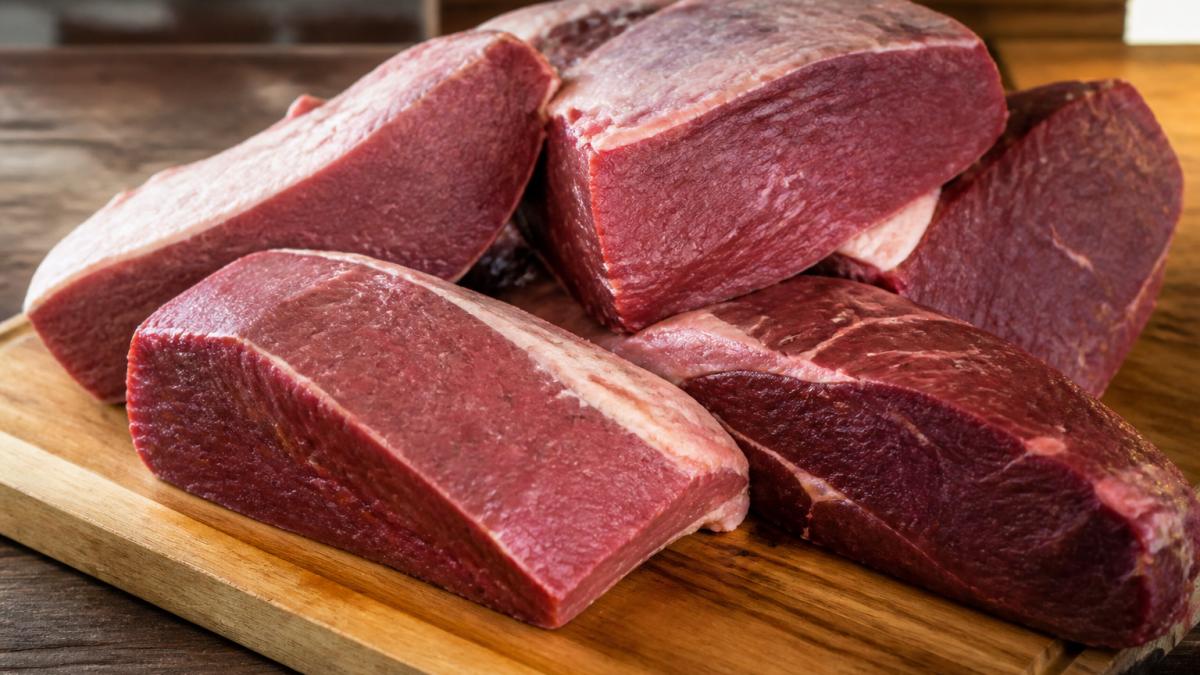
Biltong traditionally uses lean, well-marbled cuts thick enough to develop proper texture while curing. Thin cuts dry too quickly and become brittle; fatty cuts turn rancid in storage.
The best cuts for biltong are muscles with minimal connective tissue and moderate fat marbling:
- Top round (eye of round): Lean, consistent texture, dries evenly. This is the workhorse cut for commercial biltong producers.
- Bottom round: Similar to top round, slightly more forgiving if you're new to making biltong.
- Sirloin tip: Leaner than sirloin steak but with enough marbling for flavor.
- Brisket flat: Fattier than round cuts, requires careful trimming but delivers rich flavor.
Thickness matters. Traditional biltong uses strips or whole muscles 1 to 2 inches thick. Thinner cuts (under 1 inch) dry too quickly and lose the tender chew; thicker cuts (over 3 inches) take weeks to cure and risk spoilage without precise drying control.
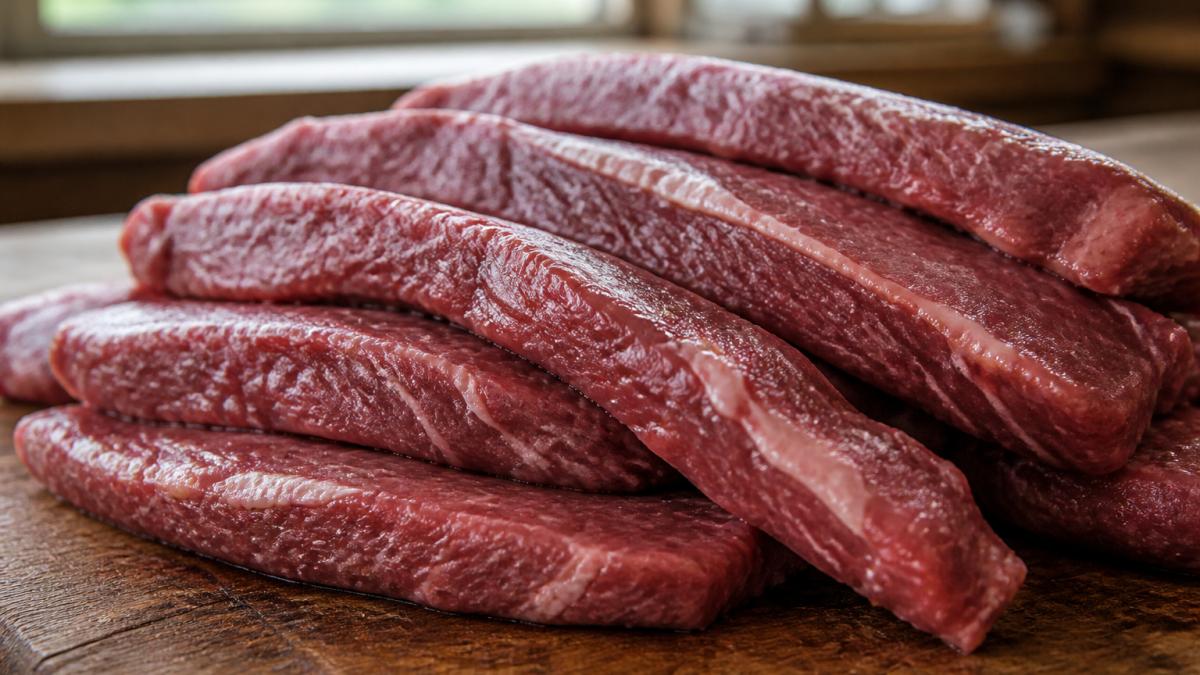
For DIY biltong makers, top round is your safest bet: lean enough to dry properly, thick enough to cure, and forgiving if your drying environment isn't perfect. Ask your butcher for "biltong-grade" top round cut to the right thickness.
Grass-Fed and Grass-Finished Beef: Quality Markers
Grass-fed and grass-finished beef mean different things, and only one matters for biltong.
Grass-fed means the animal ate grass for most of its life but may have been grain-finished in a feedlot before slaughter. It doesn't guarantee superior flavor or safety for curing.
Grass-finished means the animal ate grass from birth to slaughter, producing beef with a different fat composition and a more distinctive, mineral-forward flavor for biltong.
Both grass-fed and grain-finished beef work for biltong; the difference is flavor preference, not safety or curing ability. Grass-finished beef is leaner and dries slightly faster; grain-finished beef has more marbling and a milder flavor.
What matters more is beef sourcing transparency: where the animal came from, how old it was at slaughter, and whether the producer can trace it to the farm or ranch. That traceability separates premium biltong from generic cured meat.
Biltong vs. Beef Jerky: Key Differences That Matter
Biltong and beef jerky are not the same product, and understanding the difference helps you choose what you actually want.
Curing Methods and Flavor Profiles
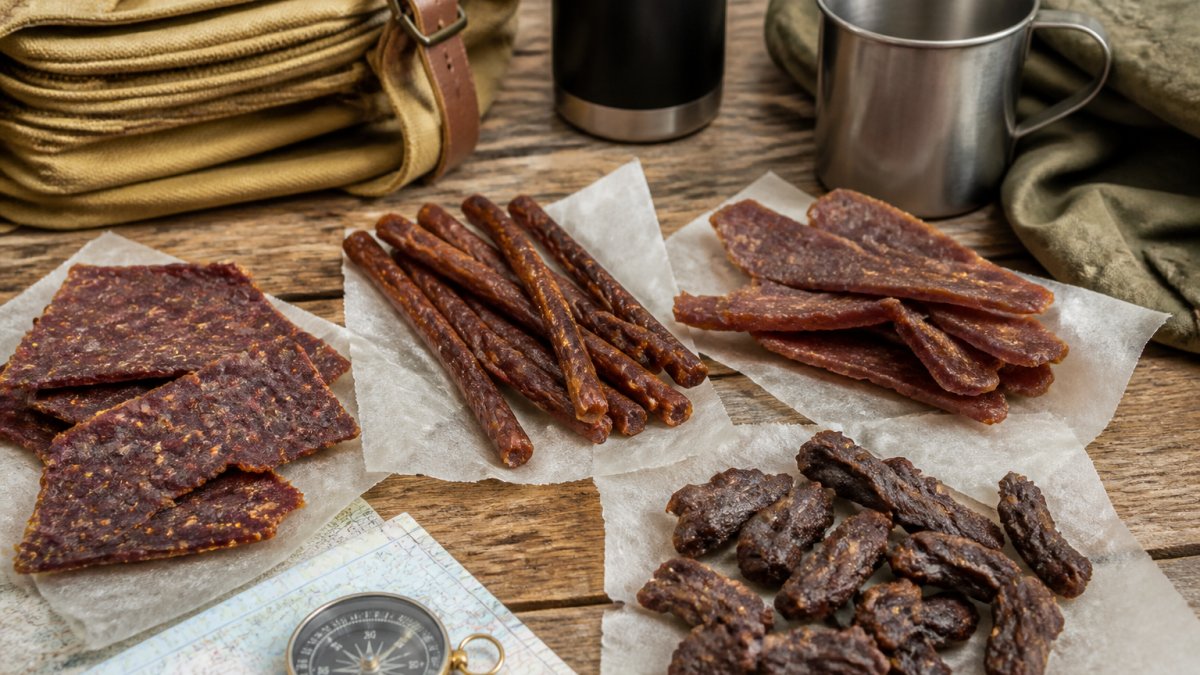
Biltong is a South African cured meat preserved by salt curing and air-drying (pubmed.ncbi.nlm.nih.gov). The meat is rubbed with salt, spices (traditionally coriander, vinegar, and black pepper), and sometimes sugar, then hung in a controlled environment for 5 to 7 days or longer.
Beef jerky is an American product that uses salt curing, spice seasoning, and usually a low-temperature oven or smoker. The heat accelerates drying and can add smoke flavor. Jerky is thinner, drier, often sweeter from marinade sugars, and brittle or crispy rather than chewy.
For USDA approved cured meats, the curing method determines the final product. Biltong's air-drying develops a tender chew and lets spice flavors meld over days; jerky's faster drying (often under 12 hours with heat) is shelf-stable quickly but less complex.
If you're looking for authentic South African biltong, the curing method must include air-drying without high heat. If a product is labeled "biltong" but was oven-dried or smoked, it's jerky marketed as biltong.
Shelf Life and Preservation Approaches
Biltong's moisture content (typically 20-30% water) and salt curing give it a shelf life of several weeks to months in a cool, dry place. Once opened, it stays fresh 1 to 2 weeks if kept sealed and away from humidity.
Beef jerky, dried to 10-15% moisture, lasts longer, often 3 to 6 months unopened, but with a less tender texture.
Biltong's higher moisture content makes it sensitive to humidity and temperature fluctuations, so legitimate producers use moisture-barrier packaging and often desiccant packets. When ordering online, check that the supplier packages properly to prevent moisture absorption in transit.
Preservative-free biltong relies entirely on salt curing and proper moisture control, which is why sourcing from producers who understand USDA food safety standards matters.
How to Choose Quality Biltong: Sourcing and Ingredient Criteria
The difference between mediocre and excellent biltong comes down to two things: where the beef comes from and what goes into the cure.
Evaluating Beef Sourcing and Traceability
Ask producers these questions before buying:
- Where does the beef come from? (Specific region or ranch, not just "the United States")
- What breed of cattle? (Black Angus, Grass-fed crossbreeds, etc.)
- How old was the animal at slaughter? (Younger animals often produce more tender meat)
- Can you trace the beef back to a specific farm or supplier?
Producers who can answer these questions have sourced deliberately, building supplier relationships and choosing specific cattle for specific qualities. That intentionality shows up in the final product.
For USDA approved cured meats, traceability also supports food safety: producers with detailed sourcing records can respond quickly to a recall, while generic suppliers buying commodity beef from multiple sources can't trace a problem to its origin.
Locally sourced beef isn't always better, but it's easier to verify. If a producer sources from ranches within a few hours' drive, you can often visit them or find public information, and that visibility builds confidence.
Clean-Label Ingredients and No Preservatives
The ingredient list on quality biltong is short: beef, salt, spices, and sometimes vinegar. That's it.
Look for products that skip:
- Sodium nitrite or sodium nitrate (chemical preservatives common in mass-market cured meats)
- Soy or soy lecithin (common fillers and binders)
- Seed oils (sunflower, canola, or soybean oil used to prevent sticking)
- Added sugars beyond minimal amounts (quality biltong's sweetness comes from the spice blend, not added sugar)
- Artificial flavors or colors
Preservative-free biltong relies on salt and proper moisture control, which is harder than adding preservatives and costs more. Producers who skip preservatives have invested in proper curing facilities and drying controls.
Watch for vague label terms like "spice blend" or "natural flavors." Quality producers list spices individually: coriander, black pepper, thyme, or vinegar.
Top Options for USDA-Approved Authentic Biltong
Shaka Braai: 20+ Years of Traditional Production
At Shaka Braai, we've spent over two decades perfecting authentic biltong using traditional South African methods combined with USDA food safety standards. Our USDA approved cured meats start with carefully sourced beef from suppliers who provide consistent, high-quality cuts.
Our biltong uses fresh, locally sourced ingredients without additives or preservatives. The cure is simple: beef, salt, coriander, vinegar, and black pepper. We control our air-drying environment precisely to reach USDA-required moisture levels while developing the complex flavors and tender chew of authentic biltong.
What sets us apart is transparency: we can tell you where our beef comes from, how long it cures, and exactly what goes into every batch. Our facility is USDA-approved, and every product is inspected for moisture content and preservation.
For online orders, we use moisture-barrier packaging so your biltong arrives fresh.
Our customers, South African expatriates, health-conscious snackers, and food enthusiasts, choose us for authenticity and quality, earned through consistency and refusing to cut corners with preservatives or cheap ingredients.
Sourcing Options for DIY Biltong Makers
To make biltong at home, start with quality beef from a butcher or meat delivery service that can meet your specifications.
Good Ranchers advertises American sourcing and a money-back guarantee. For DIY biltong, specify a thick-cut top round or bottom round and call ahead to confirm they can provide the cut and thickness you need. Their no-added-hormones, antibiotic-free beef aligns with traditional biltong's clean-ingredient philosophy.
Miltona Custom Meats is a full-service meat market with custom processing. A custom processor can cut beef to exact specifications and advise on which cuts cure best, and USDA-inspected meat from a local processor gives you traceability and direct answers.
For DIY makers, the real work is controlling your drying environment: a space with stable temperature (ideally 50-65°F) and low humidity (40-50%) to dry biltong without mold or spoilage.
| Option | Best For | Key Advantage | Main Consideration |
|---|---|---|---|
| Shaka Braai (ready-made) | Convenience and authenticity | 20+ years expertise, USDA-approved, no preservatives | Shipping cost for premium product |
| Good Ranchers (DIY) | Budget-conscious home makers | American sourcing, money-back guarantee | Requires proper drying setup at home |
| Miltona Custom Meats (DIY) | Serious hobbyists and small producers | Custom cuts, local traceability, expert advice | Requires home curing knowledge |
| Olympia Provisions (ready-made) | Explorers of traditional cured meats | USDA-approved facility, European methods | Different style than South African biltong |
Choosing quality USDA approved cured meats for authentic biltong comes down to understanding what you're buying.
Frequently Asked Questions
What kind of meat is best for biltong?
Lean, thick-cut beef from muscles with minimal intramuscular fat works best for biltong. Top rounds, sirloin tips, and eye of round are traditional cuts.
How is biltong different from beef jerky?
Biltong is cured with vinegar and spices, then air-dried, creating a tender, moist texture. Beef jerky is typically marinated and heat-dried, resulting in a chewier, drier product. Biltong uses thicker cuts and retains more moisture, while jerky uses thin strips. Biltong's vinegar-based cure and air-drying method preserve flavor and tenderness without requiring added preservatives, making it distinct from the heat-based preservation of jerky.
What should I look for when buying biltong?
Verify USDA-approved facility production to ensure food safety compliance. Check that the product uses no artificial preservatives, nitrates, or seed oils. Look for transparent sourcing information about beef origin and grass-fed status. Examine the ingredient list for clean components: beef, vinegar, salt, and spices only. Reputable producers provide traceability details and clear facility certification.
Does USDA approval guarantee biltong quality?
USDA approval indicates that a facility meets food safety and inspection standards, but it does not guarantee superior flavor or sourcing quality. Approval confirms that the facility follows proper handling, temperature control, and sanitation protocols for cured meats. Quality depends on beef sourcing, traditional curing methods, ingredient purity, and air-drying techniques. Look beyond USDA approval to evaluate beef origin, grass-fed status, and clean-label ingredients for truly premium biltong.