 How-to
Can You Really Spot Hidden Sugars in Packaged Snacks?
Last Updated: November 10, 2026
Quick Summary
To identify hidden sugars in packaged snacks, read the Nutrition Facts panel for total and added sugars, then scan the ingredient list for sugar aliases like syrups, juice concentrates, and maltodextrin. Check the serving size and multiply sugar grams by how much you will realistically eat. If sweeteners appear in the first few ingredients, treat the snack as sweet no matter what the front label claims.
- Ingredients are listed by weight, so sugar in the first three ingredients means a sugar-heavy snack.
- The Dietary Guidelines recommend limiting added sugars to less than 10% of daily calories, about 50 grams on a 2,000-calorie diet.
- No added sugar does not mean low sugar, since naturally occurring sugars still count toward total sugars.
- Sugar-free means less than 0.5 grams of sugar per serving but can still contain maltitol or sorbitol.
- A bar with 8 grams of added sugar per serving doubles to 16 grams if you eat the whole two-serving package.
Table of Contents
- Why Hidden Sugars Slip Past Even Careful Shoppers
- How to Read Nutrition Labels for Sugar Without Getting Fooled
- The Added Sugar Names List: 30+ Aliases Hiding in Your Snack Aisle
- How Ingredient Order Reveals How Much Sugar Is Really There
- Where Sugar Hides in Savory Snacks, Sauces, and Condiments
- Daily Sugar Intake Recommendations and How Snacks Fit In
- A Step-by-Step Walkthrough: Comparing Two Similar Snacks
- Decoding Marketing Claims Like 'No Added Sugar' and 'Unsweetened'
- Frequently Asked Questions
Why Hidden Sugars Slip Past Even Careful Shoppers
Most shoppers who care about sugar still get fooled, and it is not their fault. Sugar hides behind dozens of names, and food marketers know it.
The trick is knowing where to look. You need to read two things: the Nutrition Facts panel and the ingredient list. Miss either one and you are guessing.
Below, we show you a repeatable five-minute method for spotting hidden sugars.
How to Read Nutrition Labels for Sugar Without Getting Fooled
Start with the Nutrition Facts panel, not the front of the box. The front is marketing. The panel is regulated.
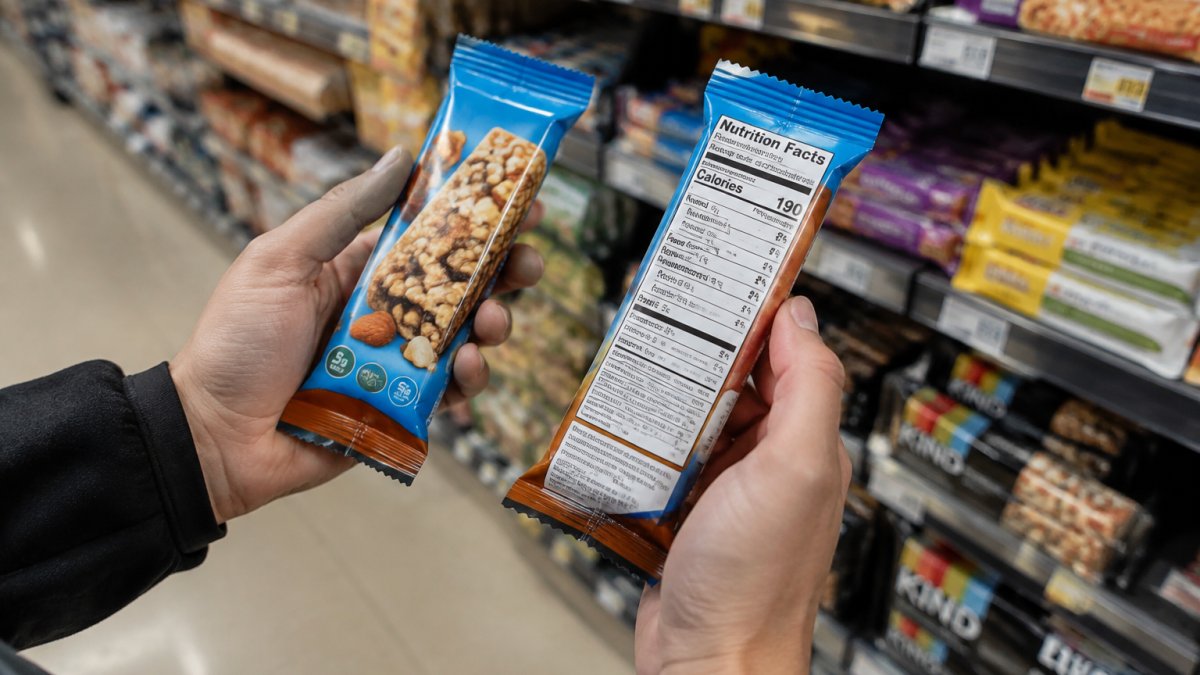
The FDA's guidance on the Nutrition Facts label lays out what each line means. Here is the order that works:
- Find the serving size and servings per container first
- Look at "Total Sugars" in grams
- Look at "Added Sugars" in grams and the percent Daily Value
- Scan the ingredient list for sugar aliases
Total sugars include everything. Added sugars are the ones that were put in during processing. That gap between the two is where the real story sits.
Total Sugars vs. Added Sugars: What the Numbers Actually Tell You
Total sugars is the sum of naturally occurring sugars and added sugars in one serving. Added sugars counts only what was added during processing.
A plain yogurt with milk sugar shows total sugars but zero added sugars. The FDA's added sugars guidance explains that added sugars are listed separately so shoppers can see what was put in, not what came from the ingredient itself.
One number tells you what is in the food. The other tells you what was done to it.
Serving-Size Math: Why the Grams on the Label Aren't What You Eat
The grams on the label describe one serving, and that serving is often smaller than what you actually eat. A snack bar labeled as two servings per container means the sugar grams double if you eat the whole thing.
Do this math before you buy:
- Note the servings per container
- Multiply sugar grams by how many servings you will realistically eat
- Compare that total against your daily limit
A bar with 8 grams of added sugar per serving sounds fine. Eat the whole package and you may have taken in 16 grams without noticing.
The Added Sugar Names List: 30+ Aliases Hiding in Your Snack Aisle
Sugar rarely appears as "sugar" alone. Manufacturers split sweeteners across several ingredients so no single one lands near the top of the list.
Simple sugars and syrups
- Sucrose, glucose, fructose, dextrose, maltose, galactose
- Corn syrup, high-fructose corn syrup, glucose syrup, rice syrup, malt syrup
- Invert sugar, brown sugar, raw sugar, turbinado, muscovado
- Cane sugar, cane juice, cane syrup, evaporated cane juice, cane crystals
- Honey, molasses, maple syrup, agave nectar, treacle
Fruit-based sweeteners
- Fruit juice concentrate, fruit puree concentrate
- Apple juice concentrate, grape juice concentrate, pear juice concentrate
- Date paste, raisin syrup, fig paste
Starches and modified carbohydrates that act like sugar
- Maltodextrin, dextrin, modified food starch
- These are not sweeteners in the traditional sense, but they break down quickly and can push total carbohydrate and sugar numbers up. A snack can list maltodextrin high in the ingredients and still show a modest "sugars" line.
Other sweeteners and syrups
- Coconut sugar, palm sugar, date sugar
- Barley malt, malt extract, diastatic malt
- Crystalline fructose, isoglucose, glucose-fructose syrup
- Yacon syrup, sorghum syrup
Sugar alcohols and low-calorie sweeteners
- Maltitol, sorbitol, xylitol, erythritol, mannitol, lactitol
- These are not sugar, but they still count as sweeteners and can upset digestion in large amounts. They also appear in "no sugar added" products, so read the total carbohydrate line alongside the sugars line.
A common pattern is a snack that lists three or four of these names in the first half of the ingredient list.
For a closer look at how a meat snack like biltong stacks up nutritionally, see Is Biltong Healthy? Nutrition, Benefits & Safety Guide.
How Ingredient Order Reveals How Much Sugar Is Really There
Ingredients are listed by weight, from most to least. That order is your best clue to how much sugar a snack really holds.
If sugar appears in the first three ingredients, the snack is sugar-heavy. If it appears fifth but four different sweeteners sit above it, the total sugar load is still high. This is the trick most shoppers miss: split sweeteners hide in plain sight.
A common mistake is reading only the first ingredient and stopping. Scan the whole list. Count every sweetener you find, then add them up in your head. Several small amounts can equal one large one.
Where Sugar Hides in Savory Snacks, Sauces, and Condiments
Savory does not mean sugar-free. Some of the biggest sugar sources sit in the snack aisle next to the chips.
- Sauces and condiments: ketchup, BBQ sauce, teriyaki, honey mustard, and salad dressings often lead with sugar or corn syrup
- Savory snacks: flavored crackers, pretzels, and seasoned nuts can carry added sugar for browning and taste
- Cured meats: some jerky and dried meat products use sugar in the cure or glaze
- Bread and wraps: sandwich bread and tortillas often include sugar to soften texture
Many commercial jerkies add sugar, corn syrup, or sweet glazes, so cured meat snacks are worth checking like any other packaged product.
Daily Sugar Intake Recommendations and How Snacks Fit In
Health authorities advise keeping added sugars to a small share of daily calories. The Dietary Guidelines for Americans recommend limiting added sugars to less than 10% of daily calories.
That budget disappears fast. One sweetened snack bar, a flavored yogurt, and a bottled sauce at dinner can use most of it. For practical ways to work a high-protein snack into your day, read How to Fit Biltong Into a Balanced Diet.
A Step-by-Step Walkthrough: Comparing Two Similar Snacks
Here is the method in action. Picture two granola bars on the shelf, side by side.
- Check the serving size. Bar A lists one bar per serving. Bar B lists two bars per serving.
- Read total sugars. Bar A shows 9 grams. Bar B shows 6 grams per serving.
- Read added sugars. Bar A shows 8 grams. Bar B shows 5 grams per serving.
- Scan ingredients. Bar A lists cane sugar second and honey fourth. Bar B lists chicory root fiber first and honey fifth.
- Do the serving math. Eat both bars in package B and you get 10 grams of added sugar, more than package A.
- Pick the lower added sugar per realistic portion. Here, Bar A wins if you eat one bar. Bar B wins only if you eat half the package.
The label never lies. It just needs the right questions. Once you have compared a few snacks this way, you will want a shortlist to start from, and 5 Best Clean Label Snacks for Busy Professionals gives you one.
Decoding Marketing Claims Like 'No Added Sugar' and 'Unsweetened'
Front-label claims follow rules, but the rules leave room. The FDA's rules on nutrient content claims define each term, and reading them once will change how you shop.
"No added sugar" means no sugar or sugar-containing ingredient was added during processing.
"Unsweetened" means no sweetener was added. Like "no added sugar," it says nothing about naturally occurring sugars.
"Reduced sugar" means the product has at least 25% less sugar than the regular version.
"Sugar-free" means less than 0.5 grams of sugar per serving. It does not mean the product is free of sweeteners or sugar alcohols, and it does not mean the product is low in carbohydrate. A sugar-free candy can still contain maltitol or sorbitol, which can affect digestion and still count as carbohydrate.
"No high-fructose corn syrup" means exactly that one ingredient is absent.
Watch out: a snack can carry three friendly claims on the front and still list four sweeteners in the ingredients. The back of the package always wins. Compare the added sugars line, the total sugars line, and the ingredient list together, then do the serving-size math before you decide.
If you want examples of snacks that keep additives off the label, Preservative-Free Meat Snacks for Travel: 5 Best Options is a good place to start, and you can browse our shop for minimally processed cured meat snacks.
| Claim | What it means | Where it can mislead |
|---|---|---|
| No added sugar | No sugar or sugar-containing ingredient added during processing | Can still show 12 grams total sugars from fruit puree or juice concentrate |
| Unsweetened | No sweetener was added | Says nothing about naturally occurring sugars; applesauce can carry 10 grams |
| Reduced sugar | At least 25% less sugar than the regular version | Does not mean low in sugar |
| Low sugar | Not a defined claim in the same way | Treat as marketing unless the Nutrition Facts panel backs it up |
| Sugar-free | Less than 0.5 grams of sugar per serving | Can still contain maltitol or sorbitol and count as carbohydrate |
| No high-fructose corn syrup | Exactly that one ingredient is absent | Other added sugars like cane sugar or honey can keep added sugars just as high |
Reading labels takes practice, but the payoff is a snack shelf you actually understand.
Frequently Asked Questions
How do I spot hidden sugars in food quickly?
Start with the Nutrition Facts label and look at the Added Sugars line, which the FDA requires manufacturers to list separately from total sugars. Then scan the ingredient list for names like cane syrup, maltodextrin, fruit juice concentrate, and dextrose. If any of those appear in the first three ingredients, the snack is mostly sugar by weight. Comparing two similar products by added sugar per serving gives you the fastest read on which one is genuinely lower in sugar.
What are the most common aliases for added sugar on food labels?
The added sugar names list runs long: sucrose, glucose, fructose, dextrose, maltose, corn syrup, high-fructose corn syrup, malt syrup, rice syrup, fruit juice concentrate, agave nectar, honey, molasses, and evaporated cane juice. Manufacturers also use less obvious names like maltodextrin and barley malt. Because labels list ingredients by weight, a snack can split sugar across four or five names so none of them ranks first. That tactic keeps sugar out of the top spot while the total added sugar stays high.
Why do manufacturers use multiple types of sweeteners in one snack?
Ingredient lists are ordered by weight, so the heaviest ingredient appears first. By splitting sugar into several forms, each one weighs less individually and drops lower on the list. A granola bar might list oats first but contain cane sugar, honey, brown rice syrup, and molasses, all of which add up to more sugar than the oats. Reading the Added Sugars line on the Nutrition Facts label bypasses this trick because the total is combined regardless of how many names appear.
What is the difference between natural sugars and added sugars in packaged snacks?
Naturally occurring sugars come from the ingredients themselves, like lactose in yogurt or fructose in dried fruit. Added sugars are put in during processing for sweetness, texture, or shelf life. The FDA's Nutrition Facts label separates the two, so you can see exactly how much sugar was added. A yogurt with 12 grams of total sugar and 2 grams of added sugar is mostly natural; one with 12 total and 10 added is mostly sweetened. That distinction matters more than the total number for most shoppers.