 How-to
Storing Cured Biltong Safely: Pantry, Fridge or Freezer
Last Updated: November 14, 2026
Quick Summary
Store cured biltong in a cool, dark, dry pantry in a paper bag for short-term use, in the fridge loosely wrapped for moist or sliced biltong, and in the freezer in portioned, airtight packs for long-term storage. Always keep air moving and condensation off the meat, and never seal moist biltong in plastic.
- Paper bags beat plastic for pantry storage because they let surface moisture escape instead of pooling.
- Never package biltong while warm; residual heat turns to condensation against the meat.
- Portion biltong before freezing and thaw it in the fridge, never on the counter.
- Vacuum-seal only fully dry biltong; sealing moist biltong pulls moisture against the meat.
- Discard biltong with fuzzy growth, slime, or a sour or ammonia-like odor.
Table of Contents
- Why Cured Biltong Spoils and What Actually Keeps It Safe
- Pantry Storage: Keeping Biltong in a Cool, Dry Place
- How to Store Biltong in the Fridge Without Ruining the Texture
- How to Store Cured Biltong Safely in the Freezer
- How to Store Cured Biltong Safely Long Term
- Choosing Biltong Storage Bags: What Works and What Traps Moisture
- Troubleshooting: Spoilage Signs vs. Harmless Surface Changes
- Ordering Shaka Braai Biltong and Storing It Right From Day One
- Frequently Asked Questions
Why Cured Biltong Spoils and What Actually Keeps It Safe
Cured biltong is dried, seasoned meat that stays safe through low moisture, salt, and airflow, not through refrigeration alone. The single biggest storage mistake is sealing moist biltong in plastic before it has finished drying. That traps water against the meat.
Below, we explain how to store cured biltong safely at room temperature, in the fridge, and in the freezer. For the shelf-stability question specifically, see whether preservative-free biltong is shelf stable.
Moisture, Not Time, Is the Real Enemy
Biltong spoils when moisture builds up faster than it can escape. Mold needs damp surfaces (the EPA). Bacteria need water activity. Take those away and the meat holds far longer.
So the goal of every storage method is the same: keep air moving and keep condensation off the meat.
Watch out: moving cold biltong straight into a warm room creates condensation on the surface. Let it sit sealed until it reaches room temperature first.
Pantry Storage: Keeping Biltong in a Cool, Dry Place
Pantry storage works best for dry biltong you plan to eat within a week or so.
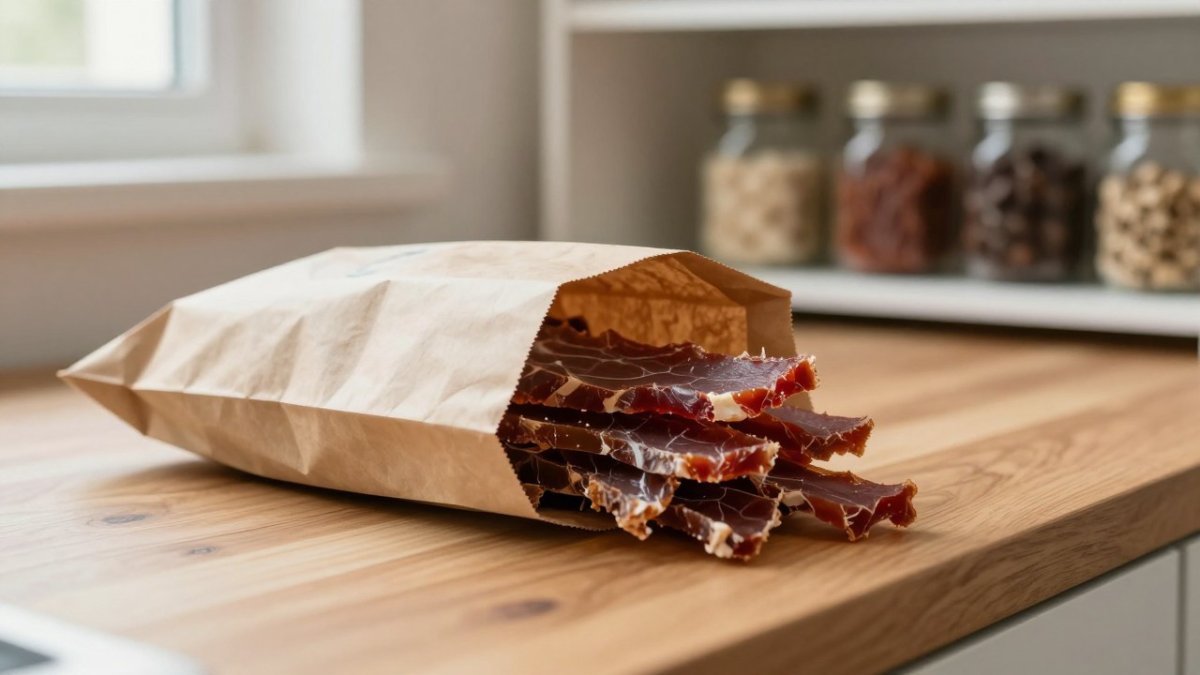
Warmth speeds up fat rancidity, and humidity invites mold. Aim for a spot that stays below room temperature and feels dry to the touch.
- Keep it out of sunlight
- Avoid the area above the fridge
- Store away from steam and splashing
- Check the bag every few days
For deeper context on how authentic biltong is handled before it reaches you, our guide to biltong in the USA walks through the curing process from start to finish.
Paper Bags vs. Plastic Bags for Short-Term Storage
Paper bags win for short-term pantry storage. Brown paper breathes, so surface moisture escapes instead of pooling. Plastic bags trap that moisture against the meat and speed up spoilage.
A common mistake is sealing still-moist biltong in a zip-top bag "to keep it fresh." In practice, that is the fastest way to grow mold. If you must use plastic, leave it open or punch small holes for airflow.
- Paper bag: best for 3-7 days of pantry storage
- Plastic bag: only for fully dry biltong, and only short term
- Cloth wrap: a good backup if paper is unavailable
How to Store Biltong in the Fridge Without Ruining the Texture
The fridge slows spoilage but dries biltong out and dulls the flavor. Use it for moist biltong or sliced biltong you will finish within a couple of weeks.
Wrap the meat loosely in paper, then place it inside a paper bag or a container with the lid cracked.
Take out only what you plan to eat. Let it come to room temperature sealed, then open it.
How to Store Cured Biltong Safely in the Freezer
Freezing is the best option for long-term storage of cured biltong. It stops spoilage almost completely and preserves texture better than most people expect.
Portion the biltong first. Freeze in amounts you will eat in one sitting, so you never thaw more than you need.
- Portion before freezing
- Remove as much air as possible
- Label with the freeze date
- Thaw in the fridge, not on the counter
Refreezing thawed biltong ruins the texture. Once thawed, treat it like fresh biltong and eat it within a few days.
How to Store Cured Biltong Safely Long Term
Long-term storage comes down to four things: dryness at the time of packaging, airtight protection, a cold and stable temperature, and no condensation inside the package. Get all four right and cured biltong keeps for months. Miss the dryness or condensation step and the other three will not save it.
Cool and Dry Before You Seal
Never package biltong while it is still warm from drying, smoking, or a delivery truck. Residual warmth turns to condensation once the package hits a cold shelf or freezer, and that moisture sits directly against the meat.
The same rule applies when moving biltong between temperatures. Going from freezer to pantry, or fridge to counter, creates surface condensation. Keep it sealed until it reaches room temperature, then open it.
Storage Duration by Method and Condition
General advice conflicts because it ignores moisture level, slicing, and whether the package has been opened. Use this as a practical guide, not a safety guarantee:
| Condition | Pantry (cool, dry, dark) | Refrigerator | Freezer |
|---|---|---|---|
| Whole, dry, unopened | 2-4 weeks in paper | 2-3 months | 6-12 months |
| Whole, dry, opened | 1-2 weeks in paper | 4-8 weeks | 6-12 months |
| Whole, moist | 3-7 days in paper | 2-4 weeks | 3-6 months |
| Sliced, dry | 3-7 days in paper | 2-4 weeks | 3-6 months |
| Sliced, moist | 2-4 days in paper | 1-2 weeks | 2-3 months |
Freezer
These ranges assume clean handling, food-safe packaging, and a pantry that stays cool and dry. Warmer, more humid kitchens shorten the pantry end of every range. When in doubt, choose the shorter end and inspect before eating.
Reconciling Fridge vs. Freezer Advice
The conflicting recommendations online usually come down to four variables:
- Moisture level. Moist biltong needs the fridge sooner; dry biltong tolerates the pantry longer.
- Packaging. Paper breathes and suits short-term pantry and fridge storage. Vacuum-sealed bags suit the freezer.
- Intended storage time. Under two weeks, pantry or fridge is fine. Beyond a couple of months, freeze.
- Climate. A humid kitchen pushes you toward the fridge earlier than a dry one.
A workable rule: pantry for dry biltong you will finish within two weeks, fridge for moist or sliced biltong you will finish within a month, and freezer for anything longer.
Vacuum Sealing and Airtight Packaging
Vacuum sealing is the strongest long-term method. It removes air, blocks moisture transfer, and protects against freezer burn.
For pantry storage, an airtight container works if the biltong is already dry. Add a paper layer to absorb any surface moisture.
Watch out: a vacuum-sealed bag that shows visible droplets or fog inside within a day of sealing was packaged too warm or too moist.
If you are investing in a larger order of USDA-approved biltong, our guide to the benefits of USDA-approved biltong explains what that approval means for quality and safety.
Choosing Biltong Storage Bags: What Works and What Traps Moisture
The right biltong storage bags breathe or seal completely, depending on your goal. The wrong ones trap moisture and shorten shelf life.
| Bag Type | Best For | Watch Out For |
|---|---|---|
| Brown paper bag | Short-term pantry, moist biltong | Tears easily, no long-term protection |
| Cloth wrap | Short pantry storage, breathability | Absorbs odors, needs regular washing |
| Zip-top plastic | Fully dry biltong, short term | Traps moisture if any dampness remains |
| Vacuum-seal bag | Long-term freezer storage | Needs a sealer, only for dry biltong |
| Airtight container | Dry biltong, pantry | Condensation if meat is not fully dry |
Match the bag to the meat's condition, not to habit. That one rule prevents most storage failures.
Troubleshooting: Spoilage Signs vs. Harmless Surface Changes
Most storage questions come down to one moment: you open the bag and something looks off. The useful skill is telling a quality defect from a safety hazard, because the two call for different responses. Quality problems cost you texture and flavor. Safety problems mean the meat should not be eaten at all.
Harmless Changes That Are Not Spoilage
Cured meat commonly develops a thin white film on the surface. That film is usually salt or fat that has migrated to the surface and dried there, sometimes called salt bloom or fat bloom.
Darkening at the edges is also normal. As biltong dries further in storage, the surface oxidizes and deepens in color. A slightly firmer, drier texture over time is expected, not a warning sign.
Warning Signs That Mean Discard, Not Taste
Stop and discard the biltong, do not taste it to check, if you notice any of the following:
- Fuzzy or raised growth. Mold is textured and three-dimensional. It may be green, black, blue, or white and fuzzy. Surface bloom is flat and powdery; mold is not.
- Slimy or tacky surface. A wet, sticky, or slippery feel that does not wipe away cleanly points to bacterial growth, not surface moisture.
- Sour, ammonia-like, or putrid odor. Cured meat should smell savory and seasoned. Any sharp or off smell is a reason to throw it out.
- Discoloration beneath the surface. Gray, green, or iridescent patches that go deeper than the surface film are not normal.
- Any mold on sliced biltong. Sliced pieces have far more exposed surface area, and mold on a slice is not salvageable by trimming.
A common pattern is to trim mold off a whole piece and keep the rest. That is risky with soft, moist biltong because the visible mold is only the fruiting body; the underlying tissue can already be contaminated.
Watch out: never rely on smell or a small taste to clear biltong that shows fuzzy growth or slime. Pathogenic bacteria do not always produce an obvious odor, and a taste test is not a safety check.
A Simple Decision Sequence
- Look first: flat and powdery wipes off, or fuzzy and raised?
- Touch next: dry and firm, or wet and tacky?
- Smell last: savory and seasoned, or sour, sharp, or ammonia-like?
- If any answer points to spoilage, discard the whole portion and clean the container before reusing it.
Cross-Contamination and Clean Handling
Spoilage organisms and pathogens move by contact. Wash hands with soap and water before handling biltong, and use a clean knife and board that have not touched raw meat. Do not reuse a board that held raw poultry or beef without washing it first.
If you are unsure whether biltong is still safe to eat, our guide to whether biltong is healthy covers nutrition and safety in more detail.
Ordering Shaka Braai Biltong and Storing It Right From Day One
The best storage plan starts the moment your order arrives. Open the package, check the texture, and decide right away whether you are eating it soon or storing it long term.
At Shaka Braai, our biltong is USDA-approved and made by a family-owned business. You can shop Shaka's biltong and cured meats online, then apply these storage tips from day one.
Storing cured biltong safely is mostly about moisture control, and a little planning goes a long way.
Frequently Asked Questions
How long does cured biltong last in the fridge?
Sliced cured biltong typically keeps for about one to two weeks in the fridge when stored in a paper bag or loosely covered container. Unsliced pieces last longer, often three to four weeks, because less surface is exposed to air. Keep the fridge cold, around 40°F or below, and check for moisture buildup on the packaging. If condensation forms, swap the bag and let the meat breathe before resealing.
How do you know if biltong has gone bad?
Trust your senses. Spoiled biltong smells sour or ammonia-like, feels slimy or sticky beyond normal surface oil, and shows fuzzy mold in green, black, or blue patches. A harmless white powdery bloom can appear on dry biltong and is usually surface mold that wipes off, but any fuzzy growth or off smell means discard it. When in doubt, throw it out rather than risk foodborne illness.
Can you freeze cured biltong, and does it change the texture?
Yes, freezing is the safest way to store cured biltong safely long term. Wrap pieces tightly, then freeze them until you are ready to eat. Thaw in the fridge overnight and blot any condensation before eating. Freezing can make very moist biltong slightly softer, so dry biltong holds up best. Never refreeze thawed biltong.
What are the best biltong storage bags?
Brown paper bags are the classic choice for pantry storage because they let moisture escape. For fridge and freezer use, airtight bags or vacuum-sealed pouches keep condensation and odors out. Avoid sealed plastic bags at room temperature, since trapped moisture encourages mold. Label bags with the date and keep portions small so you open only what you plan to eat.