 How-to
7 Storage Rules That Define Vacuum Sealed Biltong Shelf Life
Last Updated: November 8, 2026
Quick Summary
The biltong shelf life of vacuum sealed biltong depends on how dry the meat is, how much fat it contains, and how well the package keeps air and moisture out. A sealed bag kept in the fridge holds quality for months, while freezing is the longest method for extending biltong shelf life.
- Dry, lean biltong keeps longest when sealed and kept cold.
- Set the fridge under 40°F, the standard target from the FDA.
- Thaw biltong in the fridge, not on the counter, and never refreeze it.
- Once opened, reseal tightly, refrigerate, and eat it sooner than a sealed bag.
- Discard biltong with fuzzy mold, sour or ammonia odor, or slimy texture.
Table of Contents
- What Determines the Shelf Life of Vacuum Sealed Biltong
- Shelf Life of Vacuum Sealed Biltong in Fridge Storage
- Shelf Life of Vacuum Sealed Biltong in the Freezer
- How Long Does Biltong Last Once Opened
- Room Temperature and Airtight Container Storage
- How to Tell if Biltong Has Gone Bad
- Step-by-Step Vacuum Sealing for Maximum Freshness
- Ordering Biltong That Arrives Fresh and Stays Fresh
- Frequently Asked Questions
What Determines the Shelf Life of Vacuum Sealed Biltong
The biltong shelf life of vacuum sealed biltong depends on three things: how dry the meat is, how much fat it contains, and how well the package keeps air and moisture out. Get those right and a sealed bag can hold quality for months. Get them wrong and even a vacuum seal won't save it.
Storage questions for biltong usually come down to a few simple rules. This guide walks through each one.
Vacuum sealed biltong is cured, air-dried beef that has been packed with the air removed to slow spoilage. The seal limits oxygen and blocks outside moisture, which extends freshness well beyond an open bag.
Moisture, Fat Content, and Packaging Variables
Dry biltong keeps far longer than soft biltong. Moisture is the biggest factor in spoilage, so a drier strip resists mold better than a thick, wet one.
Fat content matters too. Fatty biltong can turn rancid faster because fat breaks down over time. Lean biltong holds its flavor longer.
Packaging is the third variable. A true vacuum seal with no air pockets protects the meat. A loose or punctured seal lets oxygen back in and shortens shelf life fast. The USDA Food Safety and Inspection Service guidance on food storage is a good reference for how temperature and packaging affect cured meat safety.
Shelf Life of Vacuum Sealed Biltong in Fridge Storage
Refrigeration is the safest default for any biltong that is soft, thick, or fatty, and it is the only sensible choice once a bag has been opened. Cold slows mold and bacterial growth, but it does not stop them, which is why the fridge buys you time rather than a guarantee.
A sealed bag in the fridge keeps well for a period of months. How long depends on the meat, not just the seal:
- Dry, lean biltong: keeps longest when sealed and kept cold.
- Soft or moist biltong: spoils sooner, because the moist interior is where spoilage starts.
- Fatty biltong: the fat can turn rancid even when no mold appears.
- Opened bag, resealed: shorter than a sealed bag, so eat it sooner.
Vacuum sealing removes oxygen and blocks outside moisture, but it does not sterilize the meat. A bag that sat warm for a day can spoil sooner than expected. When in doubt, refrigerate sooner and eat sooner.
Here's how we'd store it:
- Keep the seal intact until you're ready to eat
- Set the fridge to a steady cold temperature, under 40°F is the standard target (the FDA)
- Keep the bag away from strong-smelling foods
- Check the seal every couple of weeks
Watch out: a fridge that swings warm and cold, or a bag left near the door, can shorten shelf life. Condensation inside the bag is a warning sign, moisture that was not there when you sealed it means the seal or the temperature is working against you.
Shelf Life of Vacuum Sealed Biltong in the Freezer
Freezing is the longest method for extending biltong shelf life. Freezing essentially pauses spoilage, but it does not improve quality, so freeze biltong you won't eat soon, and enjoy the fresh batch first.
For a sealed bag in the freezer, dry, lean biltong generally holds up best, while soft or moist and fatty biltong show quality loss sooner, because fat can go rancid even frozen.
Frozen biltong is not automatically safe forever, a broken seal lets in air and freezer burn, and repeated temperature swings do the rest. Label each bag with the date so you know what is oldest.
Thawing and Post-Freezer Handling
Thaw biltong in the fridge, not on the counter. Slow thawing keeps the meat safe and limits moisture buildup. A sealed bag can go straight from freezer to fridge overnight; a bag you plan to eat the same day can be left sealed at room temperature for a short time, but don't let it sit out for hours.
Once thawed, treat it like fresh biltong. Eat it within a reasonable window, days, not weeks, and reseal any leftovers in the fridge. Don't refreeze thawed biltong, because repeated freezing and thawing harms texture and raises spoilage risk.
Watch out: condensation is the main post-freezer problem. Let the sealed bag come to room temperature before opening it, and pat off surface moisture before resealing. A wet surface is exactly where mold gets a foothold.
How Long Does Biltong Last Once Opened
How long does biltong last once opened? Once you break the seal, the clock speeds up. Air and moisture get in, and the meat starts to dry out or spoil faster.
An opened bag keeps best in the fridge and should be eaten within a shorter window than a sealed one. Squeeze out the air, reseal tightly, and finish it sooner rather than later.
Plan your portions. If you open a large bag, split it into smaller sealed portions so you're not exposing the whole batch each time. If you want to know whether biltong fits your diet, our guide on whether biltong is healthy covers nutrition and safety.
Room Temperature and Airtight Container Storage
Dry biltong can hold up for a short time at room temperature if it's kept in an airtight container. This works best for drier, leaner cuts. Soft biltong should go in the fridge instead.
Store the container in a cool, dark, dry place. Heat, light, and humidity all speed up spoilage.
- Use a sealed bag or airtight container
- Add an oxygen absorber for extra protection
- Keep it out of sunlight and away from the stove
- Avoid humid spots like above the sink
For travel, our roundup of preservative-free meat snacks for travel shows which options hold up without refrigeration.
How to Tell if Biltong Has Gone Bad
How to tell if biltong has gone bad comes down to your senses: look, smell, and feel. Trust them. If something seems off, don't eat it.
Normal biltong can look dark and feel firm. That's expected. What you're watching for is a change from its usual state.
Mold, Odor, and Texture Changes to Watch For
Check these signs before you eat any stored biltong:
- Mold: fuzzy white, green, or black patches. Throw it out.
- Odor: a sour, rancid, or ammonia smell. Discard it.
- Texture: slimy or sticky spots that weren't there before.
- Color: unusual discoloration beyond normal darkening.
A common mistake is trimming mold off and eating the rest. With soft or moist meat, mold can run deeper than it looks. When in doubt, toss it. For more on judging authentic quality, see our guide to authentic South African cured beef.
Step-by-Step Vacuum Sealing for Maximum Freshness
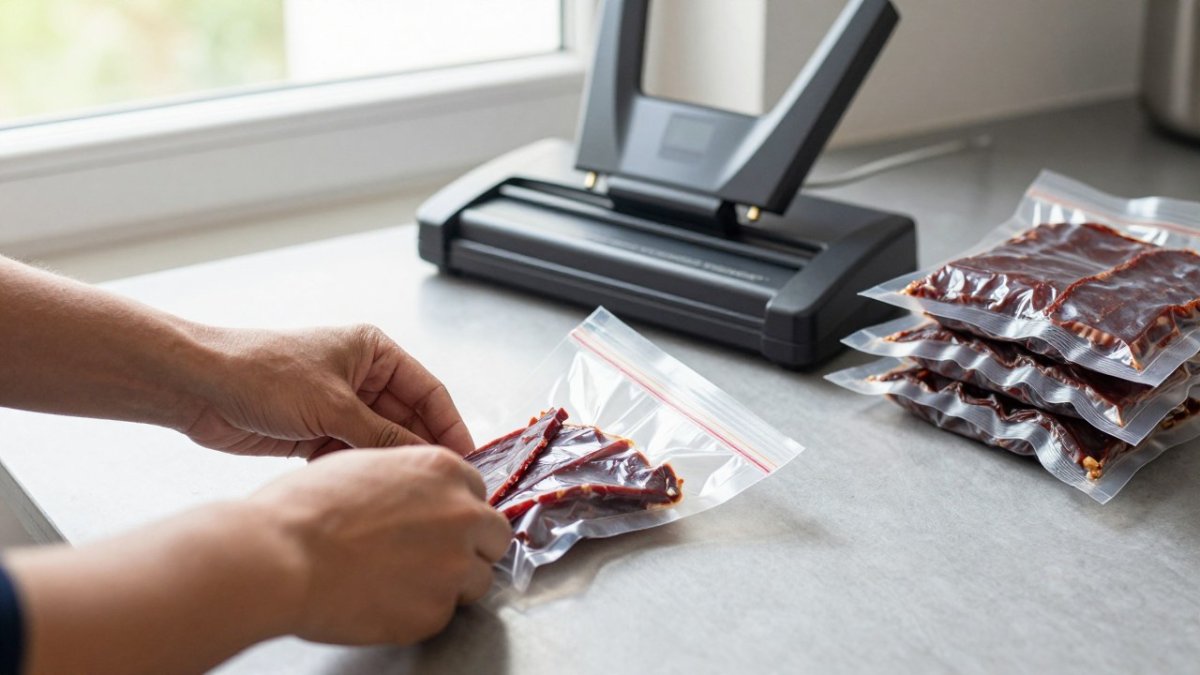
Good sealing can make a difference in how long biltong keeps. Here's a process you can follow at home:
- Start with dry biltong. Pat off any surface moisture first.
- Portion it out. Pack amounts you'll eat in one sitting.
- Use the right bag. Choose vacuum-sealer bags, not thin storage bags.
- Add an oxygen absorber for longer storage.
- Seal and check. Run the sealer and confirm there are no air pockets.
- Label and date each bag so you know what's oldest.
- Store correctly. Fridge for soft biltong, freezer for long-term.
Watch out: a bag with a tiny leak looks sealed but isn't. Press gently and watch for air creeping back in.
If you want a deeper look at how long preservative-free biltong stays shelf stable, read our full guide on preservative-free biltong shelf stability.
Follow these steps to seal biltong properly and get the most from every bag.
| Step | What to do |
|---|---|
| 1 | Start with dry biltong; pat off surface moisture |
| 2 | Portion out amounts you'll eat in one sitting |
| 3 | Use vacuum-sealer bags, not thin storage bags |
| 4 | Add an oxygen absorber for longer storage |
| 5 | Seal and check for air pockets |
| 6 | Label and date each bag |
| 7 | Fridge for soft biltong, freezer for long-term |
Ordering Biltong That Arrives Fresh and Stays Fresh
Good storage starts with well-sealed, properly dried biltong from the seller.
When you buy, look for a vacuum seal that's tight and intact. Check the meat is properly dried and the packaging is clean. Then store it using the rules above.
You can shop Shaka Braai's biltong and cured meats for current products and pricing.
Getting biltong to stay fresh is mostly about moisture, air, and temperature. Control those three and a sealed bag rewards you with months of quality. Shaka Braai brings over 20 years of family experience to USDA-approved biltong and droewors, made preservative-free and packed to travel well. Order a batch, seal it right, and enjoy traditional South African flavor on your schedule. Get started with Shaka Braai and keep authentic biltong fresh from the first bite to the last.
Frequently Asked Questions
How long will a vacuum-packed biltong last?
An unopened vacuum-sealed pack of biltong keeps well when stored cool, dark, and sealed. Soft, fatty biltong has a shorter window than dry, lean biltong because fat and residual moisture speed up spoilage. Once the seal is broken, refrigerate it and finish it sooner rather than later. Always check the pack date and follow the storage instructions on the label.
Can you freeze vacuum-sealed biltong?
Yes. Freezing is the most reliable way to extend biltong shelf life for months. Keep the vacuum seal intact, place the pack flat in the freezer, and thaw it in the fridge overnight rather than at room temperature. Expect some texture change after thawing, since freezing draws out moisture and can make the meat slightly softer. Eat thawed biltong within a few days and do not refreeze it, as repeated freeze-thaw cycles degrade quality and increase spoilage risk.
How can you tell if biltong has gone bad?
Look for fuzzy white, green, or black patches of mold, a sour or ammonia-like smell, and a slimy or sticky surface that was not there before. A harmless white salt bloom can appear on dry biltong and wipes away easily, but mold does not. Texture is the other clue: biltong that turns mushy or develops a wet film is past its best. When in doubt, throw it out, since food-safety guidance says you cannot reliably judge spoilage by taste alone.
Does biltong need to be refrigerated after opening?
Once the vacuum seal is broken, refrigeration is the safest choice, especially for soft or fatty biltong. Move the strips into an airtight container or a sealed bag and keep them cool. Dry, lean biltong can survive a few days in a pantry, but humidity and warmth shorten its window quickly. If you plan to nibble over several weeks, portion the biltong and freeze what you will not eat soon rather than leaving an open bag on the counter.